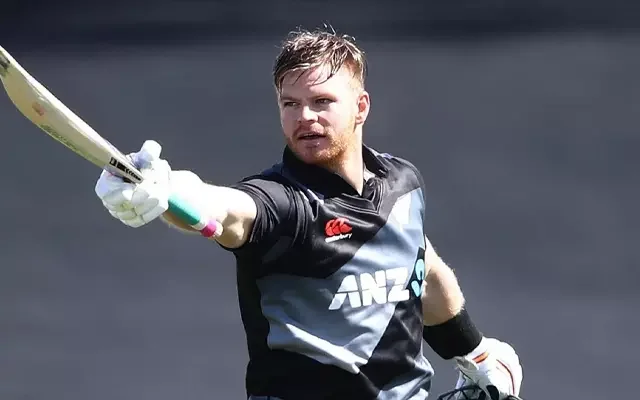
Acknowledging Scale: Phillips on New Zealand's Cricketing Stand
Ahead of the T20 World Cup final, New Zealand's Glenn Phillips has framed his team's ability to compete with India not just as a contest, but as a testament to their focused approach given their population size. He noted that India, with over 1.4 billion people, possesses a talent pool so vast they could "probably pick three sides that would compete just as evenly in this World Cup."

Phillips explicitly stated that for a nation of just over five million, "standing toe-to-toe with a cricketing superpower like India is an achievement in itself." This perspective highlights the differing scales of player selection and development, suggesting New Zealand's "high-performance program has to be very specific and catered for the population that we've got."

Strategic Positioning or Genuine Observation?
Phillips' comments, made at the Narendra Modi Stadium, have been interpreted by some as a subtle move to shift psychological pressure onto the favored Indian side. By emphasizing India's sheer depth of talent, he may be aiming to manage expectations for his own team while simultaneously acknowledging the formidable challenge they face. This framing of the disparity serves as both an observation on the realities of international cricket and potentially a strategic maneuver in the pre-match narrative.
Read More: Naoya Inoue wins undisputed title vs Nakatani in Tokyo Dome

Talent Depth and Strategic Focus
The contrast in population size directly impacts the 'luxury of choosing from' a wide array of athletes. For New Zealand, this necessitates a more concentrated and specialized approach to talent identification and development. Phillips' remarks underscore the reality that while India can draw from an enormous demographic, New Zealand must be more deliberate in cultivating its cricketers.

Champions Trophy Context and Player Mindset
While the current discussion centers on the T20 World Cup, Phillips' perspective echoes sentiments from earlier in the year during the ICC Champions Trophy. He had previously addressed claims of India having an "advantage" due to playing matches in Dubai, dismissing the notion by stating his team operates with a "no-excuse mindset." This suggests a consistent philosophy within the New Zealand camp, focusing on performance irrespective of external factors or perceived imbalances. He also pointed to a team culture where "players prioritize playing for the team rather than for individual places."
Read More: Kyle Jamieson's send-off for 15-year-old sparks cricket debate
Beyond Numbers: Fielding Prowess and Social Media Buzz
Phillips has also garnered significant attention for his athletic feats on the field, notably a spectacular catch that dismissed Virat Kohli during a match. This specific incident, which even left former players like Suresh Raina in awe, sparked considerable social media reaction, with fans praising his agility and declaring him "the craziest man in the world" and comparing him to an "Alien." These moments of exceptional individual skill, while not directly tied to the population disparity, contribute to the narrative of New Zealand punching above its weight.
India's Dominance and Global Cricket
The broader context of India's immense influence in the cricketing world is undeniable. Reports have questioned whether India's "dominance" is ultimately beneficial for the sport's global health, particularly given their financial power and the perceived advantages they may wield in scheduling and infrastructure. This discourse adds another layer to the discussions around India's place in international cricket, and how smaller nations navigate their power.
Read More: Naoya Inoue wins undisputed title fight against Nakatani in Tokyo