Recent discussions and documentation shifts suggest ongoing ambiguity regarding NVIDIA's capability to offer multi-tenant protection on a single physical GPU within its Confidential Computing (CC) framework. While early whitepapers explicitly mentioned "Confidential computing for multiple tenants per GPU," this specific use case appears to have been de-emphasized in more current materials, sparking user queries about architectural requirements and feature implementation.
The core of the concern centers on whether NVIDIA's Confidential Computing, which aims to protect sensitive data and AI models, can effectively isolate multiple independent workloads or users—tenants—when they are all sharing the resources of one GPU. This functionality is crucial for cloud providers and enterprises operating in multi-tenant environments, where strict data separation is paramount, even from the infrastructure owner. Questions are being raised about the specific configurations, such as NVIDIA's Multi-Instance GPU (MIG) or vGPU technologies, that might be necessary to enable such protection.
Read More: Chrome mimeHandler API lets extensions handle file types
Architectural Questions Arise
Users seeking to implement confidential computing on NVIDIA GPUs, particularly with the latest architectures like Hopper and Blackwell, are probing for clarity on how multiple tenants can be securely segmented on a single graphics processing unit. The absence of explicit multi-tenant use cases in recent NVIDIA documentation, contrasted with earlier mentions, fuels speculation about the current state and future roadmap of this feature. This has led to direct inquiries on developer forums, highlighting a gap in readily accessible information for those attempting to deploy these advanced security solutions.
Emerging Technologies and Security Protocols
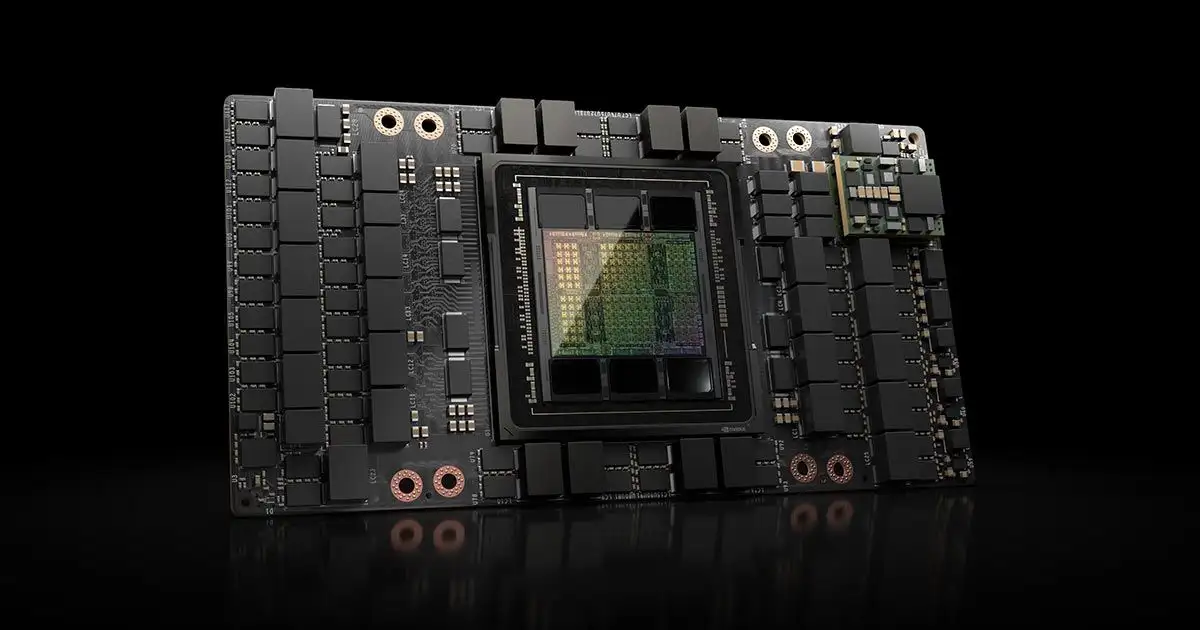
Discussions also touch upon the broader ecosystem required for robust GPU Confidential Computing. This includes integration with cloud key management services (KMS) and hardware security modules (HSMs) for attestation, which verifies the integrity of the computing environment. Users are exploring operational challenges such as enabling offline verification of security attestations and the potential for enclave key generation directly on the GPU. The implementation relies on specific hardware and software versions, with the NVIDIA H100 GPU being noted as the first to introduce GPU Confidential Computing capabilities.
Read More: Confidential Computing Security Flaw Found on 4 April 2026
NVIDIA's Confidential Computing Push
NVIDIA has been actively promoting its Confidential Computing solutions, emphasizing the protection of data and proprietary AI models. The introduction of the NVIDIA Hopper architecture marked a significant step, followed by the Blackwell architecture which promises increased performance and enhanced security. Recent announcements showcase the 'NVIDIA Vera Rubin NVL72' as a "rack-scale confidential computing platform," designed to create a unified security domain across numerous GPUs and CPUs, scaling confidentiality across an entire system.
Multi-Instance GPU (MIG) and Isolation
NVIDIA's Multi-Instance GPU (MIG) technology is designed to partition a single GPU into multiple, fully isolated instances, each with its own dedicated resources like high-bandwidth memory and compute cores. This isolation is intended to prevent interference between different jobs running concurrently on the same GPU, leading to predictable performance and resource utilization. While MIG inherently provides a degree of separation, its compatibility and efficacy in conjunction with Confidential Computing for true multi-tenant security on a single GPU remain a focal point of user inquiry. The Blackwell Ultra GPU, for instance, outlines various configurations for MIG partitioning.
Read More: BEREC Asks for Mobile Network API Ideas from Developers
Context: The Drive for Secure AI
The development of GPU Confidential Computing is intrinsically linked to the burgeoning field of Secure AI. As AI models become more complex and sensitive data is increasingly processed, the need to protect workloads and data—even from the system administrator—becomes critical. NVIDIA's efforts with Hopper and Blackwell architectures, coupled with platforms like the NVL72, signal a strategic direction towards enabling highly secure, accelerated computing environments for AI and data-intensive applications. This push for hardware-based security is designed to address the evolving threat landscape and meet the stringent security demands of enterprise and cloud deployments.