WIDESPREAD ECOLOGICAL DEVASTATION MARKED BY RECORD HEAT
"The heat wave had widespread ecological effects, including an almost 400% increase in wildfire activity and negatively affecting more than three-quarters of the species studied."
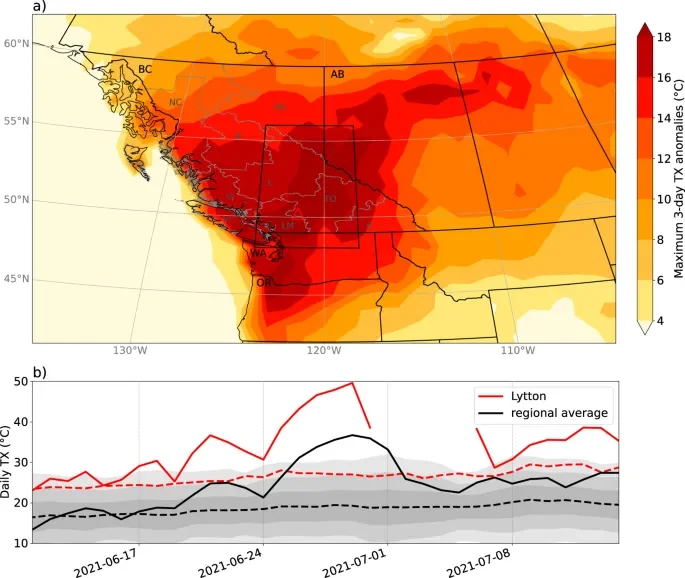
The recent 'heat dome' event across North America left a significant ecological mark, with studies revealing widespread negative impacts on wildlife. Over 75 percent of the 49 terrestrial and marine species examined experienced detrimental effects from the extreme temperatures. This grim picture is further underscored by a substantial increase in wildfire activity, surging by 37 percent during the heatwave itself and an alarming 395 percent in the week that followed.

Carbon Imbalance and Aquatic Life's Plight
The hydrological systems also bore the brunt, with cooler, wetter regions absorbing an increased 30 percent more carbon than usual. Conversely, warmer, more arid areas saw their carbon absorption plummet by 75 percent. Aquatic ecosystems were particularly hard-hit; more than half the thatched barnacle population perished, alongside a staggering 92 percent of Bay mussels. Streamflow from snow and ice melt initially saw a 40 percent increase due to rapid melting but subsequently dropped below average later that summer.
Read More: Amazon Land Use Changes Cause Disease Clusters in Brazil

Varied Responses and Unforeseen Resilience
The extent of impact on different species varied, influenced by factors like vegetation cover, an organism's inherent heat tolerance, and its behavioral capacity to seek refuge. Notably, while many species suffered, some showed surprising resilience or even benefited. For instance, moose populations returned to pre-heatwave levels of daily camera trap sightings. One earlier observation noted that the aphid infestation on blueberry plants, which affected one in every two plants before the heatwave, might have shifted.
The Science Behind the Observations
Researchers pieced together this complex ecological puzzle by synthesizing weather, ecological, and hydrological data, cross-referenced with wildfire information and sophisticated scientific models. The findings, published in journals such as Nature Ecology and Evolution, highlight the profound and multifaceted consequences of extreme weather events on the natural world.

"To assess the heatwave's impact, researchers combined weather, ecological and hydrological data with information on wildfires and scientific models."
While the heatwave inflicted considerable damage, the study also pointed to the potential for a coordinated monitoring network across Canada and its provinces as a crucial step in understanding and potentially mitigating future ecological disruptions.
Read More: World Cup 2026 travel rules block teams and referees in April 2026