

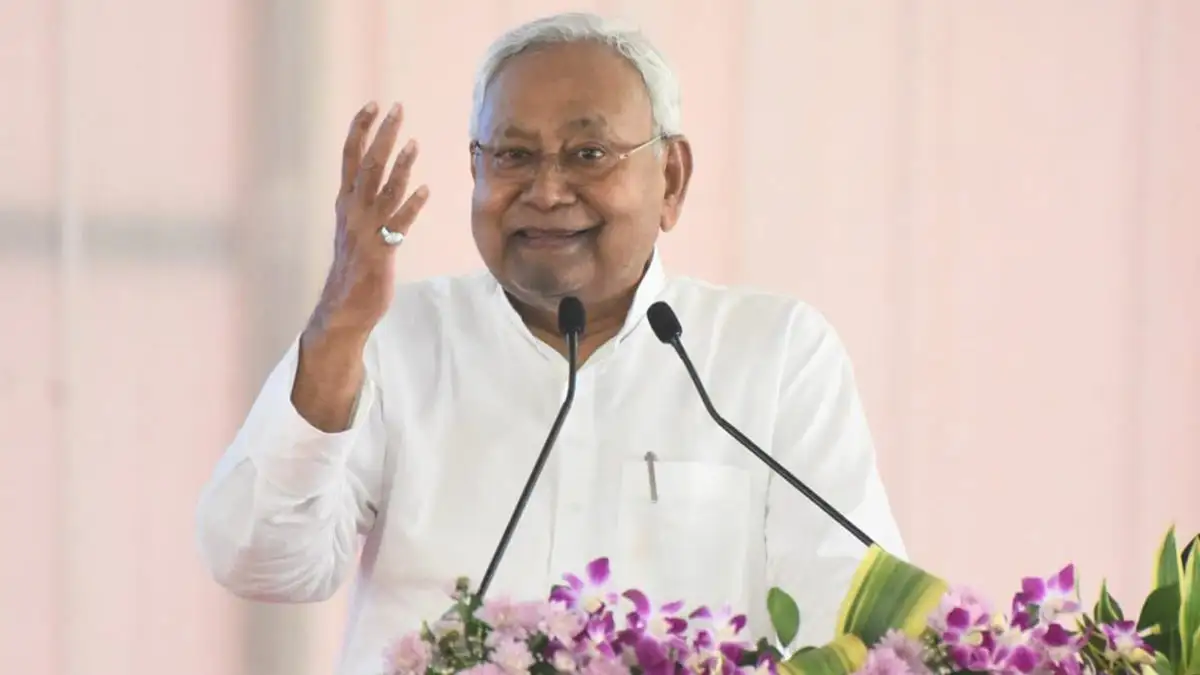
Bihar's political terrain is undergoing a seismic transformation. Nitish Kumar, the state's long-serving Chief Minister, has stepped down, making way for a new dynamic, which observers suggest, aligns with a pattern of the Bharatiya Janata Party (BJP) expanding its influence by allying with regional parties. This move is seen by many as the closing of a chapter in Bihar's political history, one defined by decades of socialist and social justice-rooted politics.
The BJP's Strategic Advance
The transition in Bihar is viewed by some as a continuation of the BJP's four-decade strategy: forging alliances with regional entities to gain a foothold, eventually becoming the dominant force and often superseding the original partner. This trajectory is noted in other states, such as Maharashtra, where the BJP ultimately secured a leading role post-alliance. The shift in Bihar places the BJP in a position of increased leverage, a stark contrast to the Janata Dal (United) JD(U)'s previous dominant stance.
Read More: White House Delays Terror Threat Bulletin Due to Iran Tensions
Acknowledging Nitish Kumar's Political Craft
For nearly two decades, Nitish Kumar has been the central figure in Bihar's politics, navigating complex alliances and shaping governance. His departure, culminating in his nomination for the Rajya Sabha, is described as a "dignified transition" rather than an abrupt exit. His political career, marked by an ability to adapt and engineer political shifts, has deeply intertwined with Bihar's electoral logic, governance style, and alliance structures for over thirty years.
The Fading Echo of Socialist Politics
The departure of Nitish Kumar prompts questions about the future of socialist politics in Bihar, a movement rooted in socialist assertion, mobilization of Other Backward Classes (OBCs), and resistance to upper-caste dominance. This political lineage, exemplified by contemporaries like Lalu Prasad Yadav and Mulayam Singh Yadav, who built parties that launched family members into politics, saw Nitish Kumar stand apart. His electoral success was, in part, attributed to this distinction.
Read More: Dhurandhar: The Revenge Attaches 3 Movie Trailers to Boost Other Films

Shifting Power Dynamics
The recent electoral outcomes reveal a significant shift, with the BJP outpacing the JD(U) in seat numbers, even while Nitish Kumar remained Chief Minister. This growing disparity in electoral strength within the alliance is seen as a key factor in the present realignment, positioning the BJP as the ascendant party in the state's political framework.
Key Pillars of Support
Nitish Kumar's political strategy relied on consolidating support, particularly among women voters, bolstered by his prohibition policy, and the Economically Backward Classes (EBCs). His approach to social justice involved strategic caste reclassifications and targeted welfare measures to build and maintain his political base, effectively outmaneuvering earlier dominant political coalitions.
Background: A Half-Century of Social Justice Politics
Bihar's political narrative over the last fifty years has been significantly shaped by social justice movements. Starting with the resistance against upper-caste dominance, it evolved through the mobilization of OBCs and other marginalized communities. Figures like Lalu Prasad Yadav, with his M-Y (Muslim–Yadav) alliance, and Nitish Kumar, with his focus on EBCs, Mahadalits, Pasmanda Muslims, and women, represent different facets of this ongoing political evolution. The current transition is thus seen by some as marking a definitive turning point in this long-standing political tradition.
Read More: Matt Hancock's TV Show Appearance Gets Nearly 2,000 Complaints to Ofcom