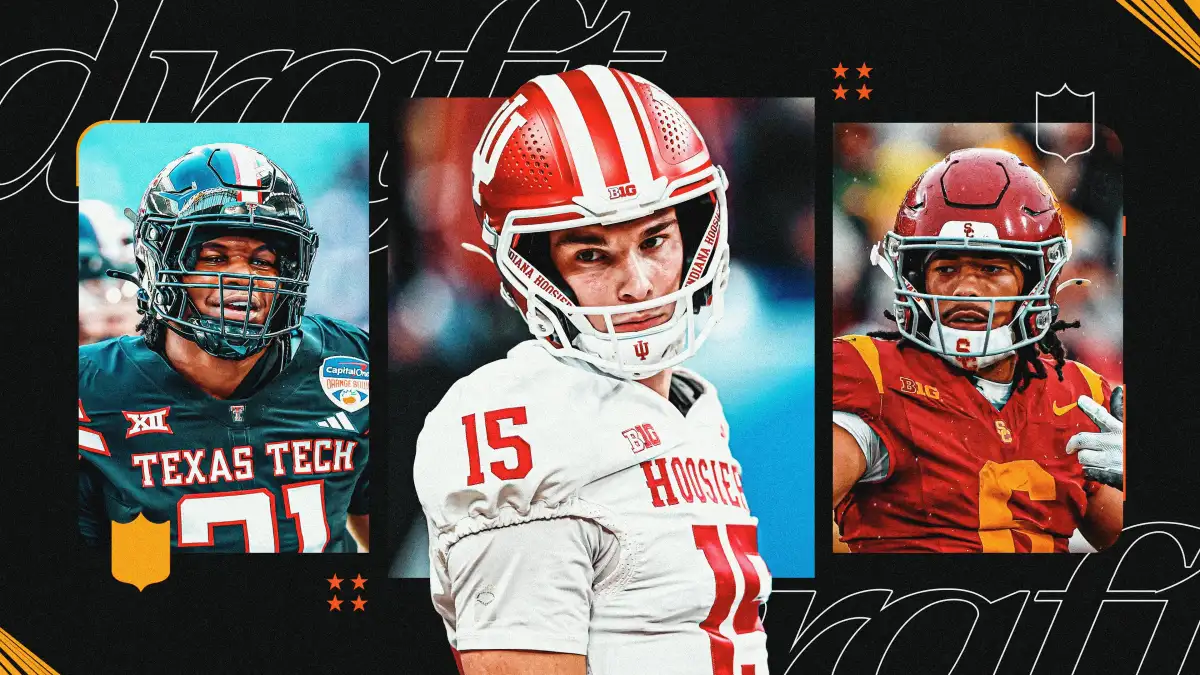
The current draft cycle sees a curious recalibration of how professional sports organizations, specifically those in the NFL and MLB, assess player potential. The once-sacrosanct valuation of proven collegiate performance is undergoing a subtle but significant erosion, replaced by an increasing emphasis on raw, measurable upside and developmental capacity. This shift, observed across multiple reports, suggests a growing belief that tools over production now dictate a prospect's true worth, especially in later rounds and for positions historically considered less glamorous.
Scouts and executives are reportedly prioritizing players with demonstrable athletic traits and developmental potential over those with established, albeit sometimes limited, collegiate track records. This is particularly evident in the MLB landscape, where the traditional strategy of prioritizing college pitchers in middle rounds is giving way to a hunt for high-upside players, even if their current performance metrics are less compelling. The rationale appears to be a pragmatic adaptation to the evolving economics of collegiate athletics, where NIL deals allow players to remain in school longer, potentially deferring draft eligibility and thus altering risk calculations.
Read More: Colorado Avalanche reach Conference Final, Montreal Canadiens lead series 3-2

NFL Draft Speculation Heats Up
As the 2026 NFL Draft looms, mock drafts and internal team assessments reveal a spectrum of player valuations. Prospects like Makai Lemon (WR, Eagles) and Fernando Mendoza (QB, Raiders) are ranked highly, indicating clear first-round projections. Other players, such as Dillon Thieneman (S, Bears) and Zion Young (Edge, Ravens), are slotted in earlier rounds with specific athletic or technical attributes highlighted as their primary value drivers. The discourse around these players often centers on their "traits" and "upside," a lexicon reflecting the aforementioned shift towards potential over immediate impact.
"His overall athletic limitations may cap his pass-rush production. His upside is high given his age and technique."— PFF 2026 NFL Draft Big Board
Reports suggest a divergence in how teams view player development, with "player development personnel weighing in on whom they think they can work with best." This implies a more granular approach to scouting, extending beyond raw talent to an organization's capacity to mold that talent. The New York Times' Athletic report on mock drafts points to insider predictions, with discussions about players like Jordyn Tyson focusing on his "freakishly gifted athlete" status and his potential to influence a defense.
Read More: NFL Starts 2026 Season Early for First Game in Melbourne

Under-the-Radar Talent Gains Traction
Amidst the prominent names, there's a burgeoning recognition of prospects who may not dominate early draft projections but possess traits teams are actively seeking. These "under the radar" players, often appearing outside the top 30 in mock drafts, are identified as possessing "traits NBA teams value" or exhibiting capabilities that warrant more attention. The ability to "get home when they want," as noted for an unnamed edge rusher, or a corner being described as the "stingiest in college football," suggests that specific, impactful skills are being noted even if a player's overall profile is less polished.
The MLB draft buzz also highlights the rising value of middle-round college pitchers, a departure from historical team strategies. Previously, teams might have focused on slot or below with college players through the second or third round before shifting to higher-upside high school players. Now, there's a noticeable trend towards these college arms, suggesting a strategic pivot driven by perceived value and organizational confidence in development.
Read More: Ottawa Charge lose PWHL Final Game 1 after scoring first
Background: Evolving Draft Metrics
Historically, the NFL and MLB drafts were largely seen as a clear-cut hierarchy of talent, with established college stars at the top and raw potential in later rounds. Performance statistics and a player's resume often carried significant weight. However, factors such as the lucrative NIL landscape in college football, which allows athletes to financially benefit without entering the professional ranks, have reshaped player decision-making and, consequently, team draft strategies. This has forced organizations to reassess risk and reward, leading to a more nuanced approach that increasingly incorporates the long-term developmental projections of prospects. The emphasis has shifted from solely identifying who is ready, to understanding who can become ready, and who possesses the inherent qualities that make that transformation most probable.