Nations Unite Behind a Shared Vision for Artificial Intelligence
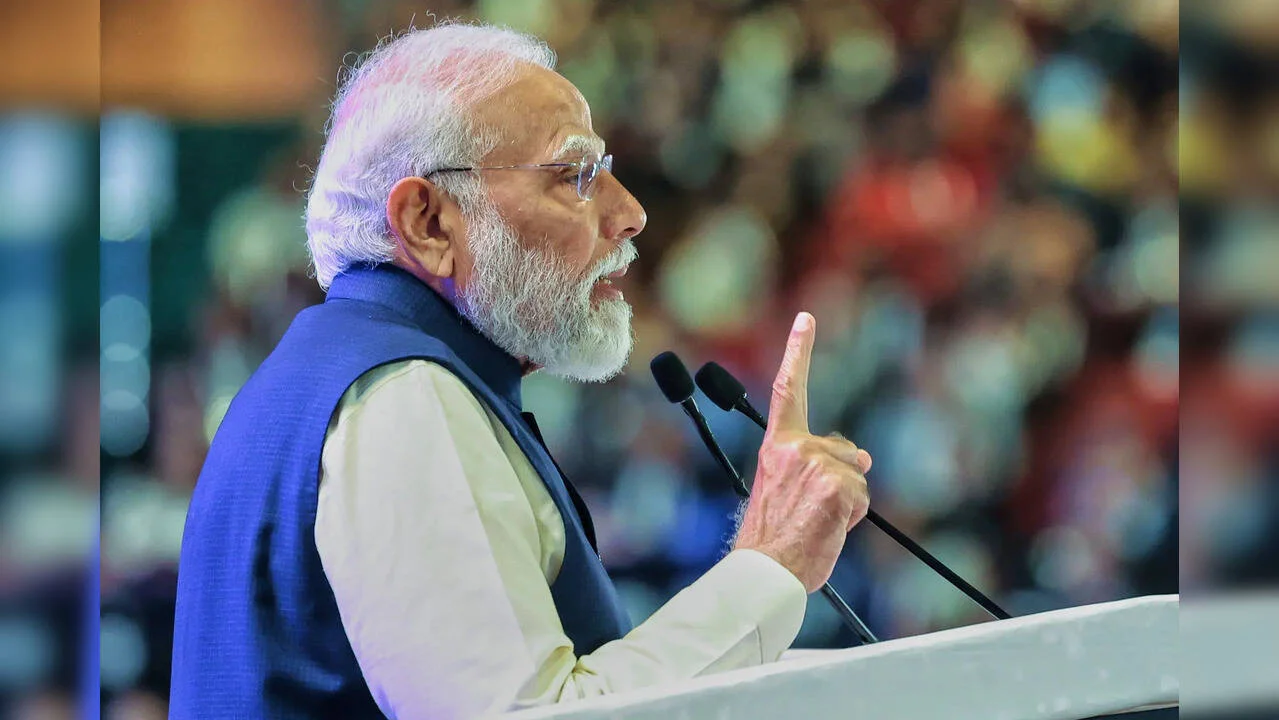
The New Delhi Declaration on AI Impact has been adopted, signaling a broad global commitment to collaborative artificial intelligence (AI) development and deployment. Endorsed by 88 countries and international organizations, including major global powers like the United States, United Kingdom, and China, the declaration outlines a vision for AI that prioritizes economic growth, social good, and equitable access. This significant agreement aims to shape future international policy and regulatory frameworks for AI, reflecting a growing acceptance of a development-focused AI approach. India has positioned itself as a key facilitator in this global conversation.
Context of the Declaration
The adoption of the New Delhi Declaration follows the AI Impact Summit 2026. This summit brought together nations and international bodies to discuss the profound impact of AI. The declaration itself is not legally binding but serves as a guiding framework for future policy and regulatory roadmaps. Its broad support, with 88 signatories, exceeds that of previous similar summits. The event underscored the importance of international cooperation in navigating the complexities of AI development and its widespread societal implications.
Read More: Free Recycling for Old Laptops and Printers in 2024
Key facts about the declaration's adoption:
Number of signatories: 88 countries and international organizations.
Key endorsing nations: United States, United Kingdom, China.
Nature of the declaration: A guiding framework, not legally binding.
Event context: Adopted at the conclusion of the AI Impact Summit 2026.
Pillars of Global AI Cooperation
The New Delhi Declaration is structured around seven key pillars that form the foundation for global AI cooperation. These pillars articulate the shared principles and objectives guiding the development and deployment of AI technologies.

Democratizing AI Resources: This pillar focuses on making AI resources more accessible.
Economic Growth & Social Good: AI is recognized for its potential to drive economic progress and benefit society.
Secure & Trusted AI: Emphasis is placed on developing AI systems that are both safe and reliable.
AI for Science: The declaration highlights AI's role in advancing scientific research and collaboration.
Access for Social Empowerment: Efforts will be made to ensure AI contributes to the empowerment of individuals and communities.
Human Capital Development: This involves building the necessary skills and knowledge for an AI-driven future.
Resilient, Efficient & Innovative AI Systems: The need for robust, energy-efficient, and innovative AI infrastructure is underscored.
Focus on Equitable Benefit Sharing
A core principle underlying the New Delhi Declaration is the equitable distribution of AI's benefits. Drawing inspiration from the philosophy of 'Sarvajan Hitaya, Sarvajan Sukhaya' (Welfare for all, Happiness for all), the declaration emphasizes that the advantages of AI should be shared across humanity. This includes promoting open-source and accessible AI ecosystems and ensuring that AI adoption leads to widespread social and economic welfare.
Read More: US F-35 Jets in Jordan: More Than 60 Aircraft Ready for Iran Action by January 2026

Key elements of equitable benefit sharing:
Shared benefits: AI's advantages must be accessible to all.
Open-source and accessible ecosystems: Encouraging the diffusion of AI technologies.
Equitable distribution: Ensuring AI's impact benefits all segments of society.
Collaboration and Infrastructure for AI Development
The declaration advocates for enhanced international cooperation to foster AI development. It calls for the establishment of global platforms and networks to facilitate the scaling and replication of AI use cases worldwide. This includes creating an international network of AI for science institutions to promote global scientific collaboration and an AI for social empowerment platform for knowledge exchange and scalable solutions. Furthermore, there is a significant focus on developing energy-efficient AI infrastructure to address the growing demands of AI on energy and resources.
Areas of collaborative focus:
Global AI Impact Commons: A platform to scale and replicate AI use cases globally.
AI for Science network: Enhancing global scientific collaboration.
AI for Social Empowerment platform: Facilitating knowledge exchange and scalable solutions.
Energy-efficient AI systems: Addressing the energy demands of AI.
Trust and Development-Oriented AI Framework
The New Delhi Declaration underscores the importance of developing secure and trustworthy AI systems. This includes creating a trusted AI Commons, a repository of tools, benchmarks, and best practices to support the development of reliable AI. The broad global backing for the declaration signals a growing acceptance of a development-oriented AI framework, with India aiming to act as a bridge between developed and developing nations in this domain.
Read More: OpenAI Employees Saw Troubling Chatbot Use Before Mass Shooting, Did Not Call Police
Key aspects of trust and development:
Trusted AI Commons: A repository for AI tools and best practices.
Secure and trustworthy systems: Prioritizing safety and reliability in AI development.
Development-oriented framework: Focusing on AI for progress and welfare.
India's role: Positioning as a facilitator between developed and developing nations.
Expert Analysis and Future Implications
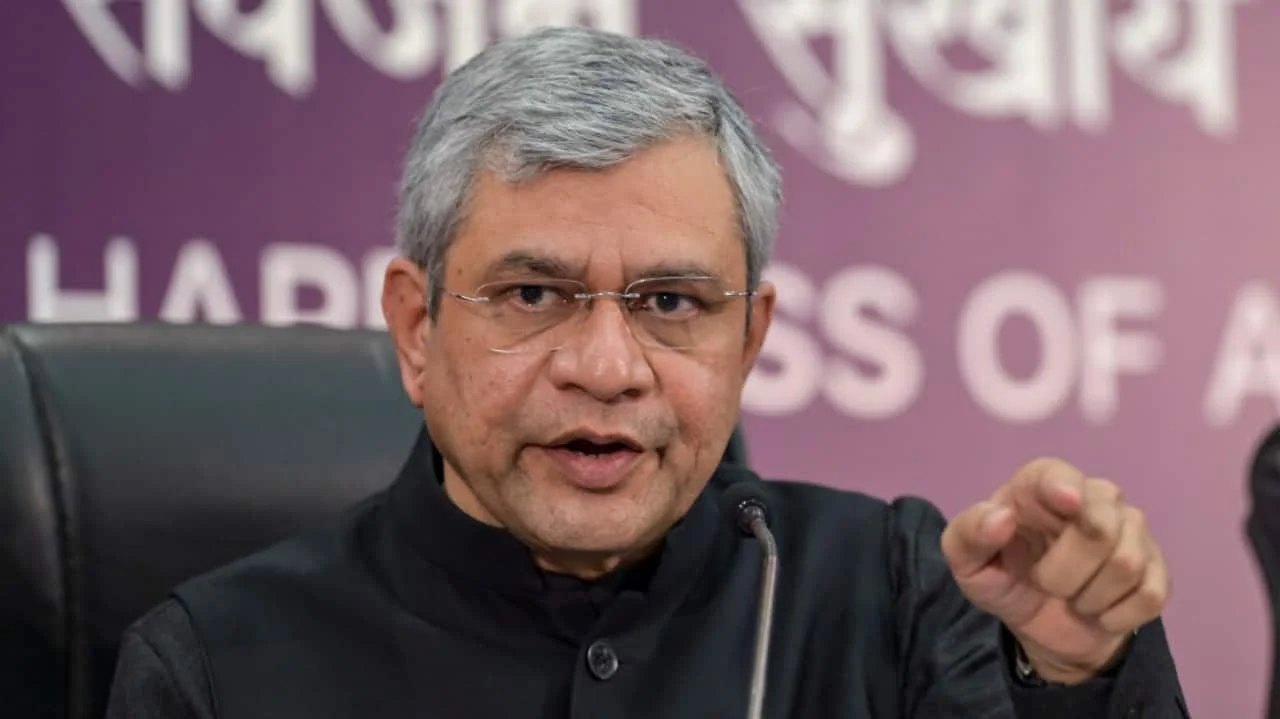
The New Delhi Declaration represents a significant step towards global consensus on AI governance. Minister of Electronics and Information Technology of India, Ashwini Vaishnaw, highlighted the broad consensus and the participation of "all major countries — 'people who matter in AI'". The declaration's political and symbolic nature means it serves as a guiding framework, encouraging future policy and regulatory roadmaps. The commitments made during the summit, including over $400 billion for infrastructure and tech investments, further underscore the economic significance of this global collaboration. The broad international endorsement suggests a unified approach to harnessing AI for economic growth and social good while addressing potential challenges.
Insights from expert commentary:
Read More: Brazil President Lula India Visit: New Deal on Critical Minerals Signed February 21, 2026
Broad consensus: Agreement from major global AI players.
Guiding framework: Influence on future policy and regulation.
Economic commitments: Significant investments in AI infrastructure.
Unified approach: Global cooperation on AI development and governance.
Conclusion: A Framework for Global AI Engagement
The adoption of the New Delhi Declaration by 88 nations marks a pivotal moment in international AI cooperation. The declaration articulates a shared vision for AI that prioritizes economic growth, social good, and equitable access, guided by seven key pillars. Its broad endorsement, including major global powers, signifies a growing global consensus on a development-oriented AI framework. While not legally binding, the declaration provides a crucial guiding framework for future policy and regulatory roadmaps. The emphasis on democratizing AI resources, fostering human capital development, and ensuring secure and trusted AI systems lays the groundwork for collaborative efforts to harness AI's potential for the welfare of all.
Sources Used:
The Hindu: https://www.thehindu.com/sci-tech/technology/new-delhi-declaration-on-ai-impact-adopted-us-uk-china-among-nations-to-endorse-vision-for-collaborative-ai/article70660201.ece
Context: Article focuses on the adoption of the New Delhi Declaration, detailing its key objectives such as democratizing AI resources, economic growth, social good, secure AI, AI for science, social empowerment, human capital development, and resilient systems. It highlights the importance of open-source, accessible AI, energy-efficient infrastructure, and AI's role in science, governance, and public services.
Deccan Herald: https://www.deccanherald.com/india/new-delhi-declaration-on-ai-impact-adopted-us-uk-china-among-88-nations-to-endorse-vision-for-collaborative-ai-3906873
Context: Reports on the adoption of the New Delhi Declaration, mentioning the endorsement by 88 nations, including the US, UK, and China. It emphasizes the principle of 'Sarvajan Hitaya, Sarvajan Sukhaya' and the need for equitable sharing of AI benefits.
Times Now: https://www.timesnownews.com/technology-science/ai-impact-summit-2026-ends-with-new-delhi-declaration-backed-by-88-countries-article-153662153
Context: Covers the conclusion of the AI Impact Summit 2026 and the adoption of the New Delhi Declaration by 88 countries and international organizations. It reiterates the focus on economic growth, social good, energy-efficient AI, and AI's role in governance, science, and public services. It mentions the declaration's structure around seven key pillars.
Moneycontrol: https://www.moneycontrol.com/news/india/ai-impact-summit-88-countries-including-us-china-endorse-new-delhi-declaration-on-ai-13838330.html
Context: Reports on the AI Impact Summit where 88 countries, including the US and China, endorsed the New Delhi Declaration on AI. It notes the broad global support for using AI for economic growth and social good, and the focus on building energy-efficient and resilient AI systems.
NDTV: https://www.ndtv.com/india-news/88-nations-adopt-new-delhi-declaration-back-indias-ai-for-all-vision-11117837
Context: Details the adoption of the New Delhi Declaration by 88 nations, supporting India's "AI for All" vision. It highlights key aspects like affordable access to AI, global platforms for AI use cases, and a repository for trusted AI tools. It points to the declaration shaping future international AI engagement and reinforcing India's role.
Livemint: https://www.livemint.com/news/india/india-ai-impact-summit-declaration-endorsed-by-88-nations-global-organisations-read-full-statement-11771669029664.html
Context: Provides information on the New Delhi Declaration being endorsed by 88 nations and global organizations. It emphasizes AI's potential for global welfare, requiring international cooperation on human capital, social empowerment, and economic growth. It outlines the seven pillars of the declaration.
The New Indian Express: https://www.newindianexpress.com/business/2026/Feb/21/88-nations-endorse-ai-impact-summit-declaration-in-new-delhi
Context: Reports on the AI Impact Summit declaration being endorsed by 88 nations in New Delhi. It details the seven key pillars of the declaration, including democratizing AI resources, economic growth, social good, and secure AI. It also mentions the focus on energy-efficient AI systems and AI skilling initiatives.
Hindustan Times: https://www.hindustantimes.com/india-news/ai-impact-summit-2026-70-countries-sign-new-delhi-ai-declaration-more-expected-101771639691358.html
Context: States that 70 countries signed the New Delhi AI declaration, with more expected. It clarifies that the declaration is largely political and symbolic, serving as a guiding framework. It quotes IT Minister Ashwini Vaishnaw on the broad consensus and the participation of major countries.
MEA.gov.in: https://www.mea.gov.in/press-releases.htm?dtl/40810/AI+Impact+Summit+2026+Concludes+with+Adoption+of+New+Delhi+Declaration
Context: This is a government press release regarding the conclusion of the AI Impact Summit 2026 and the adoption of the New Delhi Declaration. (Note: Extraction failed or content too short for detailed summary).