

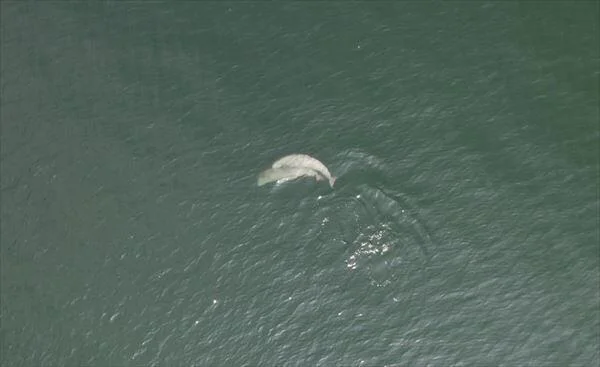
New observations from Ise Bay, Japan, challenge long-held beliefs about the narrow-ridged finless porpoise, suggesting a more complex social tapestry than previously understood. For decades, these marine mammals were largely characterized as solitary, with social interactions primarily confined to the mother-offspring bond. However, recent findings indicate the presence of 'allomaternal behavior,' where infants engage in prolonged social swimming with adults other than their mothers.
The presence of infants participating in extended parallel swimming with multiple non-maternal adults directly contradicts the established view of these porpoises as predominantly solitary creatures. This 'changing partners' dynamic, observed in Ise Bay, points towards a nuanced social structure that includes behaviors beyond the basic mother-calf unit. Researchers employed drone observation and acoustic recordings, focusing on coastal areas of Tsu, Ise, and Toba cities.
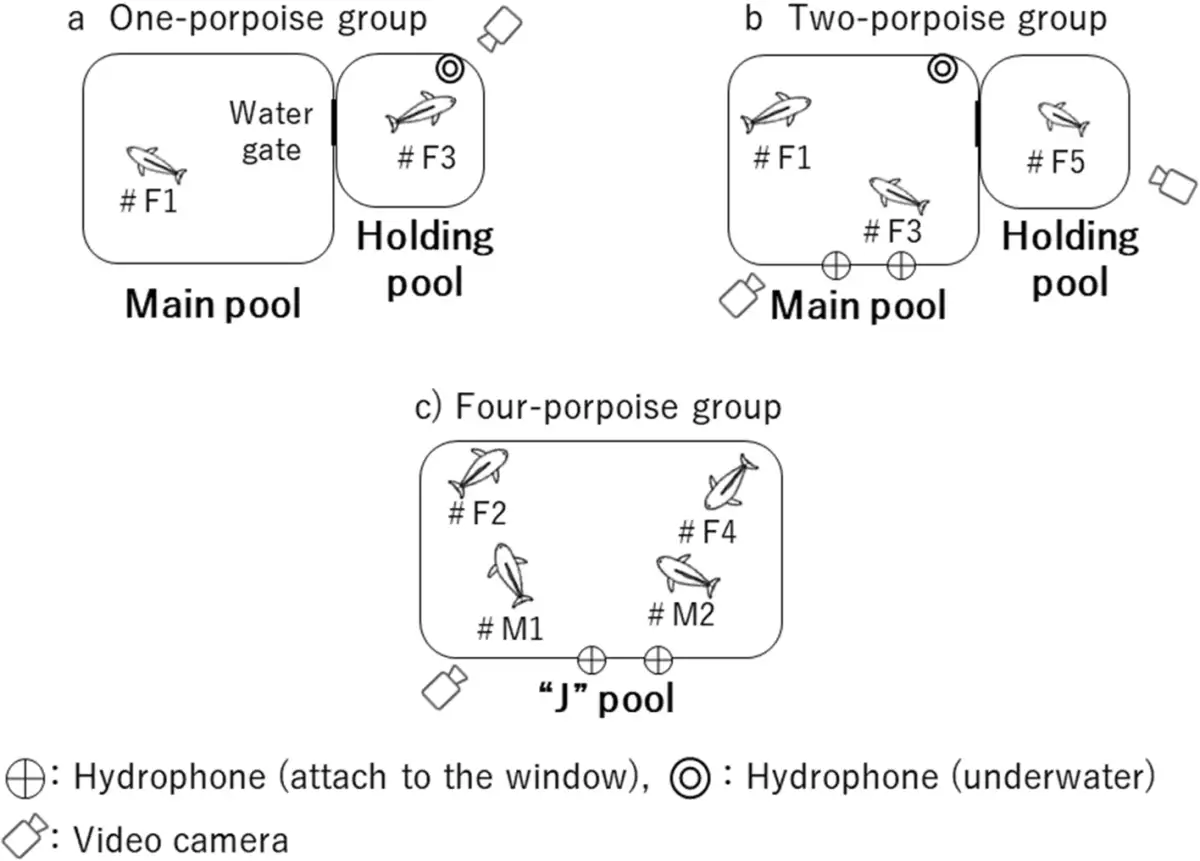
While the exact social organization remains under investigation, data suggests a coexistence of solitary and gregarious behaviors. Observations noted individuals within close proximity (15 meters) engaging in social interactions frequently. This close proximity, coupled with observed collective behaviors (84.2%), indicates a capacity for group-living, which contrasts with the prior assumption of consistent solitude. The study's findings also propose that these close distances were significantly shorter than the 'active space' of their sounds, suggesting deliberate social proximity rather than mere acoustic range.
Further research into finless porpoise interactions reveals a range of behaviors. These include sociosexual behaviors, such as body-to-body rubbing and calf-directed interactions, alongside mating and nursing dynamics. The specific swimming positions noted, like the "neonate position" (calf on mother's back) and "echelon position" (calf alongside mother), offer glimpses into close bonds, but the newly observed allomaternal behavior suggests these bonds extend beyond immediate family units.
The research, led by Dr. Tomoyoshi Terada and involving collaborators from Mie University, including Professor Tadamichi Morisaka and Professor Motoi Yoshioka, was published with supporting data on the 'bimodal distribution of inter-individual distance'. This indicates that finless porpoises exhibit both close-range social proximity and wider separation, suggesting a flexible social system.