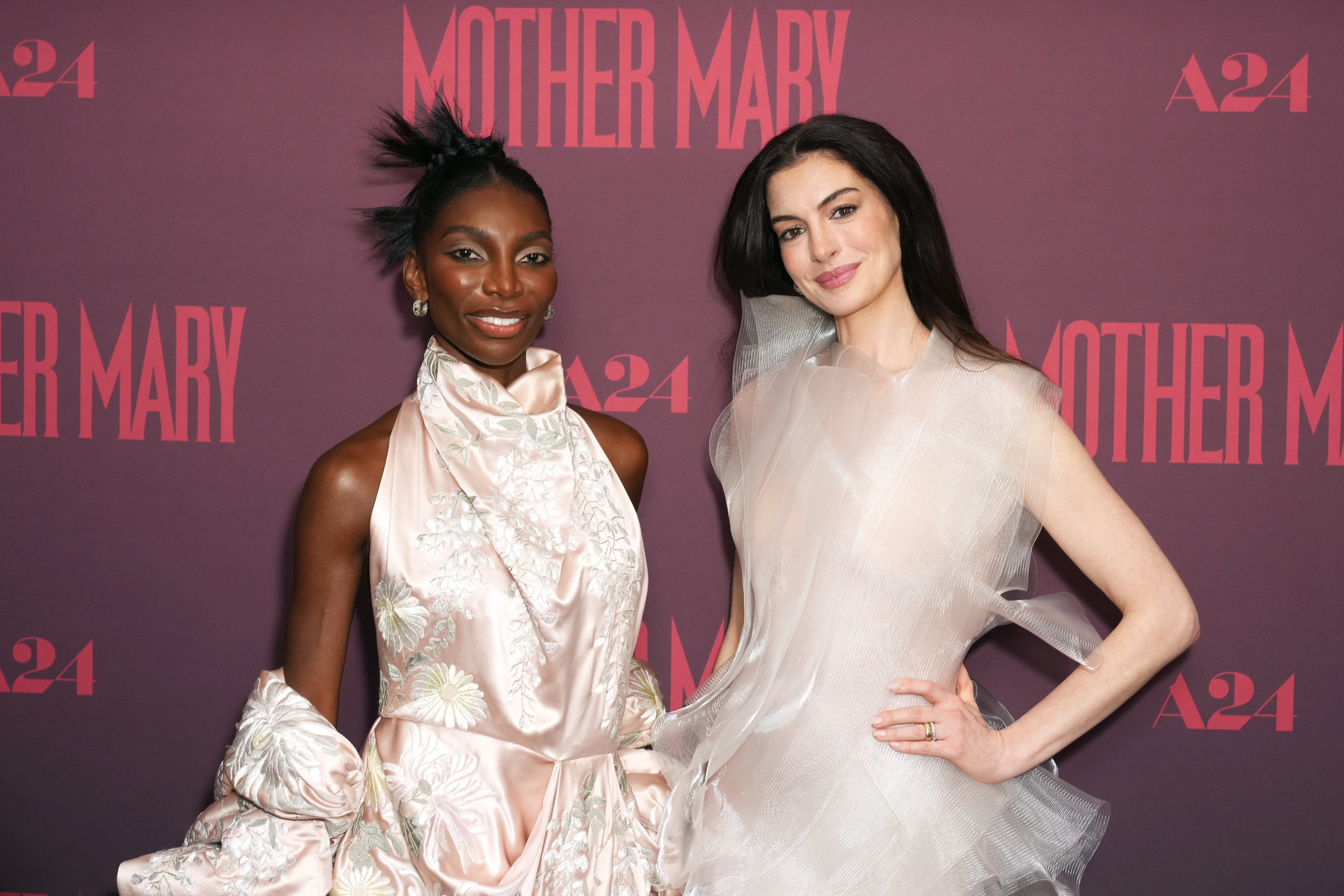
The film ‘Mother Mary’, directed by David Lowery, presents a deeply stratified narrative exploring the fractured relationship between a pop icon, Mother Mary (played by Anne Hathaway), and her former best friend and celebrated fashion designer, Sam Anselm (Michaela Coel). Arriving at Sam's doorstep after a decade of silence, Mother Mary, now a reclusive and haunted figure, desperately requests a new dress for a high-stakes comeback performance. This demand acts as a catalyst, unearthing a complex history rife with artistic ambition, professional betrayal, and a possibly queer, unspoken past. The film, described by many critics as a "gothic pop opera" and a "psychodrama," hinges on the powerful dynamic between its two leads, generating both awe and criticism for its abstract storytelling.

The core tension revolves around artistic ownership and the corrosive effects of fame. Sam, having meticulously crafted Mother Mary's iconic image, feels a profound sense of abandonment and resentment when her client abandoned her for more commercially viable designers. This deeply personal betrayal fuels Sam’s icy reception and a calculated approach to fulfilling Mary's plea, using the dress commission as a means to dissect their shared past and exert a form of control.
Read More: Priyanka Chopra Films Cameo in Mira Nair's Amrita Sher-Gil Biopic

Visuals and Performances: A Polarizing Spectacle
Hathaway's portrayal of Mother Mary is noted for its vulnerability, depicting a pop star grappling with a mysterious personal calamity that has rendered her music a source of horror. Coel, conversely, is often characterized as transcendent, embodying a designer consumed by rage and professional pride. Their interplay is consistently described as rapturous and mesmerizing, forming the film's emotional anchor, even as the narrative itself splinters into more abstract territories.

Some reviews highlight the film’s stunning visuals and a “haunting pop fever dream” atmosphere, particularly in its initial sequences. However, the latter half is frequently cited as uneven, descending into what some critics deem "ludicrous," "vapid phantasmagoria," or "thuddingly pretentious." The film’s deliberate weirdness and metaphorical density are both lauded for their boldness and decried for their lack of clarity, leaving audiences to "surrender to the weirdness" or find the film "unfulfilled and unsatisfying."
Read More: Riteish Deshmukh Calls Shivaji Maharaj Remarks 'Nonsense'
Underlying Themes: Fame, Identity, and the Male Gaze
Beyond the central relationship, ‘Mother Mary’ delves into the psychological toll of constant visibility, questioning the boundary between performance and authentic self. The film is also interpreted as a ghost story, with Mother Mary seemingly possessed by a malevolent spirit linked to her fame. Critically, the film’s all-female ensemble and its director, David Lowery, are examined for their approach to the "male gaze," with some arguing that the narrative consciously steers away from such tropes, focusing intently on the complex bond between Mary and Sam, with an unspoken suggestion of a queer connection.
Background and Release
‘Mother Mary’ began its theatrical run in select cinemas, with a nationwide release in the United States on April 24, 2026, and in UK and Irish cinemas from April 23, 2026. The film has generated significant buzz due to its A-list cast and association with A24, known for its distinctive cinematic output. Lowery, whose directorial style is described as challenging and personal, draws inspiration from figures like Madonna and his own Catholic upbringing, contributing to the film's thematic richness and sometimes polarizing reception.
Read More: Michael Jackson Biopic 'Michael' Earns $217 Million Globally