


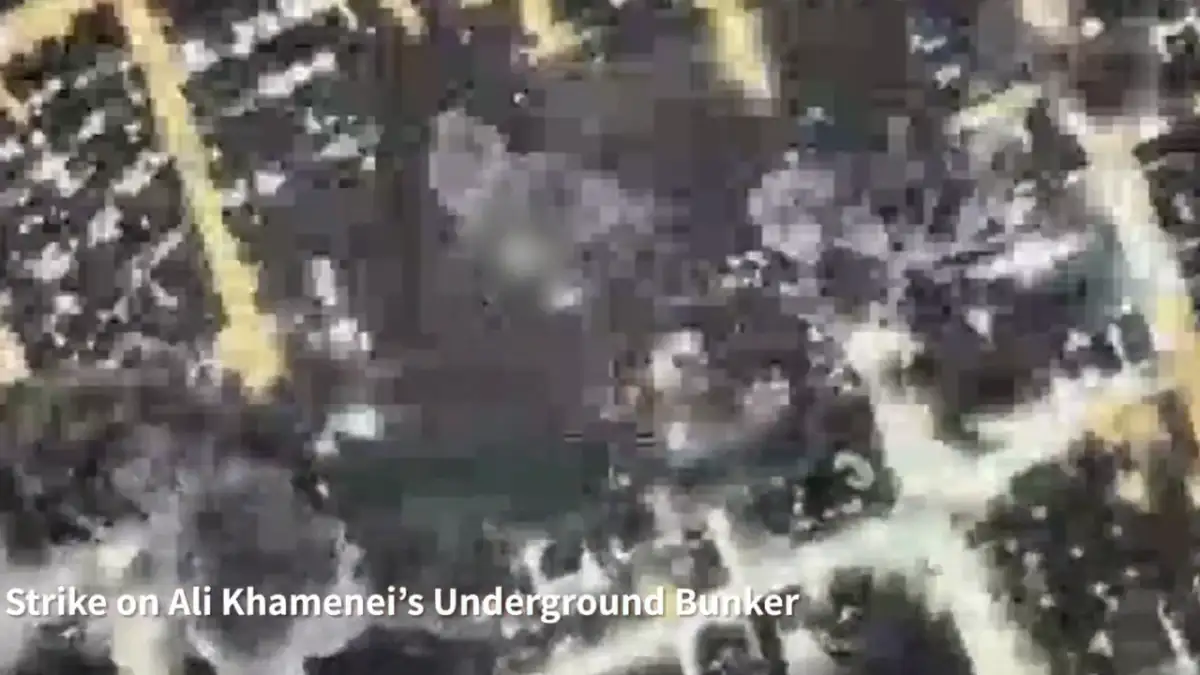
On Friday, 50 Israeli fighter jets executed a coordinated aerial bombardment of an underground bunker in Tehran associated with the late Supreme Leader Ayatollah Ali Khamenei. The operation involved the deployment of 100 munitions targeting the facility, situated beneath a central leadership compound. The tactical strike aims to finalize the physical erasure of Iranian command-and-control capabilities following the confirmed deaths of 40 senior officials, including Khamenei and Chief of Staff Abdolrahim Mousavi, during the opening phase of Operation Epic Fury.
Operational Scope and Regional Impact
The kinetic engagement—now entering its second week—represents a significant expansion of the Geopolitical Destabilization currently unfolding across the Levant and the Persian Gulf. Military maneuvers include:
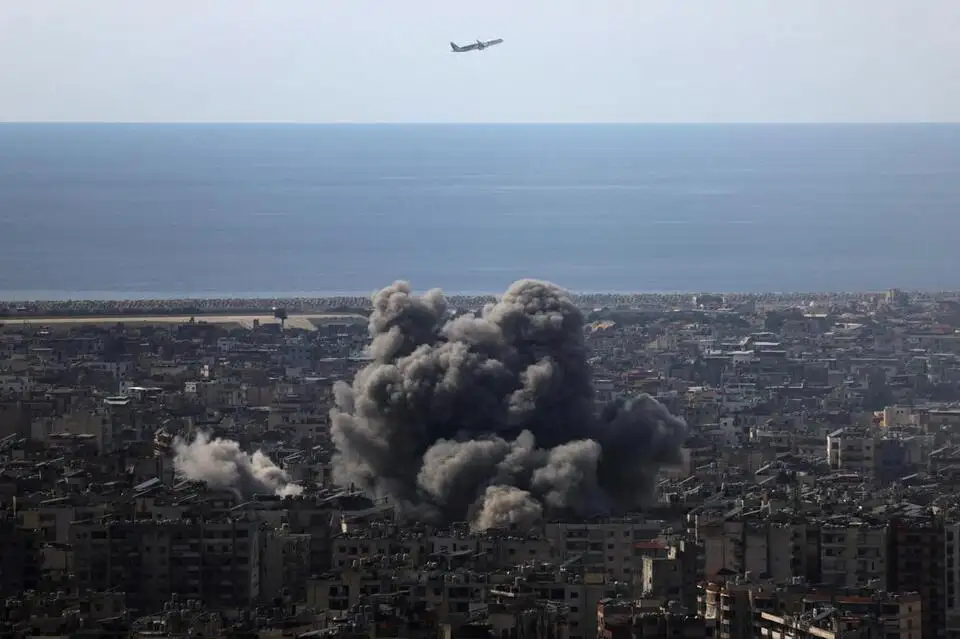
Aerial Saturation: Footage confirms multiple streets in the capital were leveled to ensure the structural destruction of subterranean bunkers.
Maritime Escalation: Parallel to the Tehran strikes, United States assets engaged and reportedly struck an Iranian drone carrier, extending the conflict to the maritime theater.
Defense Degradation: Official Israeli statements claim the current offensive has neutralized the bulk of Iran’s indigenous missile launchers and air defense systems.
| Actor | Stated Intent | Current Status |
|---|---|---|
| Israel | Dismantle leadership nodes | Sustained offensive; 50-jet sorties |
| United States | Support joint "Epic Fury" strikes | Expanding air and maritime campaigns |
| Iran | Retaliatory strikes on US hosts | Infrastructure damage; command paralysis |
| Hezbollah | Front-line engagement | Direct ground resistance in South Lebanon |
Contradictions in Narrative
While military planners describe the operation as a decisive dismantling of the regime's capacity, observers note the ambiguity surrounding the efficacy of these strikes. Some intelligence assessments suggest the Iranian military command retains a level of operational continuity despite the heavy shelling of command nodes.
"Strikes against Tehran are about to surge dramatically." — Pete Hegseth, US Defence Secretary.
Background: The Collapse of Stability
The current volatility traces its origin to the start of Operation Epic Fury, a joint US-Israeli campaign that effectively decapitated the Iranian top brass in a 60-second synchronized assault one week ago. Since that collapse, the conflict has bled into neighboring territories, specifically Lebanon, where local infrastructure and civilian corridors have been disrupted by heavy air operations. The regional economy remains in a state of flux as global markets react to the systematic destruction of major Energy and Military Infrastructure. The persistence of these strikes—targeting sites both confirmed and potentially already compromised—suggests a strategy of absolute denial rather than mere tactical advantage.