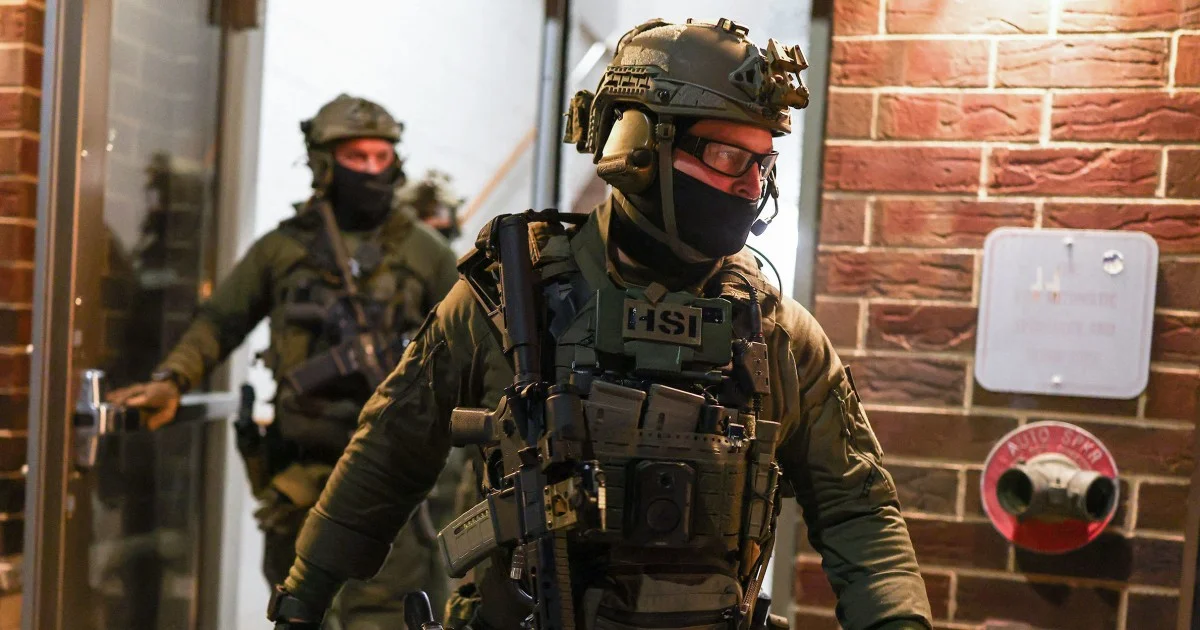
Federal authorities have announced the cessation of "Operation Metro Surge," a significant immigration enforcement initiative in Minnesota. The operation, which spanned several months, resulted in over 4,000 arrests. Its conclusion follows a period marked by widespread protests and two documented deaths involving federal immigration agents, raising questions about the tactics employed and their impact on the community.

Background of Operation Metro Surge
Launched in December, Operation Metro Surge involved U.S. Immigration and Customs Enforcement (ICE) and deployed a substantial federal presence, reportedly up to 3,000 officers at its peak, primarily in the Minneapolis-St. Paul metro area. Federal officials characterized the operation as targeting "dangerous criminals," a claim met with skepticism by many immigrant rights advocates and community members.

The initiative led to the arrest of more than 4,000 individuals.
State officials, including Governor Tim Walz, engaged with federal leaders, including Border Czar Tom Homan and White House Chief of Staff Susie Wiles, regarding the operation's scope and impact.
Governor Walz stated he accepted assurances of a partial withdrawal of federal officers but noted a significant contingent remained.
Public Response and Escalation
The scale of the detentions and the visible federal presence triggered considerable public opposition. Numerous protests erupted across Minnesota, highlighting concerns about family separations and the broader implications of the crackdown.
Read More: UK Rules: Dual Citizens Need British Passport to Enter UK

Activists questioned the official narrative, with some stating, "Don’t believe what they say."
The situation intensified with two fatal shootings involving federal immigration agents, identified as involving Renee Good and Alex Pretti. These incidents fueled demands for greater oversight and intensified public backlash against the operation.
The events led to discussions about funding for the Department of Homeland Security, with Governor Walz indicating that the shootings did not increase his readiness to support such funding.
Federal Justification for Drawdown
Border Czar Tom Homan attributed the decision to end the operation to improved cooperation with local detention facilities. He suggested that increased capacity in these facilities reduced the necessity for extensive federal deployments.

Homan announced the drawdown's commencement, stating it would continue over the following weeks.
He indicated his intention to remain in Minnesota to oversee the process.
The withdrawal began this week, with a phased conclusion anticipated.
Political and Public Reaction
The operation and its subsequent winding down have drawn attention from various political factions and the public. While the Trump administration framed the crackdown as a necessary measure against criminal activity, critics viewed it as an overreach that ensnared innocent individuals.
Read More: US Immigration Rules Change for Yemeni People
A significant portion of Republicans expressed support for the immigration enforcement tactics, according to an AP-NORC poll.
Conversely, a majority of U.S. adults surveyed believed that President Trump had exceeded his authority regarding immigration enforcement in cities.
Independent voters largely disapproved of the federal approach to immigration enforcement in Minnesota.
Broader Context and Comparative Incidents
The events in Minnesota are not isolated. Similar large-scale detentions and protests have occurred elsewhere, raising parallels in the methods of enforcement and the resulting societal tensions.
In Pakistan, a crackdown on protesters involved widespread internet disruptions, barricaded routes, and reportedly thousands of detentions prior to and during demonstrations, with multiple fatalities reported.
In Morocco, accusations of "horrific" abuse have been leveled against authorities concerning detained youth protesters, with reports of extended detentions and alleged beatings.
Expert Analysis
Dr. Maria Rodriguez, a sociologist specializing in immigration studies, commented on the dynamics: "Mass detentions, particularly when perceived as indiscriminate, often serve as a catalyst for community mobilization and deepen distrust between populations and law enforcement. The fatalities underscore the inherent risks associated with aggressive enforcement actions and the critical need for robust accountability mechanisms."
Conclusion and Lingering Questions
The end of Operation Metro Surge marks a significant phase in Minnesota's recent immigration landscape. While federal authorities state the operation is concluding, the repercussions of the mass detentions, protests, and loss of life are likely to resonate.
Read More: Arizona Voters Want ICE Changes
The withdrawal of federal officers is ongoing, with a full cessation expected in the coming weeks.
The two deaths involving federal agents remain a point of contention and are likely to be subjects of further scrutiny.
The long-term impact on community relations and the effectiveness of immigration enforcement strategies in urban areas are critical areas for continued observation.
Sources:
PBS NewsHour: https://www.pbs.org/newshour/politics/homan-announces-end-to-minnesota-immigration-crackdown (Published 17 hours ago) - Provides direct reporting on Border Czar Tom Homan's announcement of the operation's end, detailing arrests and state-federal interactions.
Associated Press (AP News): https://apnews.com/article/minnesota-metro-surge-ice-523d18d5d75c81cbf9f24c602f1884ff (Published 17 hours ago) - Offers a comprehensive overview of the crackdown's end, including protests, fatalities, and activist reactions.
The Independent: https://www.independent.co.uk/news/world/europe/donald-trump-minnesota-tom-homan-keith-ellison-joe-biden-b2919291.html (Published 15 hours ago) - Focuses on the political context, including Republican support for immigration tactics and broader public opinion.
National Herald: https://www.nationalheraldindia.com/international/us-federal-authorities-announce-end-to-immigration-crackdown-in-minnesota (Published 1 day ago) - Reports on the announcement and the tension between federal and state authorities, mentioning the fatalities and public backlash.
Times of India (TOI Shorts): https://timesofindia.indiatimes.com/short-videos/briefs/minnesota-immigration-crackdown-ends-after-protests-deaths-4000-arrests-rock-us-amid-rising-fury/shorttakes/128272694.cms (Published 13 hours ago) - Provides a concise summary of the operation's conclusion, arrests, protests, and the administration's framing versus critics' views.
Globalnews.ca: https://globalnews.ca/news/11664649/minnesota-ice-ending-crackdown/ (Published 16 hours ago) - Details the announcement of the crackdown's end by U.S. authorities, reiterating the number of arrests and the context of protests and deaths.
Read More: Doctor Says Jeffrey Epstein Was Strangled, Not Hanged