

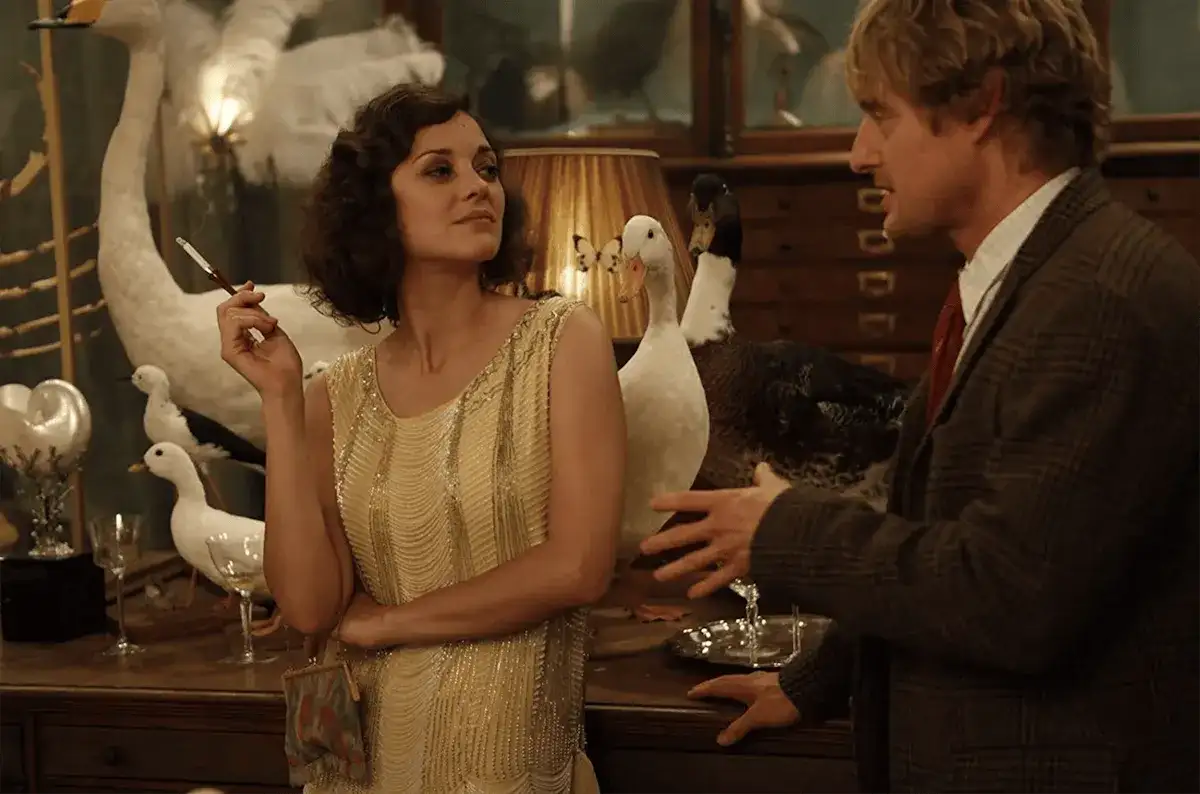
Today, May 20, 2026, marks a retrospective look at Woody Allen’s 2011 film, Midnight in Paris, as it hits its 15-year milestone. Critics and analysts currently frame the work not merely as a romantic comedy, but as a structural critique of the 'Golden Age' fallacy and the mechanics of the time-travel subgenre.
The film utilizes temporal displacement to argue that human dissatisfaction is independent of chronological era, suggesting that nostalgia functions as a psychological barrier rather than a source of revelation.
Analytical Distinctions
The discourse surrounding the film’s endurance focuses on its departure from standard science fiction tropes:
| Element | Role in Midnight in Paris |
|---|---|
| Time Travel | A 'garnish' used to explore internal character discontent. |
| Historical Figures | Symbols of the protagonist’s refusal to confront present-day reality. |
| Narrative Loop | Causal paradoxes (e.g., influencing Luis Buñuel) serve to cement the protagonist's integration into the past. |
The Mechanics of Discontent
At the center of the narrative, the protagonist Gil Pender—played by Owen Wilson—functions as a conduit for a persistent modern malaise. His journey through the 1920s is often interpreted as an attempt to resolve unfulfilled professional and personal ambitions by retreating into an idealized history.
Read More: Tamil Cinema Loses K. Bhagyaraj and Bharathiraja, Ending An Era
The film forces a confrontation between the character's expectations and the reality that every era, including the one he escapes, contains its own form of "unpleasantness."
Critical reception notes that while the dialogue is polished and the setting romanticized, the underlying thesis remains cynical: that individuals are "doomed to be dissatisfied" regardless of their place in time.
Contextual Background
Initially released in 2011, Midnight in Paris has persisted in cultural discourse due to its dual nature. It is simultaneously consumed as an aesthetic exploration of Paris and a structural study on causal loops and sci-fi tropes.
Unlike traditional time-travel cinema, which often treats the manipulation of time as a puzzle to be solved or a world to be altered, this film uses the device as a diagnostic tool for the lead character's personality. Fifteen years later, the consensus remains divided between those who view the work as a celebration of artistic imagination and those who identify it as a scathing critique of the human tendency toward wistfulness and escapism. The film is currently available for streaming on platforms such as Tubi.





:max_bytes(150000):strip_icc():focal(799x0:801x2)/nyc-sky-taylor-swift-travis-kelce-wedding-070326-2dc0d912004b400eac2c8c8b5adeff2a.jpg)