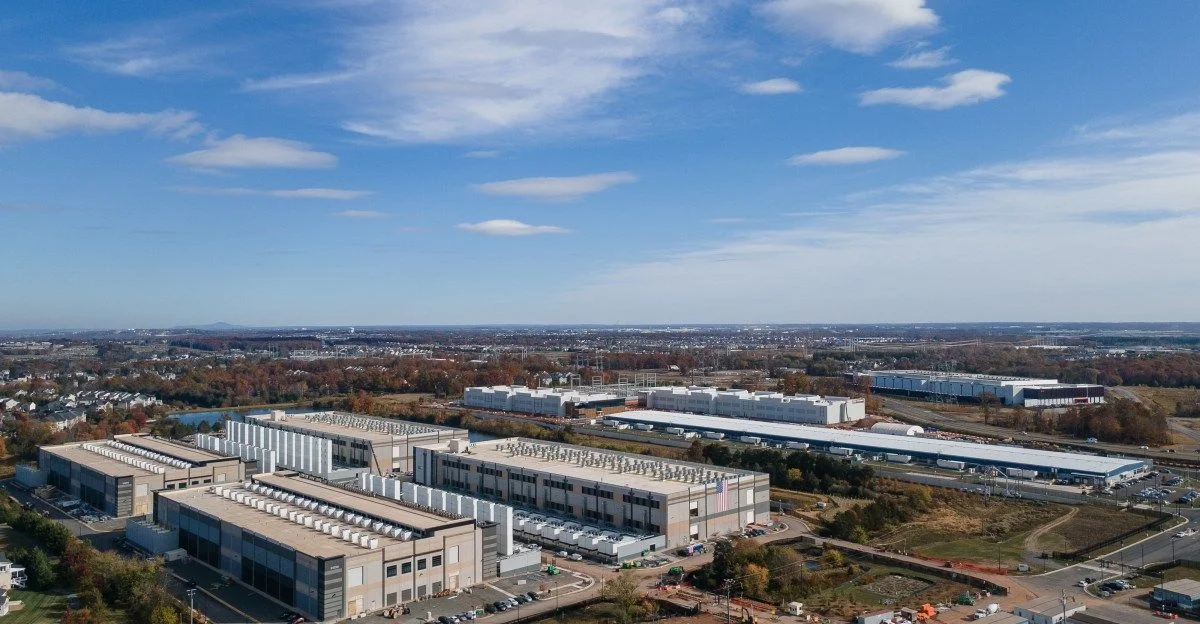
Microsoft has announced its investigation into high-temperature superconducting (HTS) technology as a means to improve power delivery efficiency and reduce the physical footprint of its data centers. This initiative aims to address the escalating power demands driven by artificial intelligence (AI) workloads and a broader push for greater datacenter capacity. While the company highlights potential benefits, the technology remains in its nascent stages, with widespread adoption yet to occur.
The increasing reliance on AI and the continuous expansion of data center infrastructure present significant challenges related to power consumption and thermal management. Traditional power delivery systems, relying on copper and aluminum, require substantial space and infrastructure. Microsoft's exploration of HTS technology, drawing parallels with advancements in fusion energy research, signals a potential shift towards more compact and efficient power solutions within its data centers and potentially for the wider grid.
Timeline and Key Developments
November 2025: Microsoft and its partner VEIR conducted a pilot demonstration of an HTS power delivery system in a simulated data hall, successfully transmitting 3 megawatts (MW) of power through a single HTS cable. VEIR, which originally focused on long-distance power transmission, has reportedly pivoted towards the data center sector due to the immediate use case presented by AI.
November 2025: TechCrunch reported that VEIR, a company backed by Microsoft, had been discussing its megawatt-class superconducting cables with data centers for several years. VEIR developed a simulated data center environment for demonstration purposes, claiming its HTS cables require significantly less space than copper alternatives.
September 2025: Microsoft unveiled tests of a new microfluidics cooling approach, designed to address the heat generated by increasingly powerful AI chips. This innovation aims to enable denser, faster data centers while reducing energy costs associated with cooling.
Ongoing: Microsoft's broader research and development efforts continue to explore advanced cooling and power infrastructure solutions to support the growing demands of AI and cloud computing.
Actors and Their Roles
Microsoft: The technology giant is actively investigating and promoting the use of HTS technology for its data centers. It seeks to leverage these advancements for increased power density, improved efficiency, and a reduced environmental impact. Microsoft's backing of VEIR further underscores its strategic interest in this area.
VEIR: A company focused on HTS technology, VEIR has collaborated with Microsoft on pilot demonstrations. VEIR's technology aims to deliver power with minimal resistance, potentially allowing for more compact and efficient power transmission systems. The company's strategic shift towards data centers suggests a recognition of the immediate market opportunities.
AI Industry: The rapid growth of AI is a primary driver for the demand for more powerful and efficient data centers. The associated infrastructure requirements, including power delivery and cooling, are being pushed to their limits, creating a strong incentive for innovation.
Fusion Research Community: Advancements in high-temperature superconducting tape, developed for fusion energy projects, are seen as a potential source of technology and expertise that can be adapted for data center applications.
Technical Overview of HTS in Data Centers
High-temperature superconductors (HTS) are materials that can conduct electricity with almost zero resistance when cooled to specific temperatures, which are higher than those required for traditional superconductors but still well below ambient temperatures. This property offers several potential advantages for data center operations:
Read More: Why Some Programmers Choose Special Languages
Increased Power Density: HTS cables can carry significantly more electrical current than conventional copper or aluminum wires of the same size. This allows for more power to be delivered to racks and servers within a smaller physical space.
Reduced Space Requirements: Due to their high current-carrying capacity, HTS power lines can be narrower and require less extensive infrastructure, such as smaller trenches or conduits, compared to traditional cabling.
Improved Efficiency: By minimizing electrical resistance, HTS technology can reduce energy loss during power transmission, leading to greater overall efficiency within the data center.
Potential for Greener Infrastructure: Microsoft has suggested that HTS could reduce the "physical and social footprint of the power infrastructure," potentially lessening the impact on local communities.
Challenges and Considerations
Despite the promising attributes of HTS technology, several hurdles remain before its widespread adoption:
Read More: UK Economy Grew Very Little at End of 2025
Cost and Availability of Materials: Superconducting materials can be expensive, and their supply chains are not yet fully established for large-scale deployment in the power sector.
Cooling Requirements: While "high-temperature" superconductors operate at warmer temperatures than conventional ones, they still require cryogenic cooling systems, which add complexity and energy overhead.
Maturity of Technology: HTS cables are not yet widely deployed, even in conventional grid-scale operations. The technology is still undergoing development and testing, particularly for the specific demands of data center environments.
Integration Complexity: Integrating HTS power systems into existing data center architectures and electrical grids presents engineering challenges.
Analysis of Microsoft's Position
Microsoft's public endorsement of HTS technology, particularly through its partnership with VEIR, indicates a proactive stance on addressing the power challenges of modern computing. The company's articulation of benefits, such as reduced physical footprint and potential efficiency gains, aligns with its broader goals of sustainable and scalable data center operations.
Read More: Software Jobs Changing, Not Ending, Because of AI
However, some assessments suggest that Microsoft's claims regarding HTS are tempered by the technology's immaturity. The acknowledgement that HTS cables are not widely deployed and that superconducting materials are not readily available suggests that significant development and investment are still required. The benefits highlighted, while real in principle, are framed as future possibilities rather than immediate impacts.
Microsoft's interest also extends to complementary technologies, such as microfluidics cooling, which aims to tackle the heat generated by AI chips. This dual approach – addressing both power delivery and heat dissipation – suggests a holistic strategy for future data center design.
Evidence and Observations
Pilot Demonstrations: Microsoft and VEIR's successful pilot in November 2025, delivering 3 MW via a single HTS cable, provides empirical evidence of the technology's capability in a controlled environment.
VEIR's Claims: VEIR has stated its HTS cables require 20 times less space than copper and can carry power five times farther, offering quantitative metrics for the technology's advantages.
Industry Reports: Publications like The Register have noted that HTS cables are expensive and that superconducting materials are not readily available, casting a critical light on the near-term viability of widespread adoption.
Microsoft's Azure Blog: The company's own publications emphasize how HTS supports "smaller, quieter, and far less intrusive systems" and enables "high-density, high-performance workloads with improved efficiency."
Broader Context of AI Infrastructure: Warnings from institutions like Goldman Sachs about the potential risks of the AI infrastructure "binge" underscore the financial and operational pressures driving the search for solutions like HTS.
Expert Perspectives
"While the potential for superconductors to revolutionize power transmission is significant, the practical challenges of cost, scalability, and integration mean that widespread implementation in data centers is likely years away. Microsoft's early exploration is commendable, but it is important to distinguish between ambitious research and immediate operational deployment."— Anonymous industry analyst specializing in data center infrastructure
"The physics of superconductivity offer undeniable advantages in terms of efficiency and power density. The key lies in overcoming the engineering and economic barriers to make these benefits a reality for large-scale applications like data centers. Advances in material science and cryogenic engineering are crucial."— Quoted perspective from academic research on superconductivity
Conclusion and Implications
Microsoft's engagement with high-temperature superconducting technology signifies a forward-looking approach to managing the immense power and space demands of AI-driven data centers. The technology holds the promise of more efficient, denser, and potentially more sustainable data center infrastructure.
Read More: Companies Need to Build Strength into Daily Work
However, the current state of HTS technology presents substantial challenges. The expense of materials, the need for cryogenic cooling, and the overall immaturity of widespread deployment mean that significant hurdles remain before HTS can be considered a mainstream solution. The successful pilot demonstration with VEIR is a critical step, but it represents a foundational achievement rather than a solution ready for immediate, large-scale implementation.
The implications of this exploration are twofold:
For Microsoft: This initiative positions Microsoft as an innovator in datacenter technology, potentially offering a competitive advantage in the long term. It also necessitates continued investment in research and development, as well as strategic partnerships to mature the technology.
For the Industry: Microsoft's focus on HTS could accelerate research and development across the sector, potentially spurring further innovation in power delivery and datacenter design. It also highlights the critical need for scalable and efficient power solutions to support the continued growth of AI and other data-intensive technologies.
Read More: Schools Watch Student Devices, Raising Privacy Worries
Further developments will likely involve continued pilot programs, advancements in material science, and efforts to reduce the cost and complexity of HTS systems. The timeline for widespread adoption remains uncertain and contingent on overcoming the inherent technological and economic challenges.
Sources
The Register: "Microsoft touts immature HTS tech for datacenter efficiency" - Published: 15 minutes ago. Link: https://www.theregister.com/2026/02/10/microsofthightemperaturesuperconductorshopium/
Context: This source offers a critical perspective on Microsoft's announcement, emphasizing the nascent stage of HTS technology and the associated challenges.
Azure Microsoft Blog: "Can high-temperature superconductors transform the power infrastructure of datacenters?" - Published: 22 hours ago. Link: https://azure.microsoft.com/en-us/blog/can-high-temperature-superconductors-transform-the-power-infrastructure-of-datacenters/
Context: This is Microsoft's official publication detailing its perspective on the potential benefits of HTS for data center power infrastructure.
The Verge: "Microsoft wants to rewire data centers to save space" - Published: 5 hours ago. Link: https://www.theverge.com/science/876083/microsoft-ai-data-center-superconductor
Context: This article provides an overview of Microsoft's goals for using HTS to create more compact data centers.
Latitude Media: "Microsoft wants to borrow superconducting tape from fusion" - Published: 22 hours ago. Link: https://www.latitudemedia.com/news/microsoft-wants-to-borrow-superconducting-tape-from-fusion/
Context: This source connects Microsoft's interest in HTS to advancements in fusion research and highlights the VEIR pilot demonstration.
The Outpost: "Microsoft Tests Superconducting Cables to Tackle AI Power Demands and Shrink Data Centers" - Published: 22 hours ago. Link: https://theoutpost.ai/news-story/microsoft-tests-superconducting-cables-to-tackle-ai-power-demands-and-shrink-data-centers-23678/
Context: This article details Microsoft's exploration of HTS cables to meet AI power demands and reduce data center size.
TechCrunch: "Exclusive: Microsoft-backed Veir is bringing superconductors to data centers" - Published: Nov 12, 2025. Link: https://techcrunch.com/2025/11/12/microsoft-backed-veir-targets-data-centers-for-its-megawatt-class-superconductors/
Context: This report provides details on VEIR's efforts and its focus on the data center market, supported by Microsoft.
CryptoRank.io: "Revolutionary Superconductors Transform Data Centers: Microsoft-Backed VEIR’s Breakthrough Solution for AI Power Demands" - Seen on: AOL. Link: https://cryptorank.io/news/feed/80664-veir-superconductors-data-centers-microsoft
Context: This source emphasizes Microsoft's strategic investment in VEIR and the potential of superconductors for AI power demands.
TechRadar: "Microsoft wants to solve AI data center overheating with its latest cooling innovation - microfluidics" - Published: Sep 24, 2025. Link: https://www.techradar.com/pro/microsoft-unveils-advanced-ai-cooling-which-lowers-heat-cuts-energy-use-and-could-lead-to-more-powerful-data-centers
Context: This article covers Microsoft's parallel research into microfluidics cooling, a complementary technology for addressing AI hardware challenges.
Read More: Sir Jim Ratcliffe Called Hypocrite for Immigration Comments