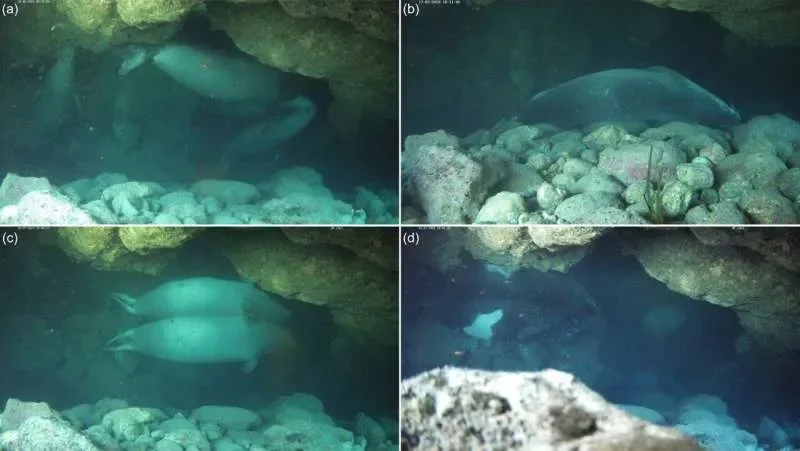
Mediterranean monk seals, among the planet's most imperiled marine mammals, are increasingly seeking refuge in obscure underwater "bubble caves." This behavior shift, documented recently, highlights a desperate adaptation to escalating human presence along coastlines once considered remote havens. These animals, needing dry land for critical life functions like resting, molting, birthing, and nursing pups, are finding traditional beach habitats too fraught with disturbance. The seals' retreat into these less accessible, submerged spaces offers a stark visual of their precarious existence, forced to trade familiar shores for deeper, more secluded sanctuaries.

Observations reveal that these seals spend extended periods within the bubble caves, far longer than in more easily reached, yet disturbed, main caves. Within these confined, underwater domes, the seals exhibit a range of behaviors, from floating at the surface to sleeping upright or remaining motionless on the seabed. The shift is driven by escalating human activity, including day trippers, private yachts, and attempts to interact with the animals, which disrupt their natural behaviors and prevent them from utilizing preferred resting and breeding grounds.
Read More: Clean air efforts may weaken Atlantic ocean current

Coastal Retreat, Underwater Havens
Historically, Mediterranean monk seals would haul out on open beaches. However, increasing accessibility of once-remote coastlines, by various vessels from hired boats to private yachts, has made these areas less secure. This human encroachment, particularly during the critical summer months, generates stress and alters the seals' natural patterns. The bubble caves, though perhaps less comfortable than larger caverns, may offer a crucial advantage: enhanced protection from unwanted human interference. Biologist Joan Gonzalvo, director of the Ionian Dolphin Project, notes that knowledge of the animals' habitat and behavior is vital for their protection.

A Species on the Brink
The Mediterranean monk seal is one of the world's rarest seal species, with individuals reaching up to 2.8 meters in length and weighing over 300 kilograms. This large size, coupled with their endangered status, underscores the urgency of conservation efforts. On at least two occasions, human intrusions into breeding caves have resulted in the separation of mothers from their pups, a catastrophic event for this already vulnerable population.
Read More: Fukushima Wild Pigs Grow in Number in No-Go Zone, Show New Traits by 2026

Formicula, a significant habitat for these seals, is slated to become part of the new Ionian Marine Protected Area (MPA). While conservation measures, like those around Piperi island, have shown potential for success, the management and effectiveness of newer, larger MPAs remain subjects of scrutiny. Conservationists warn that unregulated marine tourism represents a rapidly escalating danger to these ancient creatures. Conservation efforts in Greece began in the late 1980s, with organizations like the Hellenic Society for Protection of the Monk Seal playing a role in rescuing injured and orphaned animals.