

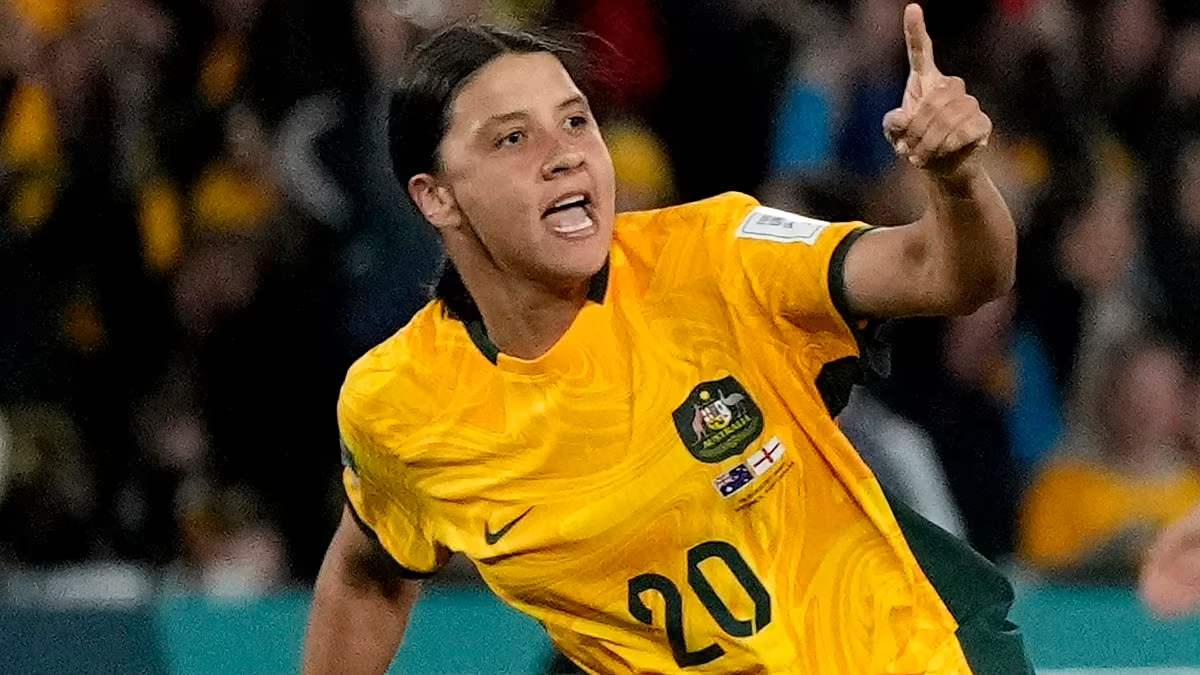
Questions swirl around program's depth and future direction.
The Matildas program faces a critical juncture, with persistent critiques from figures within and around the team highlighting significant structural weaknesses. These concerns point to a lack of planned succession, inadequate domestic league support, and questions about the team's actual performance metrics versus its public profile.
Matildas coach Tom Sermanni has voiced stark criticisms regarding the team's current state and future prospects. In a rare outburst, Sermanni described the A-League Women's competition as "not good enough" and suggested a severe lack of preparedness for upcoming challenges. This comes amidst a backdrop of recent losses and an apparent failure to cultivate emerging talent over the past four years.

The domestic league, intended as a breeding ground for national talent, is seen by some as having regressed in professionalism since its inception, despite having former full-time coaches and staff involved.
Even as many Matildas players have international experience, a significant portion still participate in the domestic league, underscoring its importance and its current perceived shortcomings.
The arrival of key players like Steph Catley, Caitlin Foord, and Kyra Cooney-Cross from European commitments has raised questions about their immediate readiness for national team duty.
Further complicating the narrative, departing coach Tony Gustavsson faced intense scrutiny following the team's exit from the Olympics. Reports suggested player dissatisfaction throughout his tenure, with some individuals characterizing his four years at the helm as "four years of hell." This period was marked by a failure to build on previous successes, with disappointing results against teams like Germany, the USA, and a narrow win against Zambia.
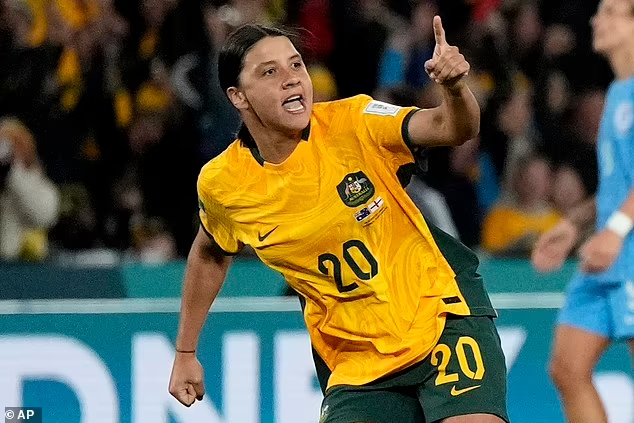
Program's Identity Under Scrutiny
The team's public image, bolstered by a string of sold-out home games and players in top global leagues, appears to be diverging from its on-field results. Questions have been raised about the strength of opposition faced and whether the team's achievements are genuinely reflective of its depth and tactical prowess.
Read More: Warriors Beat Roosters 42-18 in First Game of Season

The national team's reliance on a consistent core group of players over an extended period has, according to Sermanni, limited opportunities for new talent to emerge.
Recent performances against Brazil have been poor, leading to a succession of losses and exposing the vulnerabilities of a team missing its star players like Sam Kerr and Mary Fowler.
The preparation for future tournaments, such as the upcoming Asian Cup, is seen as potentially hampered by these underlying issues.
The Long Road Back
The discussion extends to the overall structure of Australian women's football, with a need to support the Matildas program effectively. The success of players abroad is juxtaposed with the perceived stagnation of the domestic league and the national team's strategic planning. The absence of clear pathways and consistent development programs seems to be a recurring theme.
The critical remarks suggest a deeper malaise within the program, extending beyond immediate coaching decisions. It points towards a need for a fundamental re-evaluation of how talent is nurtured, how the domestic competition is structured, and how long-term success is strategically pursued rather than assumed.