Evidence Suggests Ancient Martian Conditions Could Have Harbored Microbial Life
Recent findings from NASA's Perseverance rover at a location dubbed 'Cheyava Falls' on Mars have presented what some scientists consider the clearest indications yet of potential ancient life. The rover identified a rock sample exhibiting unique 'leopard spots,' a feature unlike any previously observed on the planet. This rock carries the signature of two iron-rich minerals, vivianite and greigite, substances that on Earth are associated with organic matter and environments where microbial life thrives. The presence of these minerals, alongside organic compounds—the fundamental building blocks of life as we understand it—suggests that the mudstone at Cheyava Falls once experienced conditions conducive to microbial organisms.

Minerals and Molecules Point to Past Habitability
The specific minerals identified, vivianite and greigite, are notable. On Earth, Vivianite is commonly found in sediments, peat bogs, and near decaying organic matter. Greigite, another iron sulfide, can be produced by certain forms of microbial life on our own planet. The combination of these minerals within the Cheyava Falls rock, along with the detection of carbon-based molecules, fuels speculation about its biological origins. NASA has categorized these findings as 'potential biosignatures'—substances or structures that might originate from life but require further investigation to confirm.
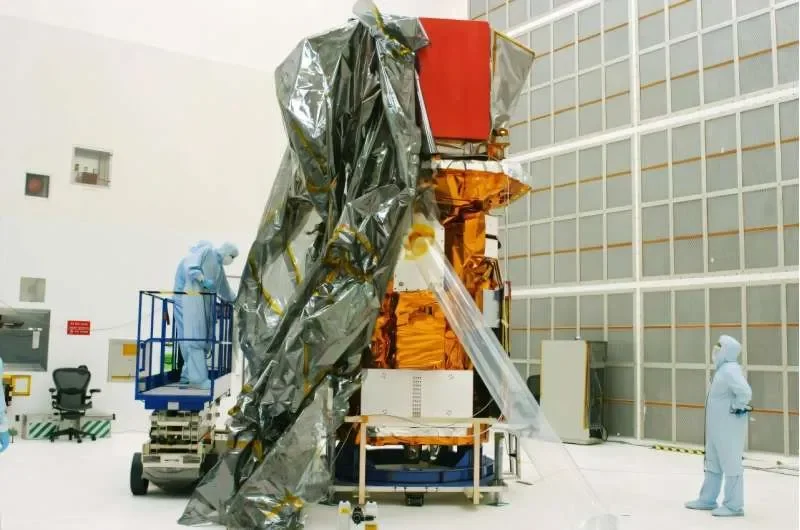
Read More: NASA Robot Mission Launched to Raise Swift Telescope Orbit, Add 10 Years

"A potential biosignature is a substance or structure that might have a biological origin but requires more data or further study before a conclusion can be reached about the absence or presence of life."
The analysis indicates that water likely permeated this region of Mars long ago, and the mudstone formed under conditions typically associated with microbial existence. NASA plans to return the rock sample to Earth for more in-depth analysis, a move intended to increase confidence in deciphering any potential signals of extraterrestrial life.

Scientific Community Grapples with Ambiguity
The broader scientific community is approaching these discoveries with a mix of intrigue and caution. While the evidence is compelling, the path to definitively declaring the presence of past alien life is complex and fraught with uncertainty. The situation highlights a gap in understanding how scientific consensus forms around such momentous claims, with a lack of systematic data on how researchers respond to new evidence. The evaluation of scientific opinion, through metrics like agreement, neutrality, and disagreement, becomes crucial in navigating these groundbreaking, yet unconfirmed, findings.
Read More: Mars Probe Lost After Unidentified Object Encounter
"Scientific knowledge advances through uncertainty, disagreement and gradual revision."
The discovery at Cheyava Falls, alongside ongoing investigations into exoplanets like K2-18b, underscores the persistent human quest to answer fundamental questions about life beyond Earth. However, these endeavors are built on meticulous, often ambiguous, scientific processes.