

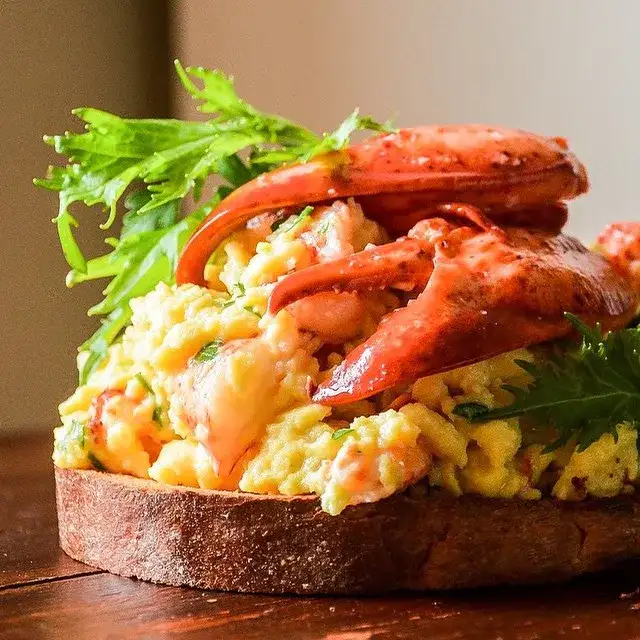
The industrial assembly of three 4-ounce Maine lobster tails into a slurry of 12 to 15 large eggs defines the current peak of domestic brunch labor. This specific ratio, often documented in high-circulation papers and food repositories, requires 18 asparagus spears and half a stick of unsalted butter to achieve a texture described by curators as "custard-like." The outcome is typically served atop or within brioche, a high-fat bread that acts as a structural stabilizer for the heavy, wet proteins.
Technical Requirements and Hardware
| Component | Quantity | Physical State |
|---|---|---|
| Lobster | 12 oz | Steamed, then sliced or chopped |
| Eggs | 12-15 | Beaten, held at low temperature |
| Fat | 4 tbsp | Unsalted butter + olive oil finish |
| Alliums | 1/4 cup | Finely chopped chives |
| Greenery | 18 spears | Asparagus, trimmed of woody ends |
The Ritual of the Fold
The process demands a specific timing to avoid the "rubbery" failure of over-cooked shellfish.
The lobster meat is introduced only when the eggs reach a half-set state.
Heat must remain low to maintain a creamy viscosity.
Chives are integrated during the scramble, while salt and pepper are applied according to individual tolerance for minerals.
Asparagus serves as a textural counterpoint, either seared separately or integrated as a base.
"Low heat is key to creamy, not rubbery, scrambled eggs," according to instructions found in culinary guides.
Regional Variations and Flavor Additives
While the core remains egg and crustacean, the secondary seasonings vary by the creator's intent to mask or highlight the lobster’s salinity.
The Spice Route: Some proponents suggest a pinch of cayenne pepper or tarragon to alter the aromatic profile.
The Acidic Lean: Side servings of homemade tomato puree or confit are suggested to cut through the heavy lipids of the butter and brioche.
Dairy Substitutes: Occasional mentions of goat cheese appear in more localized versions of the dish, though this risks overwhelming the delicate flavor of the Maine tail.
Background: The Marketing of Decadence
The insistence on Maine lobster points to a geographical branding that suggests quality, though many home cooks utilize frozen meat for convenience. This dish exists in a space between a sandwich and an open-faced plated meal, moving from a "simple" breakfast to a "lavish" performance of wealth depending on the scarcity of the ingredients. The recipes prioritize a specific aesthetic of "overflowing" brioche buns, reinforcing the visual of excess that has become standard for mid-morning social dining since the early 2020s.
Read More: Paella Recipe Updates: Bomba Rice and No Stir Rule
:max_bytes(150000):strip_icc()/image-460-7bdc9b0a055246f0b95bfb1b800773ec.jpg)



:max_bytes(150000):strip_icc()/2435672-black-bean-and-corn-quesadillas-Allrecipes-Magazine-1x1-1-2e864f6d676f4645936ff27ca1021db6.jpg)