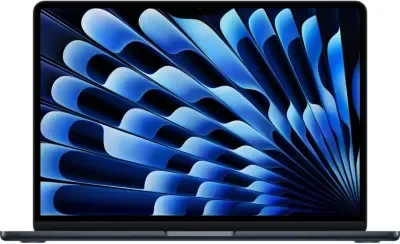
Chip Upgrade Marks Evolutionary, Not Revolutionary, Step
The recently released M5 MacBook Pro series presents a curious case of incremental advancement, primarily centered around its namesake chip. While benchmarks suggest gains, particularly in single-core performance, the broader landscape reveals a nuanced picture where some previous models, like the M4 Pro and Max, may still hold their ground for specific, demanding workloads. This new iteration offers a substantial upgrade for users migrating from M4 or earlier generations, promising tangible improvements across creative, computational, and even purported AI tasks.
The M5 MacBook Pro lineup, including M5 Pro and M5 Max variants, introduces a new chip based on an advanced 3nm process.

Performance Nuances Emerge
The M5 Pro chip boasts a 15-core CPU and 16-core GPU, paired with 24GB of RAM and 1TB of SSD storage in its initial configurations. The M5 Max models push this further, with the 14-inch variant offering an 18-core CPU, 32-core GPU, and 36GB of RAM, accompanied by 2TB of storage. Notably, the M5 Max equips the 16-inch model with up to 16 hours of wireless web browsing and 22 hours of video streaming, a slight edge over its M4 predecessor.
Read More: Chrome mimeHandler API lets extensions handle file types
However, the narrative of overwhelming superiority is complicated. Reports indicate that in certain multi-threaded workloads, the M4 Pro may still outperform the base M5 chip. Furthermore, while the M5 MacBook Pro retains three Thunderbolt/USB 4 ports, it does not feature the newer Thunderbolt 5 protocol found in some M4 Pro and Max configurations. This detail might steer users prioritizing the absolute latest in connectivity towards older, higher-tier models.

Design and Display Remain Consistent
Visually, the M5 MacBook Pro largely mirrors its predecessors. It retains the "beautiful, bright XDR screen" and a familiar array of ports, suggesting Apple's design philosophy remains firmly entrenched. The base model, for instance, is equipped with a single fan, a point of note for thermal considerations.
Read More: Lenovo Legion 7 Laptop With RTX 5070 Gets Tested in April 2026
A Look Back: The M5's Predecessors
The M5 MacBook Pro series arrives following a lineage of chip developments, including the M4, M3, and M2 generations, each offering its own set of advancements. Apple's historical struggle to define the "low-end" MacBook Pro is mentioned, with the current M5 iteration seemingly consolidating desirable features into a more accessible package, even if it means fewer GPU cores compared to the higher-end M5 Pro and Max chips. The introduction of the M5 chip itself is described as a "very minor update overall" in terms of the laptop's broader feature set, indicating that the core changes are primarily internal and chip-focused.
The M5 MacBook Pro continues Apple's tradition of integrating proprietary silicon into its laptops, a strategy that has consistently aimed to balance performance, power efficiency, and ecosystem integration. The performance metrics, while showing gains, are presented within the context of an already competitive market, where rival machines from brands like Lenovo, HP, and Dell are also being benchmarked and considered.
Read More: BEREC Asks for Mobile Network API Ideas from Developers