State Legislators Vote to Eliminate Majority-Black District Following Supreme Court Decision
The Louisiana state senate, on Thursday, May 14, 2026, approved a new congressional map, advancing a plan that would do away with one of the state's two majority-Black congressional districts. The vote, which concluded with a 27-10 tally, stands as a significant shift in the state's political landscape, potentially tipping the scales towards a 5-1 Republican advantage in Louisiana's U.S. House delegation. This development arrives swiftly after a recent U.S. Supreme Court ruling that dismantled the state's previous congressional map.

The core of this legislative maneuver centers on redrawing district boundaries in the wake of the Supreme Court's decision in Louisiana v. Callais. This ruling effectively curtailed the strength of the Voting Rights Act (VRA), creating an opening for states, particularly in the South, to re-evaluate and alter their existing electoral maps.
Read More: Taiwan Holds Nantou County Drills to Prepare for State Collapse
Republican state senator Jay Morris, who sponsored the contentious bill, reportedly defended the proposed districts during a lengthy floor debate. However, this defense was met with sharp opposition from Democratic lawmakers. State senator Sidney Barthelemy II, a Democrat, is noted to have actively pushed back against the proposal.
Political Repercussions and Republican Strategy
The move by the Louisiana legislature follows a pattern seen in other Southern states. Following the Supreme Court's decision, which struck down a prior map that had been ordered to include a second majority-Black district, Republican officials have moved to implement new boundaries. This effort aims to consolidate Republican control, with the new map projected to create a five-Republican, one-Democrat split in the state's congressional representation, a stark contrast to the current 4-2 split.

Republican Governor Jeff Landry had previously postponed Louisiana's U.S. House primaries, originally slated for Saturday, May 16, 2026. This postponement occurred in the aftermath of the Supreme Court's ruling, creating a window for legislative action on redistricting.
Sources indicate that Republican leaders, including Senate President Cameron Henry, acknowledged that pursuing a full 6-0 Republican map was deemed "infeasible." The current advancement of the map still requires passage through the full state senate and subsequent approval from the state House of Representatives.
Read More: Louisiana AG Liz Murrill indicted in New Orleans court dispute
Opposition and Legal Challenges
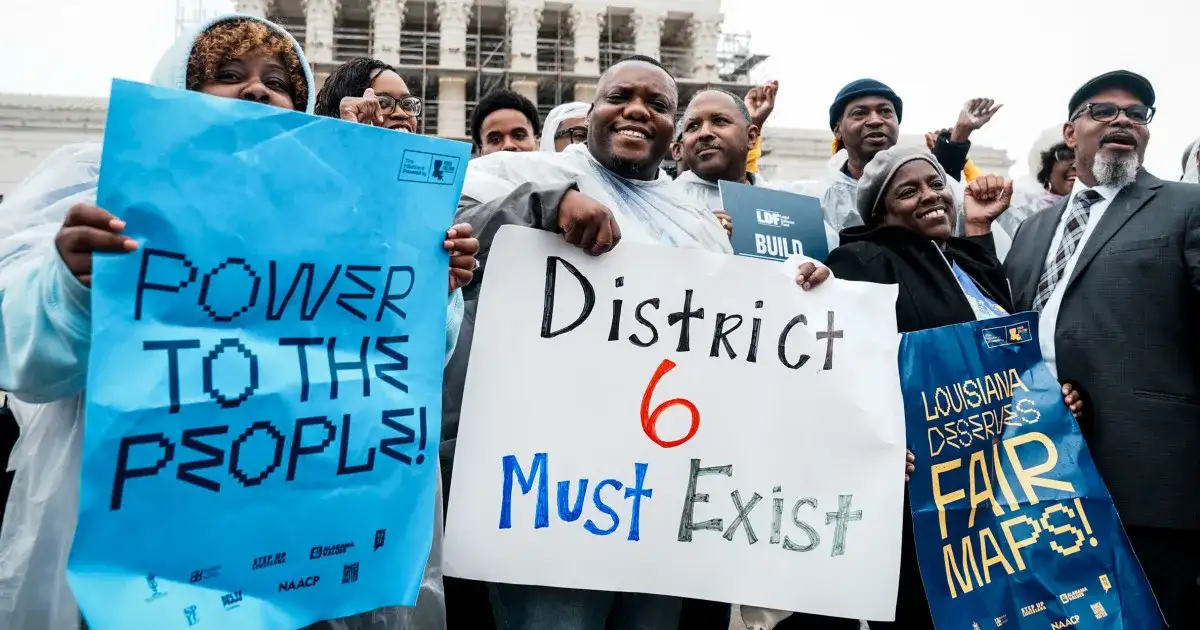
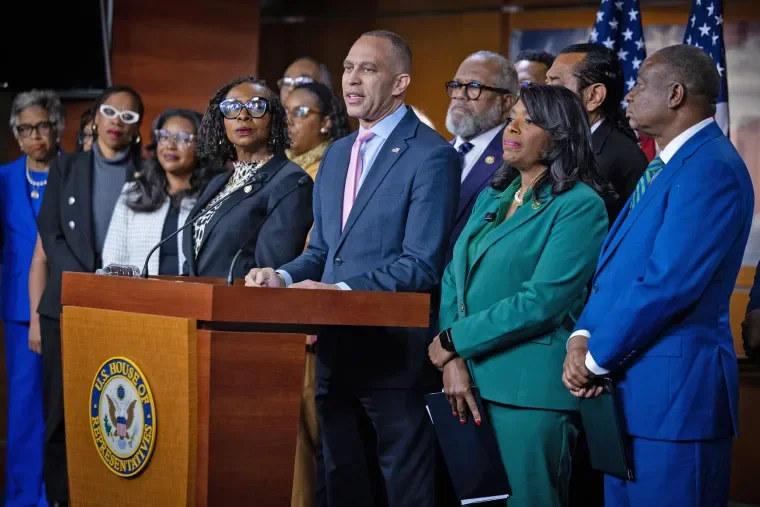
Civil rights organizations have voiced strong condemnation of the legislative action. The NAACP has explicitly denounced the committee's move, framing it as an attempt to "erase" majority-Black districts and limit Black political influence. Voting rights advocates express concerns that such coordinated redistricting efforts could have lasting impacts, potentially eroding Black representation for generations. The NAACP has already taken legal action in other states, such as filing suit to block new maps in Tennessee.
Details of the legislative process reveal heightened tensions. During committee meetings, Democratic legislators, including Royce Duplessis, engaged in heated exchanges with proponents of the new map. It was noted that not a single person reportedly submitted testimony in support of Senator Morris's map during these proceedings.
Read More: FBI Analysts Review Georgia 2020 Election Data in Fulton County
Historical Context and Supreme Court Rulings
The legislative action is directly linked to the U.S. Supreme Court's recent pronouncements on redistricting. In April 2026, the Court struck down Louisiana's congressional map, finding it to be an unconstitutional racial gerrymander. This decision overturned a lower federal court's order that had mandated the creation of a second majority-Black district, ruling that the previous map relied too heavily on race.
This Louisiana case, Louisiana v. Callais, is seen as a pivotal moment for the Voting Rights Act. The Trump administration had previously filed a brief supporting the striking down of the map that included two majority-Black districts. The subsequent ruling has emboldened similar redistricting efforts in states like Tennessee and Alabama, which have also moved to implement new maps following the Supreme Court's guidance on how race can be considered in district creation. Democrats in other states, such as California, have also responded by drawing new districts.
Read More: Louisiana Ends Vehicle Inspection Stickers for Most Drivers