Thousands Converge on Downing Street, Echoes of Division Resonate
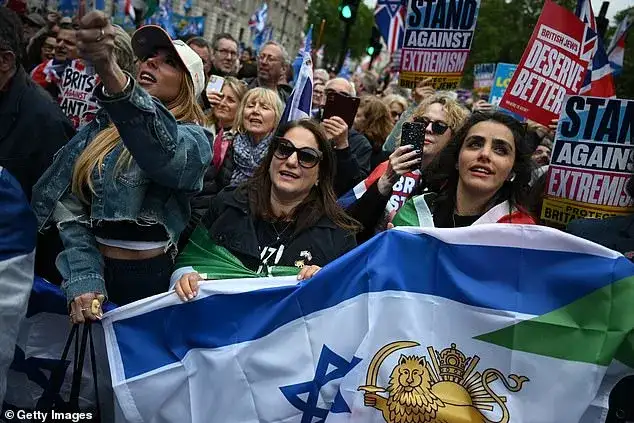
London—Thousands gathered outside Downing Street on Sunday, a significant demonstration aimed at protesting a perceived surge in antisemitic incidents. The rally, organized by prominent Jewish community bodies including the Board of Deputies of British Jews and the Jewish Leadership Council, sought to project a united front against rising hate crimes, which have included violent assaults. The event, however, was not without its internal friction, particularly concerning the invited political participants and the framing of the antisemitism debate.

The core of the demonstration focused on an increase in antisemitic violence and hate crimes. Organizers highlighted specific incidents, such as the stabbing of two British Jews in Golders Green on April 29th, as direct impetus for the rally. Speakers at the event, including politicians and interfaith leaders, called for societal unity and government action. Topics raised included calls for a zero-tolerance approach from law enforcement, changes to counter-terrorism programs, and the proscription of Iran's Revolutionary Guard Corps.
Read More: Taiwan Holds Nantou County Drills to Prepare for State Collapse

Political Fissures Emerge Over Rally Inclusions
The inclusion of Nigel Farage, leader of Reform UK, proved a significant point of contention, creating a visible rift within the Jewish community and among allied groups. Critics, including academics and grassroots organizations like We Democracy, voiced concerns. Dr. Ruvi Ziegler, a professor at the University of Reading, characterized the situation as the far-right offering a "bear hug" to the Jewish community, pointing to past controversies surrounding figures like Tommy Robinson and Reform UK politicians. These critics argued that inviting Farage, whose stance on immigration and refugees has drawn consistent criticism, complicated the anti-antisemitism message.

Adding to the disquiet, the Green Party leader, Zack Polanski, who is Jewish, was notably not invited, a decision the Board of Deputies stated was due to insufficient action on antisemitism within his own party. A Green Party spokesperson lamented this, suggesting a dissonance in inviting Reform UK while excluding their Jewish leader, stating, "It does feel like the world is upside down." This exclusion was questioned by some attendees, who felt a broad, cross-party effort was essential for tackling antisemitism effectively.
Read More: New Atheism movement splits on April 7 2026 over political views

Labour Minister Jeered Amidst Protest Activity
The rally saw moments of significant public dissent. Work and Pensions Secretary Pat McFadden faced jeers and booing while speaking. Reports also surfaced of a Labour minister being booed, with some protestors reportedly shouting "Jew harmer." This incident underscores the charged atmosphere and the complex sentiments present among those gathered, with some feeling that certain political figures were not genuinely addressing the issue.
The rally was estimated to draw around 20,000 people, including members of the British Jewish community and allies. A variety of Jewish community organizations were involved in the organization, including Stand with Us UK, Stop the Hate, Campaign Against Antisemitism, and the National Holocaust Museum. The Metropolitan Police reported no counter-protests during the event.
Contextual Background
The demonstrations and ensuing debates occur against a backdrop of what organizers and many attendees describe as an "unprecedented level of hatred and prejudice" directed towards the Jewish community. This sentiment is amplified by recent events, including the October 7th Hamas attacks and the subsequent conflict in Gaza, which have coincided with large pro-Palestinian demonstrations in London. Some analyses suggest a link between these geopolitical events and the rise in antisemitic incidents, with a portion of the Jewish community feeling that certain ceasefire demonstrations have at times veered into antisemitic rhetoric. Conversely, some Jewish individuals participating in pro-Palestine marches have argued that such involvement is crucial to dissociate Jewish identity from state actions and to demonstrate that anger over Israeli policies is not inherently directed at British Jews. Concerns have also been raised about the impact of protests on campus and public transport, where Jews report increased harassment.
Read More: FBI Analysts Review Georgia 2020 Election Data in Fulton County