


London - Tens of thousands of individuals participated in dueling marches through the capital on Saturday, demanding a significant police presence aimed at maintaining separation and preventing violence. The Metropolitan Police reported a total of 43 arrests across the two events. Among these, 11 individuals were taken into custody for hate crime offences.

The police deployed an extensive operation, utilizing over 4,000 officers, drones, horses, and dogs, with armored vehicles on standby. This security measure was a direct response to the scale and potential for confrontation between opposing groups. The cost of this policing effort is estimated to exceed £4.5 million.

The "Unite the Kingdom" March
One prominent demonstration, identified as the "Unite the Kingdom" march, drew an estimated 60,000 attendees, according to Metropolitan police figures. This group convened in Kingsway before proceeding to Whitehall and assembling in Parliament Square. Among the speakers at this rally was anti-Islam activist Stephen Yaxley-Lennon, also known as Tommy Robinson. Messages supporting this march were also reportedly amplified on Elon Musk's social media platform, X. Of the hate crime arrests, nine were linked to the Unite the Kingdom protest, with 20 individuals detained in connection with this event.
Read More: Platner Challenges Collins in Maine Senate Race, Citing Outsider Status
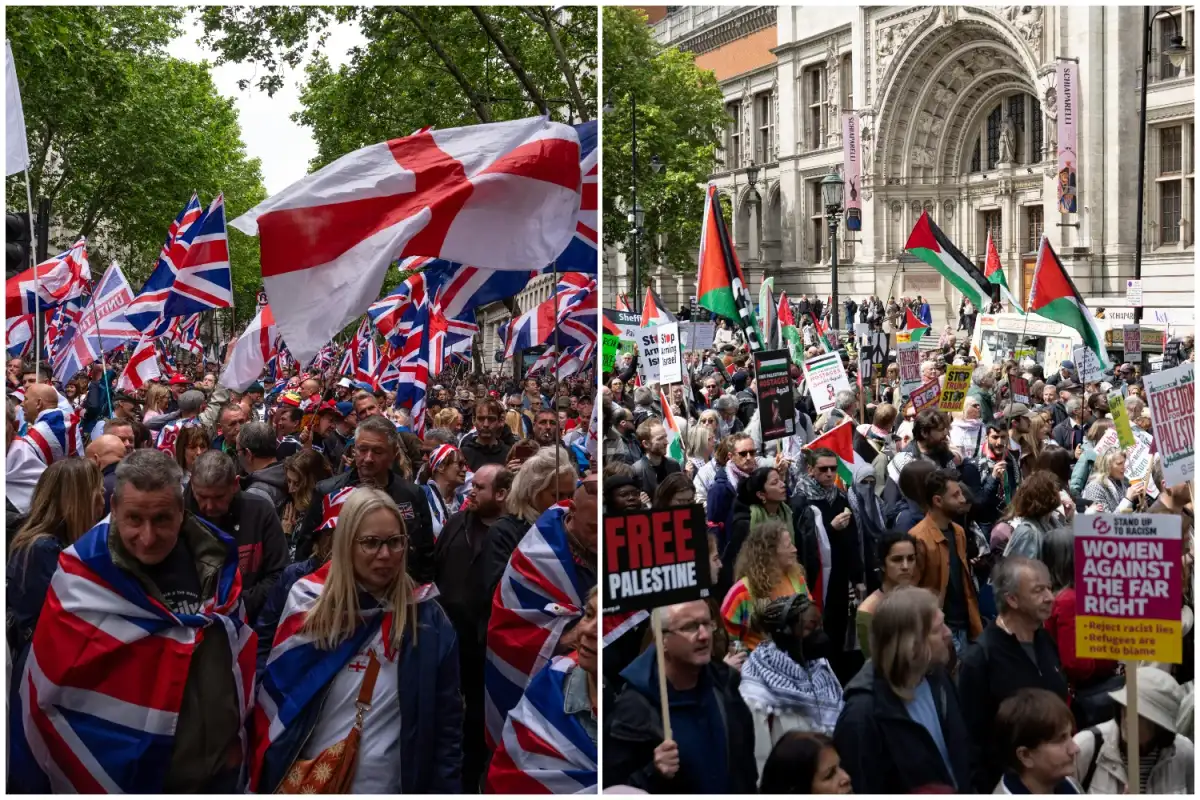
Pro-Palestinian Demonstration
A separate, large-scale pro-Palestinian march, observed on Nakba Day, also saw tens of thousands participating. This demonstration commenced in Kensington and made its way towards Waterloo Place via Piccadilly. Organizers, including John Rees from Stop the War, questioned the scheduling of the "Unite the Kingdom" march on the same day. Two hate crime arrests were made in relation to the pro-Palestinian march, and 12 individuals were detained.

Broader Context and Police Response
Authorities emphasized a firm stance against disruptive behavior, with a senior officer stating, "For anyone who sets out to wreak havoc on our streets, to intimidate or threaten anyone, you can expect to face the full force of the law." Police implemented barriers to physically segregate the march routes. The overall policing operation also coincided with the FA Cup Final, adding another layer of demand on police resources. Seven hate crime offences remain under investigation, with suspects yet to be identified. The proximity of these marches highlights the convergence of contemporary social and political tensions in Britain, including concerns over immigration and international conflicts.
Read More: Nutrition Plan Helped Sawe Run Marathon Under 2 Hours in London


