Recent election outcomes across England, Scotland, and Wales have ignited significant internal and external pressure on Sir Keir Starmer's leadership of the Labour Party. The results, described by some as a "humiliation" in traditional Labour strongholds, have fueled calls for a review of Starmer's tenure.
Election Results Spark Leadership Questions
In Wales, the political landscape has shifted dramatically. Plaid Cymru now holds 43 seats in the Senedd, with Reform UK securing 34. Labour's representation has dwindled to nine seats, trailing behind the Conservatives at seven. The Green Party added two seats and the Liberal Democrats one.
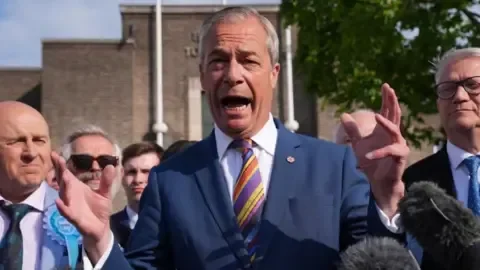
Reform UK notably took control of 12 councils and gained 1,209 seats overall.
The Green Party also saw gains, taking control of three councils and adding 221 councillors.
A significant blow came with Reform UK capturing Sunderland, a council that encompasses the Westminster seat of Bridget Phillipson, the current Education Secretary.
This electoral performance has intensified scrutiny on Starmer, with some within the party advocating for a clear timeline regarding his leadership.
Internal Responses and External Observations
While some Labour MPs, like former frontbencher Richard Burgon, have publicly stated a need for Starmer to outline his departure, others, including his cabinet allies, have offered support. A collective of four former Labour general secretaries has urged the party to prioritize its policy agenda over internal leadership debates.
Read More: Taiwan Holds Nantou County Drills to Prepare for State Collapse
Externally, Zack Polanski, leader of the Green Party, has interpreted the results as a signal that 'two-party politics is defunct' and that voters have rejected the current leadership. The gains by Reform UK, particularly in historically Labour-supporting areas, are seen as a direct challenge to Starmer's strategy.
Background: A Shifting Political Terrain
The recent elections underscore a volatile political environment. The performance of parties like Reform UK and the Green Party indicates a potential fragmentation of the traditional political allegiances, putting established parties like Labour under renewed pressure to adapt their strategies and appeal.