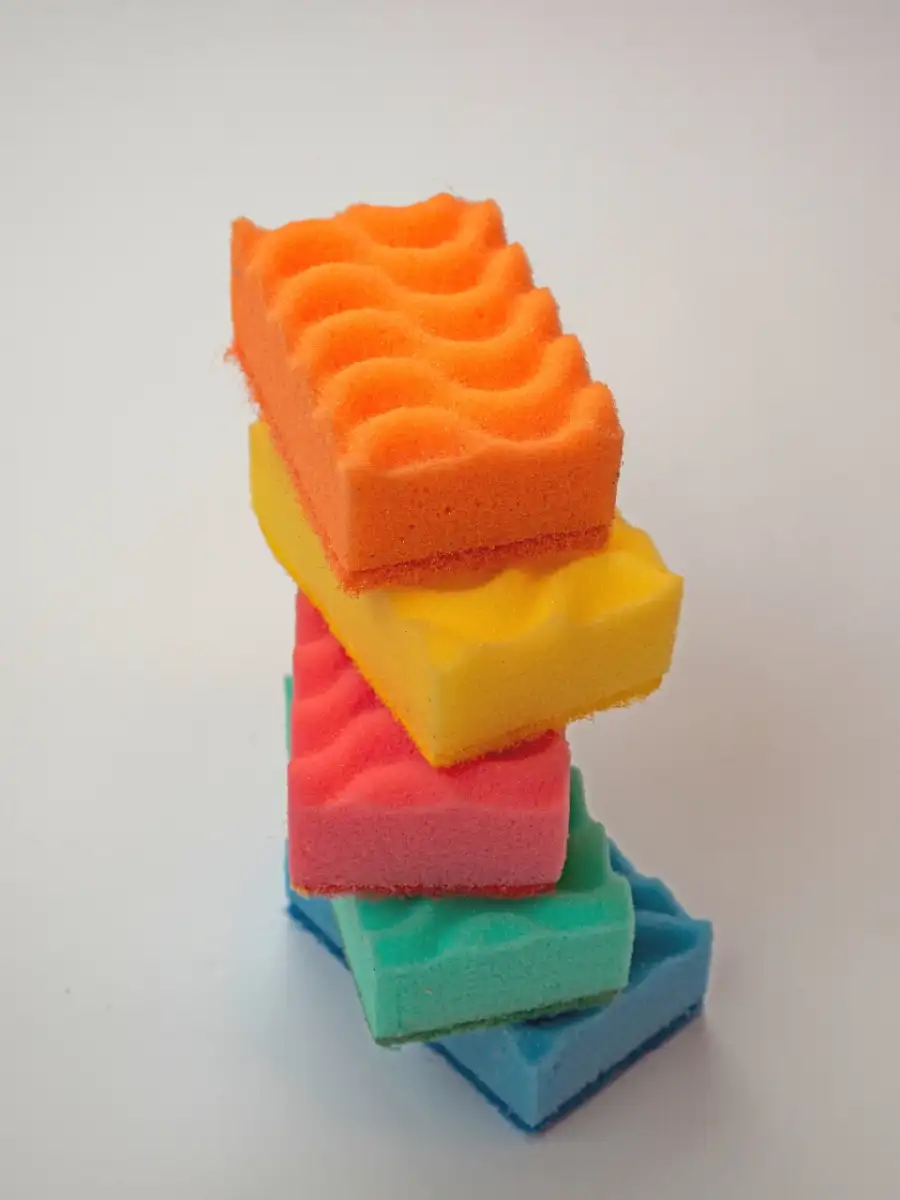
When you walk down the cleaning aisle, the bright colors of kitchen sponges often seem like a simple choice for your home decor. However, an investigation into cleaning tools shows that these colors are rarely just for show. Manufacturers use specific colors to tell you how rough or soft a sponge is. This helps users avoid damaging expensive pans or spreading germs across the kitchen.
While many people pick a sponge based on their favorite color, the choice carries real stakes. Using a "heavy-duty" sponge on a non-stick pan can strip away the coating, while using a "soft" sponge on a burnt pot may be a waste of time. Investigations into product guides show that color-coding is a tool used to keep kitchens clean and items safe. The core signal is that color often equals the level of scrubbing power.
Read More: Summer AC Settings: Save Money by Raising Thermostat
Timeline and Context of Color Use
For years, the cleaning industry has moved toward color-coded systems. This is not just for home use; professional cleaners use colors to prevent "cross-contamination," which means they do not want the sponge used on a floor to ever touch a dinner plate.
Standard Practices: Companies like CNET and BlissClean point out that the abrasive part of the sponge (the rough side) is the main part that is color-coded.
Consumer Awareness: Recent reports from late 2024 and early 2025 show that most people still do not know these colors have a job.
The Market: Manufacturers like those mentioned by Homemaking.com also use colors to make cleaning products look more attractive to buyers, even though the primary goal is function.
Evidence of Color Meaning
The following data is collected from manufacturing guides and cleaning experts. It shows how the roughness of a sponge is linked to its color.
| Sponge Color | Reported Function | Common Use Case |
|---|---|---|
| Green | High Abrasiveness | Heavy-duty scrubbing; burnt-on food; cast iron. |
| Yellow | Medium/Universal | All-purpose; safe for non-stick pans; dishes. |
| Blue | Low Abrasiveness | Delicate items; glassware; fine china. |
| Red | Gentle / Specialized | Some sources say "grease expert"; others say "very soft." |
| White | Surface Cleaning | Walls, floors, or mirrors; leaves no scratches. |
Differing Uses for Scrubbing Levels
The main difference between sponges is the "scour pad" on the back. Not all pads are made of the same material.
"If you thought sponge colors were just for aesthetic appeal, you'd only be partly correct." — CNET
Heavy-Duty Tools (Green)
The green sponge is widely recognized as the most powerful tool in the kitchen. Reports from Netmums and The Thaiger describe it as a "warrior" for tough jobs. It is made of hard fibers that can scratch soft metals and plastic.
Delicate Surface Tools (Blue and Yellow)
There is some overlap between blue and yellow sponges. Farmingdale Observer notes that both are used for delicate items. However, CNET specifically points to blue for "sensitive surfaces" and yellow for "non-stick cookware." The question remains: Is there a global rule, or does it vary by brand? Evidence suggests that while patterns exist, the specific material of the scrub pad is the most reliable guide.
Read More: Flat-Top Grills Offer Easier Outdoor Cooking and Cleaning in 2026
The Specialized Roles (Red and White)
The use of red and white sponges is less common in standard packs. BlissClean reports that white is best for surfaces and floors. Meanwhile, The Thaiger views red as a "soft" cleaner, but Netmums claims it is an expert at handling "fat" or grease. This difference shows that while green and blue are standard, red may have different meanings depending on the maker.
Expert Analysis of Material Science
Experts in the cleaning industry, such as those at BlissClean, state that the choice of color is a "crucial factor" in how a sponge works. The science behind this involves the density of the fibers on the scrub pad.
Read More: June Garden Tasks: Watering, Weeding, and Pest Control
Physical Properties: Darker colors (like dark green) often indicate thicker, sharper fibers meant to cut through carbon and grease.
Safety Measures: Color-coding acts as a safety system. If a user picks up a green sponge for a glass window, the visual cue of "green" is meant to warn them of potential scratches.
Hygiene Control: Using different colors for different rooms (blue for kitchen, red for bathroom) is a common suggestion to stop the spread of bacteria.
Investigation Findings
The investigation into sponge colors reveals that while colors make the product look "cheerful," their primary job is to serve as a guide for the user.
Green is almost always for heavy scrubbing.
Blue and Yellow are safer for pans with coatings and glass.
Red and White are specialized for grease or non-scratch surface cleaning.
Labels Matter: Since some brands may vary, users should check the packaging for words like "non-scratch" or "heavy-duty" to confirm the color code.
The next step for users is to look at their current cleaning tools. Does the color of the sponge match the task being done? Correcting this can save money on ruined cookware and improve overall kitchen health.
Sources Used
CNET: Do You Know Your Sponge Colors? Here's What Each One Is For
Homemaking: Why Are Kitchen Sponges Different Colors?
Farmingdale Observer: Very few people know what the color of kitchen sponges really means
BlissClean: Why do kitchen sponges come in different colours
The Thaiger: Why dishwashing sponges are different colours