"Captain Kirk just set phasers to vaporize."
This phrase, appearing in recent online discussions, points to a broader interest in the weapon settings employed by Captain Kirk and his crew in Star Trek. While often depicted as tools for exploration and defense, the phaser's capabilities, particularly its "kill" setting, raise questions about tactical decisions and the implications of their use within the fictional universe.

Historical Context of Phaser Technology
Phasers, a core element of Starfleet's arsenal since The Original Series, have evolved significantly.

Early iterations in the 22nd century transitioned from simpler lasers to early phase pistols and cannons.
The handheld and ship-mounted phasers familiar to viewers represent a later development, although the term "laser" was sometimes used interchangeably in earlier periods.
These weapons are noted for their complexity and power, far exceeding typical science fiction laser devices.
Phaser Settings and Their Effects
The adjustable nature of phasers allows for a range of effects, from non-lethal incapacitation to destructive force.

A "stun" setting is designed for temporary unconsciousness, though higher settings can cause more prolonged effects.
The "kill" setting, conversely, is intended for lethal force.
In some instances, phasers set to "stun" have been shown to affect non-humanoid species differently due to genetic enhancements, causing pain rather than incapacitation.
The capacity for phasers to cause serious injury or death after multiple hits, even on a stun setting, is a documented aspect of their operation.
"Kill" Setting: Tactical Rationale and Debate
The decision to deploy phasers on the "kill" setting, as implied by the initial phrase, prompts examination of tactical considerations within the Star Trek narratives.
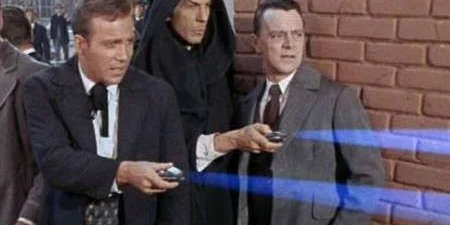
Some discussions revolve around specific scenarios where a "kill" setting might be perceived as necessary for a "stealthy, hopefully quick operation."
This implies a belief that a higher setting would achieve a swift incapacitation or elimination of targets, thus minimizing the risk of prolonged engagement or detection.
However, the rationale for choosing "kill" over "stun" in situations where stealth is paramount is not always clear-cut, particularly when considering the potential for collateral damage or unintended escalation.
Phaser Overload and Destructive Potential
Beyond targeted settings, phasers possess a capacity for catastrophic failure.
When configured to release all stored energy at once, phasers can overload.
This overload is characterized by a high-pitched noise and a violent explosion.
The inherent danger of phaser overload highlights the destructive power available, even when not directly aimed at a target.
Symbolic and Collectible Value of Captain Kirk's Phaser
The phaser, particularly those used by Captain Kirk, has transcended its in-universe function to become a significant cultural artifact.
Read More: Silo Season 3 July 3 2026 Apple TV+ Adds Iran Conflict
Original phaser props have appeared in notable episodes and associated media, contributing to their iconic status.
The sale of Captain Kirk's prop phaser and communicator at auction, with conservative estimates reaching hundreds of thousands of dollars, underscores their immense value to collectors and fans.
The provenance of these items, often traced back to Hollywood prop industry veterans, further enhances their historical and monetary worth.
Expert Analysis and Fan Interpretation
The dialogue surrounding phaser settings reflects a deep engagement with Star Trek's lore, often involving detailed analysis of on-screen events.
"You were perfect as Captain Kirk. He is also no pushover…"
This sentiment, found in fan discussions, captures the perceived competence and decisive nature of the character, often linked to his use of Starfleet equipment. The ongoing mission for content creators often involves exploring these nuances for an audience eager for detailed insights into the fictional universe.
Fan forums and specialized wikis frequently dissect weapon capabilities and usage.
Discussions explore the differences between phaser models and their intended functions.
The interpretation of "kill" versus "stun" settings often depends on the specific context of the episode or film being analyzed.
Conclusion: Intent and Impact
The recurring theme of Captain Kirk's phaser usage, particularly the "kill" setting, suggests a complex interplay between narrative necessity and the tangible capabilities of the fictional technology.
The evidence indicates that phasers are versatile tools with adjustable settings capable of causing varying degrees of harm.
While "stun" is the more common non-lethal option, the "kill" setting exists and is depicted as being deployed.
The precise reasons for selecting the "kill" setting in any given situation remain subject to interpretation, often tied to perceived tactical advantages for speed and decisiveness.
Beyond their in-universe function, these iconic props hold significant cultural and economic value, reflecting the enduring legacy of Star Trek.
Sources:
Article 1: Captain Kirk Just Set Phasers To Vaporize
Published: 8 hours ago
Link: https://twitchy.com/rickrobinson/2026/02/12/captain-kirk-just-set-phasers-to-vaporize-n2424935
Article 2: Why did Kirk/Spock have phasers set to "kill" instead of "stun" (spoiler)
Seen on: AOL
Article 3: Beam setting
Seen on: AOL
Article 4: Star Trek: 10 Things You Didn't Know About Phasers
Published: Sep 27, 2023
Link: https://whatculture.com/tv/star-trek-10-things-you-didnt-know-about-phasers-2
Article 5: ST-v-SW.Net :: Trek Ground Combat - The Phasers of TOS
Seen on: AOL
Article 6: Captain Kirk's Long-Lost 'Star Trek' Phaser, Communicator Expected To Beam Up Hundreds Of Thousands At Auction
Published: Jul 16, 2024
Link: https://hobbylistings.com/captain-kirk-star-trek-phaser/
Article 7: RacProps Issue 3 - The Black and Blue Phasers - Page 1
Seen on: AOL