"A Rs 10 kid’s diaper doesn’t leak, but NTA papers do." - Khan Sir
The recent spate of examination paper leaks, particularly concerning the NEET-UG 2026, has ignited sharp criticism from prominent educator Khan Sir, who is demanding stringent accountability and a fundamental shift in how security is managed. Khan Sir contends that current measures, focusing on transportation, fail to address the core issue: security at the source where question papers are prepared and printed. The recurring incidents, he argues, constitute a "game being played with the lives of millions of children," causing profound mental and academic distress to students and educators alike.

The educator has proposed extreme penalties for those found guilty, including suggesting the 'death penalty for the guilty,' while fiercely denouncing the National Testing Agency (NTA) as a 'Never Trustable Agency.' Khan Sir has also voiced skepticism regarding the effectiveness of current investigative bodies like the CBI, suggesting the need for higher judicial involvement to address what he perceives as deep-rooted irregularities and potential insider roles within the NTA.
Read More: Google Learn About AI Tool Released April 2026 For Simple Learning
Questions Raised Over Punishment Delay
Khan Sir has explicitly questioned the prolonged delay in delivering punishment to those responsible for the paper leaks. Speaking with IANS, he highlighted the arduous academic efforts that teachers and students undertake, only to be derailed by such breaches. He stressed that the controversy surrounding the NEET-UG re-examination, and reports of utilizing the Indian Air Force for paper transport, miss the central point of contention.
Disproportionate Impact on Female Students
A significant concern raised by Khan Sir pertains to the distinct and severe repercussions faced by female students due to examination disruptions. He noted that while male students may have avenues to retake exams, disruptions for female students can lead to immediate social pressures, such as forced marriages, jeopardizing their educational trajectories. The financial burden of re-examinations, including travel costs for students who often secure loans, further exacerbates the situation, prompting Khan Sir to call for holding accountable those who have commercialized education.
Read More: India IVF Costs And Social Barriers Limit Access In April 2026
Critiques of NTA and Investigation Agencies
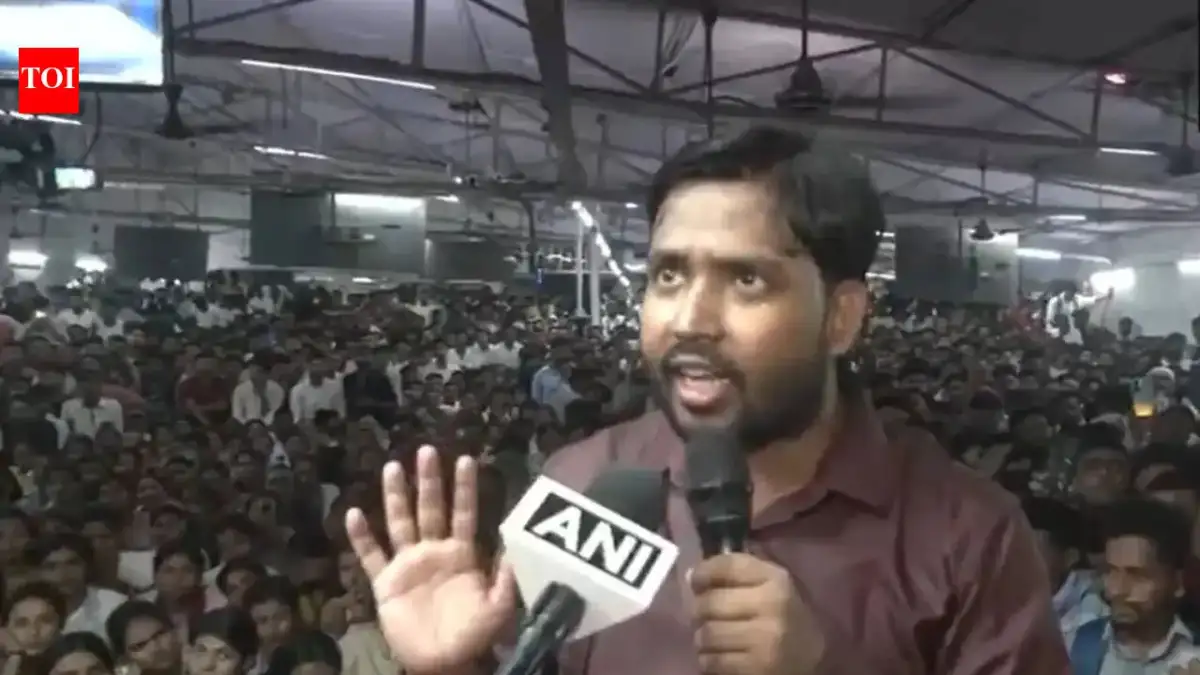
Khan Sir’s critique extends to the operational integrity of the National Testing Agency (NTA). He has not only called for its renaming but has also alleged systemic failures and potential internal complicity in repeated leak incidents. The educator also pointed out that students themselves were often the first to identify leaks, suggesting authorities were slow to react. His comments indicate a broader disillusionment with the investigative process, questioning the outcomes of CBI inquiries and advocating for direct intervention from higher authorities, including the Prime Prime Minister's Office and the Supreme Court.
Background
The NEET-UG (National Eligibility cum Entrance Test - Undergraduate) is a crucial medical entrance examination in India. Recent incidents of paper leaks have led to significant public outcry and demands for reform within the examination system. The National Testing Agency (NTA) is the body responsible for conducting this and several other national-level entrance examinations. Concerns over the integrity and transparency of these examinations have been a recurring theme in public discourse. The Central Bureau of Investigation (CBI) is often tasked with investigating such irregularities. Educators, parents, and students have consistently voiced their frustrations over the perceived systemic failures and the lack of swift, decisive action against those involved in paper leaks.
Read More: OCDSB approves $3.5M budget deficit on April 7 2026 under oversight