


A significant push for advanced public transportation in Kerala is underway as the state government formally requests the central government to conduct a feasibility study for a Regional Rapid Transit System (RRTS). This initiative, driven by the state's long-term vision for sustainable mobility, has ignited a debate concerning the state's infrastructure future, particularly in light of a rival high-speed rail proposal.
Contextual Background
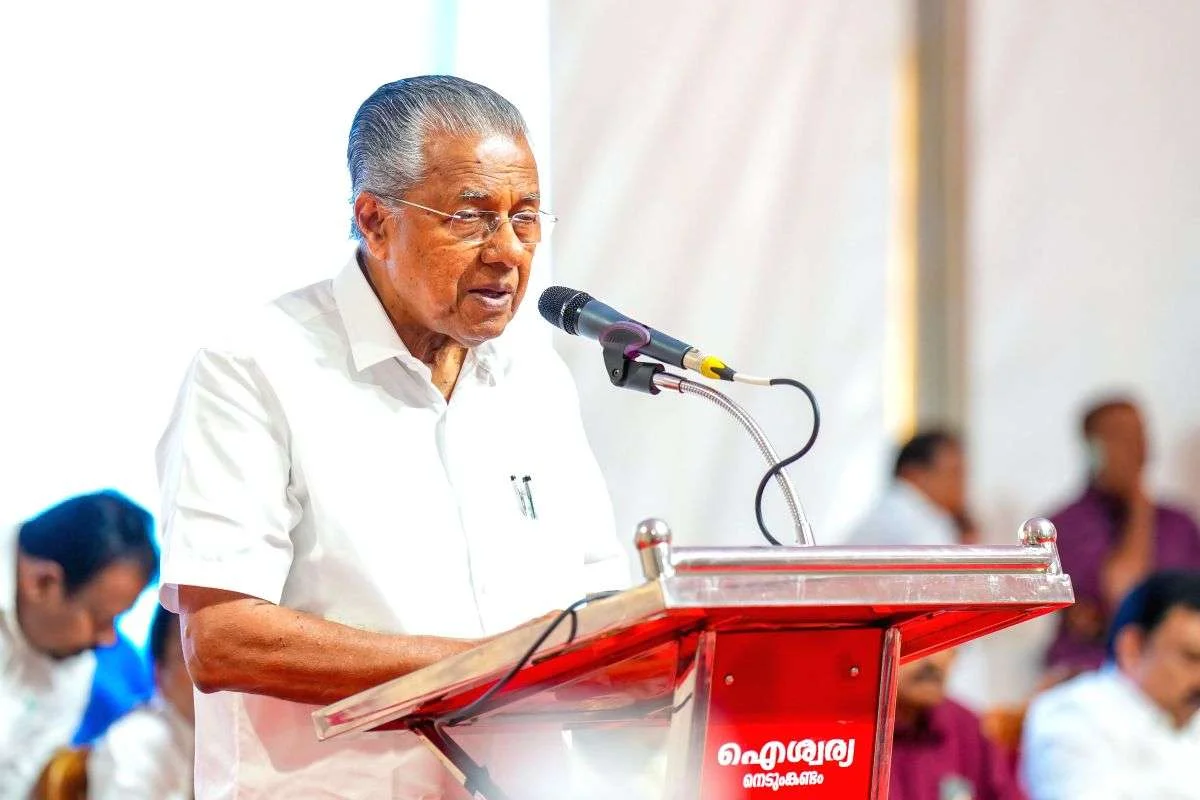
The Kerala government, through a letter from Chief Minister Pinarayi Vijayan to Union Minister for Housing and Urban Affairs Manohar Lal Khattar, has signaled a formal pivot towards the RRTS model. This move follows the State Cabinet's in-principle approval for the project on January 28. The proposed RRTS is envisioned as a near-urban continuum corridor, aiming to connect major cities and airports across the state, from Thiruvananthapuram to Kasaragod. This corridor is characterized by a dense population spread, making an integrated rapid transit ecosystem a strategic necessity for the state's sustainable mobility strategy.
Read More: Kochi: Autopsy Shows Child Sex Abuse Before Father and Daughter Died
The state government has been actively exploring options for high-speed rail connectivity. While the RRTS proposal is gaining traction, it emerges against a backdrop of continued uncertainty surrounding an earlier high-speed railway proposal. This earlier proposal has a prominent advocate in E. Sreedharan, a veteran engineer credited with major metro projects. Sreedharan has presented a rival railway blueprint, contributing to an escalating infrastructure debate in the state, particularly as state assembly elections approach.

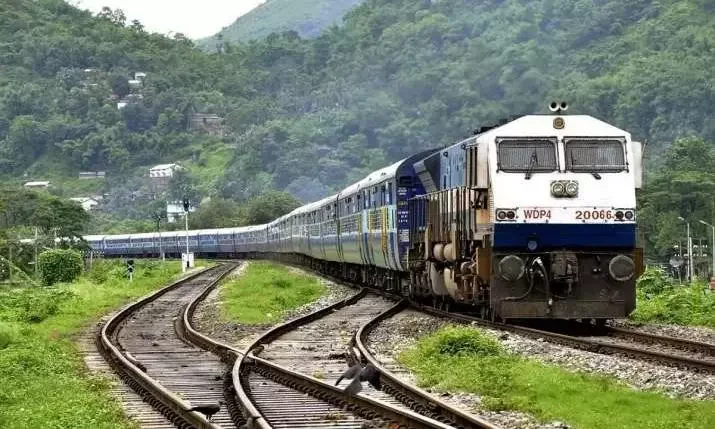
The RRTS framework, as proposed by Kerala, is modeled on the Delhi-Meerut Regional Rapid Transit System, which has demonstrated operational efficiency and integration capabilities. The state's decision to formally pursue feasibility studies through the National Capital Region Transport Corporation (NCRTC), the implementing agency for the Delhi-Meerut corridor, indicates a deliberate step towards adopting this proven model. The RRTS is designed to complement and connect existing and planned metro systems in Kochi, Thiruvananthapuram, and Kozhikode, thereby creating a seamless, high-speed inter-city and intra-regional mobility network.
Read More: Noida Metro Will Get Longer: New Line to Connect Sector 142 and Botanical Garden
Evidence of Formal Pursuit
Formal Communication: Chief Minister Pinarayi Vijayan has written to Union Minister Manohar Lal Khattar, requesting the central government's support to advance the RRTS project. The letter specifically asks the Ministry of Housing and Urban Affairs to facilitate discussions with the NCRTC for feasibility studies and framework development. (Articles 1, 2, 4, 7, 10)
State Cabinet Approval: The Kerala State Cabinet granted in-principle approval for the RRTS proposal on January 28, 2026. This approval marks a formal step towards the project's implementation. (Articles 2, 5, 6, 7, 10, 12, 14)
Project Outline and Model: Kerala is seeking to replicate the success of the Delhi-Meerut RRTS corridor, citing its operational efficiency, advanced technology, and integration with urban transport networks. The state functions as a "near-urban continuum corridor" with a dense population, making the RRTS model a practical solution. (Articles 1, 4)
Long-Term Strategy: The state government views the RRTS as a cornerstone of its long-term sustainable mobility strategy, emphasizing environmental sustainability, carbon emission reduction, and improved safety and efficiency. (Articles 1, 4)
Phased Implementation: The proposed 583-kilometer RRTS project will be implemented in four phases, with the initial phase focusing on the Travancore line (284 km) from Thiruvananthapuram to Thrissur. This phased approach aims to mitigate the financial burden on the state. (Articles 12, 14, 15)
Integration Potential: The RRTS is designed to be integrated with existing and proposed metro projects in Kochi, Thiruvananthapuram, and Kozhikode, enhancing last-mile connectivity and reducing reliance on private vehicles. (Articles 11, 13, 14)
A Divergent Vision: E. Sreedharan's Proposal
The Kerala government's push for RRTS unfolds amidst a strong counter-proposal from veteran engineer E. Sreedharan. Sreedharan has unveiled a rival railway blueprint, which he terms a more suitable alternative for Kerala's specific geographical and fiscal conditions.
Read More: Dog, Not Leopard, Killed Lamb in Kerala Village

Critique of RRTS: Sreedharan has publicly criticized the RRTS concept, labeling it "impractical and financially unsound" for Kerala's terrain and fiscal capacity. He contends that the RRTS is exclusively designed for metropolitan regions and cannot be implemented under the Railway Act. (Articles 3, 6, 13)
High-Speed Rail Alternative: Sreedharan's proposal emphasizes a high-speed rail network, with trains expected to achieve top speeds of 200 km/hr. This contrasts with the RRTS's proposed operational speed of 160-180 km/hr. (Article 11)
Funding and Implementation Concerns: While Kerala's RRTS funding is proposed on the Delhi-Meerut model (20% state, 20% central, 60% international loans), Sreedharan's plan appears to align more closely with central government initiatives for high-speed rail. (Article 13)
Political Undercurrents: Sreedharan, who previously contested Assembly elections on a BJP ticket, has suggested that the RRTS move might be an attempt to "derail" the high-speed rail project. (Article 13)
Infrastructure Debate Intensifies
The divergent proposals have led to a heightened infrastructure debate, with the RRTS and Sreedharan's high-speed rail plan positioned as competing visions for Kerala's future connectivity.
Read More: Travel Delays Hit London Paddington to Heathrow Airport Train Route
Conflicting Models: While the RRTS is presented as a project that can be linked with existing and proposed metro networks, the Centre's high-speed rail corridor is described as a stand-alone project. This distinction has created confusion regarding the nature and alignment of both initiatives. (Article 11)
Land Acquisition and Railway Land: A key characteristic of RRTS is the independent construction of tracks, necessitating land separate from existing railway lines. The Railways has indicated that the State Government must provide land for new tracks, a requirement that could impact the project's timeline and cost. (Article 9)
Environmental Considerations: Kerala's commitment to environmental sustainability is cited as a driving factor for the RRTS, with the elevated viaduct model on pillars suggested to reduce land acquisition and minimize obstruction of natural water flow, potentially mitigating public opposition. (Article 15)
Economic Implications: The estimated cost of the RRTS project is around ₹1,92,780 crore, with the final cost to be determined after detailed project reports are completed. (Article 15) The RRTS is deemed vital for the state's development and socio-economic growth. (Article 12)
Expert Analysis and Insights
"The Kerala government's move to seek a feasibility study for RRTS signifies a pragmatic approach towards addressing the state's unique mobility challenges. The model, if adapted effectively, can offer a robust solution for its dense urban continuum."— Analysis based on Article 1
"E. Sreedharan's reservations about the RRTS highlight the critical need for a detailed technical and financial evaluation specific to Kerala's challenging terrain. His experience lends significant weight to the debate regarding the most suitable infrastructure for the state."— Analysis based on Articles 3 and 6
"The juxtaposition of the RRTS and high-speed rail proposals underscores a broader discussion on the future of public transportation in India. Kerala's situation presents a microcosm of the strategic choices governments face in balancing rapid development with existing infrastructure and geographical constraints."— Analysis based on Article 11
Conclusion and Next Steps
The Kerala government's formal request to the Centre for a feasibility study on the Regional Rapid Transit System marks a significant step in its pursuit of enhanced public transportation. The state has secured in-principle approval from its cabinet and is actively seeking collaboration with the NCRTC. This initiative is positioned as a critical component of its long-term sustainable mobility strategy, designed to integrate with existing and planned metro networks across the state.
Read More: New Water Plant Approved to Help Kochi Get More Drinking Water
However, the RRTS proposal faces a strong counter-argument from E. Sreedharan, who advocates for a different high-speed rail model, citing concerns about the RRTS's practicality and financial viability in Kerala. This divergence has intensified the infrastructure debate within the state.
Key implications include:
Federal Scrutiny: The central government's response to the feasibility study request will be crucial in determining the future trajectory of the RRTS project.
Inter-Agency Coordination: Successful implementation will hinge on effective coordination between state agencies, the NCRTC, and potentially other central government bodies.
Public Discourse: The ongoing debate between the RRTS and high-speed rail proposals necessitates a comprehensive public discussion to arrive at a consensus on the most beneficial infrastructure development for Kerala.
Detailed Project Report: The completion of a Detailed Project Report (DPR) is a vital next step, which will firm up alignments, technical models, and the final cost estimates, irrespective of the chosen model.
Read More: New Rules for Cars in City Centers
Further developments are expected as the central government considers Kerala's request and as the infrastructure debate continues to evolve, particularly in the context of upcoming state assembly elections.
Sources:
The Hindu: Kerala writes to Centre to undertake feasibility study for RRTS
URL: https://www.thehindu.com/news/national/kerala/kerala-writes-to-centre-to-undertake-feasibility-study-for-rrts/article70631880.ece
Context: Reports on Kerala's formal request to the central government for a feasibility study on the RRTS project.
Onmanorama: Kerala RRTS: Chief Minister seeks NCRTC support for project, writes letter to Centre
URL: https://www.onmanorama.com/news/kerala/2026/02/14/kerala-rrts-project-gets-state-cabinet-approval.html
Context: Details the Chief Minister's letter to the Union Minister and the state cabinet's in-principle approval.
Newkerala: Kerala RRTS vs Sreedharan's Rail Plan: Infrastructure Debate Heats Up
URL: https://www.newkerala.com/news/a/kerala-rail-crossroads-as-cm-vijayan-seeks-rrts-419.htm
Context: Highlights the debate between the RRTS proposal and E. Sreedharan's rival railway blueprint.
Hindustan Times: Kerala CM seeks Centre’s support for high-speed RRTS corridor
URL: https://www.hindustantimes.com/india-news/kerala-cm-seeks-centre-s-support-for-high-speed-rrts-corridor-101771049321915.html
Context: Focuses on the Chief Minister's letter, emphasizing the RRTS as a cornerstone of the state's mobility strategy and environmental sustainability.
Social News XYZ: Kerala at 'rail crossroads' as CM Vijayan seeks RRTS support, Sreedharan offers rival vision
URL: https://www.socialnews.xyz/2026/02/14/kerala-at-rail-crossroads-as-cm-vijayan-seeks-rrts-support-sreedharan-offers-rival-vision/
Context: Discusses the state's pivot to RRTS amidst uncertainty over its previous high-speed rail proposal and Sreedharan's alternative.
Prokerala: Kerala at 'rail crossroads' as CM Vijayan seeks RRTS support, Sreedharan offers rival vision
Context: Similar to Social News XYZ, this article details the infrastructure debate and Sreedharan's critique of RRTS.
Newkerala: Kerala CM Vijayan Seeks Centre's Support for RRTS Project
URL: https://www.newkerala.com/news/a/cm-vijayan-writes-union-minister-khattar-seeking-centres-852.htm
Context: Reports on CM Vijayan's letter to the Union Minister, mentioning the in-principle approval and existing metro projects.
The Federal: Why a high-speed rail network could lead to Kerala-Centre flashpoint
URL: https://thefederal.com/the-federal-focus/kerala-budget-e-sreedharan-railway-network-rrts-high-speed-trains-227569
Context: Explores the RRTS as a state-articulated plan and the potential for friction with central government initiatives.
Mathrubhumi English: K-Rail: Kerala eyes RRTS as faster alternative on lines of Delhi–Meerut Corridor
URL: https://english.mathrubhumi.com/news/kerala/k-rail-kerala-eyes-rrts-as-faster-alternative-on-lines-of-delhimeerut-corridor-h14gq2ej
Context: Discusses the RRTS as an alternative to K-Rail and notes the requirement for independent tracks, separate from existing railway land.
ANI News: CM Vijayan writes to Union Minister Khattar seeking Centre's support for RRTS project in Kerala
URL: https://aninews.in/news/national/general-news/cm-vijayan-writes-to-union-minister-khattar-seeking-centres-support-for-rrts-project-in-kerala20260214104635/
Context: Reports on CM Vijayan's letter, reiterating the in-principle approval and the project's importance to the state's mobility strategy.
New Indian Express: Kerala’s RRTS plan fuels confusion amid Centre’s high speed rail push
URL: https://www.newindianexpress.com/states/kerala/2026/Jan/31/keralas-rrts-plan-fuels-confusion-amid-centres-high-speed-rail-push
Context: Highlights the confusion arising from Kerala's RRTS plan and the Centre's push for high-speed rail, contrasting the two models.
The Print: Kerala govt decides to go ahead with RRTS project
URL: https://theprint.in/india/kerala-govt-decides-to-go-ahead-with-rrts-project/2844648/
Context: Reports on the Kerala government's in-principle approval for the RRTS project connecting Thiruvananthapuram with Kasaragod, outlining phased implementation and integration with metro projects.
Mathrubhumi English: Kerala govt’s RRTS move aimed at derailing high-speed rail project, claims Sreedharan
URL: https://english.mathrubhumi.com/news/kerala/kerala-govts-rrts-move-aimed-at-derailing-high-speed-rail-project-claims-sreedharan-pahc5bih
Context: Details Sreedharan's claims that the RRTS is an unsuitable concept for Kerala and may be intended to disrupt high-speed rail plans.
Onmanorama: Kerala RRTS to integrate Metro projects, 1st phase between TVM & Thrissur, will connect Manguluru & Coimbatore in future
URL: https://www.onmanorama.com/news/kerala/2026/02/03/kerala-rapid-transit-system-project.html
Context: Provides details on the RRTS project's integration with metro systems, phased implementation, and potential future expansion.
The Hindu: Amid uncertainty, Kerala gives approval for first phase of RRTS project
URL: https://www.thehindu.com/news/national/kerala/amid-uncertainty-kerala-gives-approval-for-first-phase-of-rrts-project/article70586868.ece
Context: Reports on Kerala's approval for the first phase of the RRTS project, highlighting the estimated cost and the need for central government clearances.


