


Assembly battlegrounds emerge, from Vadakara's grassroots to Vattiyurkavu's unpredictability.
The Kerala Assembly Elections 2026 are shaping up to be a contest of notable intensity, particularly in constituencies like Vadakara, Perambra, Koyilandy, Nadapuram, Kuttiyadi, and Vattiyurkavu. These areas, spread across Kozhikode and Thiruvananthapuram districts, are anticipated to witness particularly keen contests, according to recent observations. The United Democratic Front (UDF), banking on the organizational strength of the Indian Union Muslim League (IUML) and the Revolutionary Marxist Party of India (RMPI) in Vadakara, alongside incumbent MP Shafi Parambil, faces local government structures that show a mixed hold. In the Perambra segment, for instance, six out of ten grama panchayats are currently under UDF rule. Conversely, in Nadapuram, the Left Democratic Front (LDF) holds sway in six grama panchayats, with the UDF leading in four. Other segments like Kuttiyadi and Villiappally grama panchayats are under LDF control, and Thiruvallur shows a tie.
Read More: Taiwan Holds Nantou County Drills to Prepare for State Collapse

High Stakes in Central and Southern Districts
Central Kerala's Thrissur and Nattika constituencies are poised for spirited battles between established political forces. In Pala, the Kerala Congress (M) chairman Jose K. Mani of the LDF is set to face incumbent MLA Mani C.. The National Democratic Alliance (NDA) has nominated Shone George, son of former Poonjar MLA P.C. George, in this fray. Nattika itself is set to witness a contest where the incumbent MLA C.C. Mukundan, formerly with the CPI, is now contesting as an NDA candidate against former MLA Geetha Gopi.
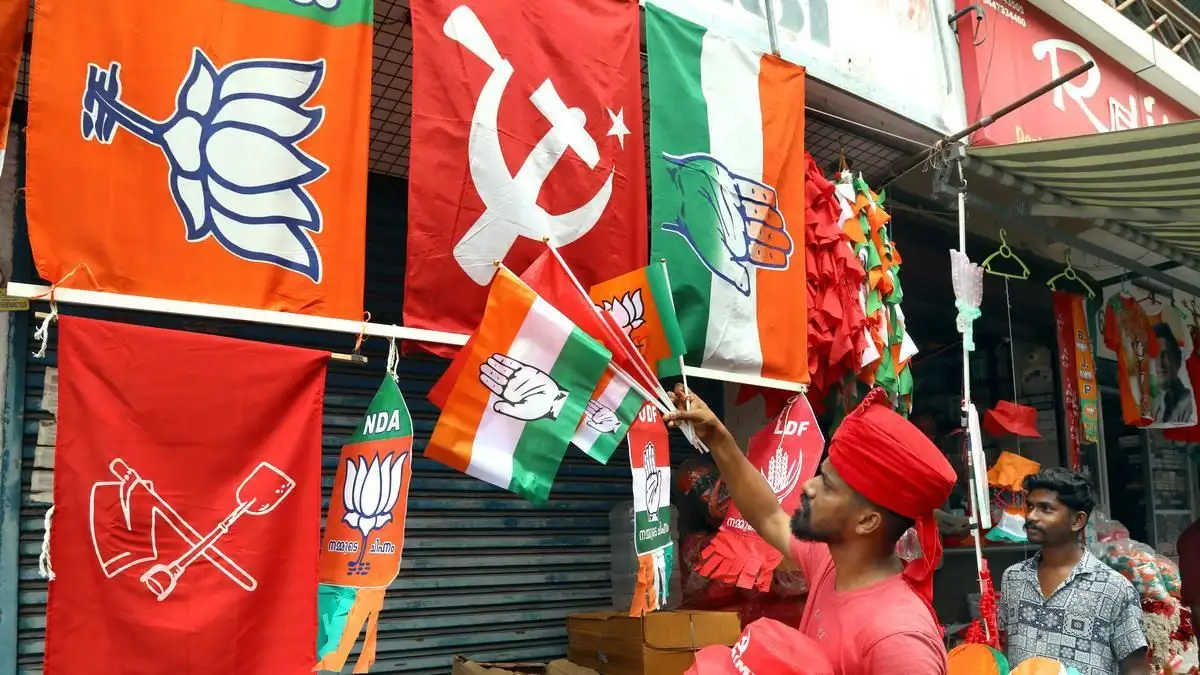
Meanwhile, the Vattiyurkavu constituency in Thiruvananthapuram is emerging as a focal point, with all three major political fronts preparing for a high-stakes engagement. The LDF secured this seat previously with CPI(M) candidate V.K. Prasanth, who won by a significant margin. The Congress leadership is reportedly considering fielding Mr. Muraleedharan to regain lost ground. The nine constituencies identified as crucial, with the potential to dictate the political landscape, include Nemom, Kazhakkoottam, Vattiyoorkkavu, Aranmula, Pala, Thrissur, Nattika, Palakkad, and Manjeshwaram.
Read More: Kerala Health and AYUSH Departments Link for Dengue Control in 2026

Party Nominations and Electoral Dynamics
As the election date of April 9 approaches, various political parties have begun announcing their candidate lists. The Communist Party of India (Marxist) [CPI(M)] and CPI released their initial lists of candidates on March 15, 2026. The Indian National Congress (INC) followed with its first list of 55 candidates on March 17, followed by a second list of 37 candidates on March 19. The Indian Union Muslim League (IUML) announced its first list of 25 candidates on the same day.
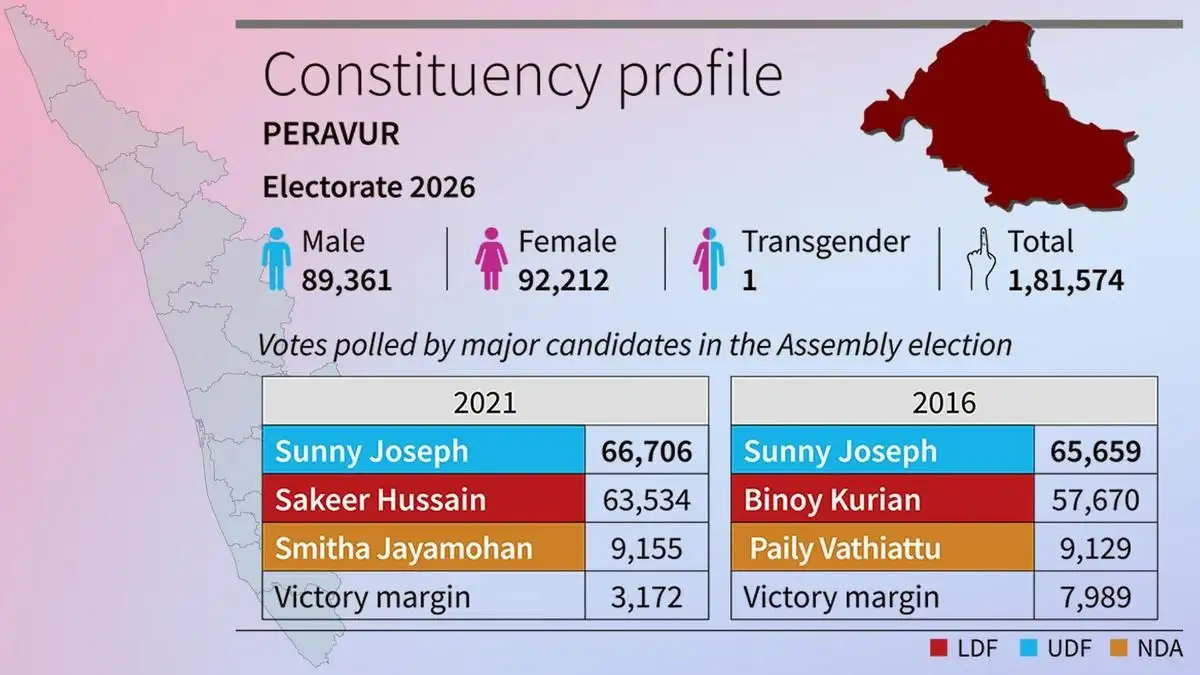
The Bharatiya Janata Party (BJP) has been active in candidate announcements, releasing its first list of 47 candidates on March 16, including prominent figures like former Union minister Rajeev Chandrasekhar and former state chief K. Surendran. V. Muraleedharan is slated to contest from Kazhakoottam, and P.C. George from Poonjar. The BJP has also announced its candidates for several constituencies including Manjeshwar, Udma, Kanhangad, and Payyannur, with polling scheduled for Phase 1 on April 9.
Read More: FBI Analysts Review Georgia 2020 Election Data in Fulton County
Local Government Power Structures and Historical Context
Recent local government election results provide some context to the upcoming state assembly polls. The LDF secured around 40 percent of votes in the local government elections. While the UDF has a majority in 81 constituencies according to some reports, the BJP's victories in certain wards have coincided with a significant drop in the UDF's vote share. Opinion surveys suggest that incumbent MLAs from both the LDF and UDF generally enjoy higher personal popularity compared to previous election cycles. The PDP has declared support for the LDF.
Read More: Five POCSO cases filed in Kasaragod after minor assault on 7 April 2026
Historically, Kerala's elections have often centered on rural concerns such as land, wages, welfare, and community identity. The UDF's past electoral gains have been interpreted by some as a negative vote against the LDF rather than a strong endorsement of the UDF itself. The LDF's strength has traditionally been attributed to its cadre mobilization capacity. Data from previous elections indicate that close victory margins are common in several constituencies, suggesting that small shifts in vote share can dramatically alter outcomes. The usage of the NOTA (None of the Above) option, though limited, has shown variations across constituencies. Furthermore, a significant number of incumbent MLAs have declared considerable assets, with some also facing criminal cases.
Electoral Landscape: Key Data Points
Total Assembly Constituencies: 140
Reserved for Scheduled Caste (SC): 14
Reserved for Scheduled Tribes (ST): 2
Urban Voters: 6,130
Rural Voters: 24,341
Voting Date: April 9, 2026
Counting Date: May 4, 2026
Majority Required: 71 seats
Major Political Alliances: LDF, UDF, NDA.
The elections are for the 16th Kerala Legislative Assembly. The term of the current Assembly is set to end, prompting the schedule for these polls. Information regarding candidates, polling stations, and electorates is being made available through official election commission websites and various news outlets.







