The livelihoods of fruit growers in Kashmir are under significant strain due to two converging issues: a new trade deal with the United States and prolonged disruptions on the Jammu-Srinagar National Highway. Growers report substantial losses, with concerns that imported goods will undercut local produce while damaged infrastructure prevents timely market access for their harvests. The economic stability of the region, heavily reliant on horticulture, appears to be at a critical juncture.
Kashmir's fruit industry, a cornerstone of its economy, is grappling with a multifaceted crisis. Reports indicate that recent weather events, including landslides and floods, have led to extended closures of the crucial Jammu-Srinagar National Highway (NH-44). This has resulted in thousands of fruit-laden trucks being stranded, causing estimated losses that run into hundreds of crores of rupees. Concurrently, a new trade agreement between India and the United States is raising fears among growers about increased competition from duty-free imports of agricultural products like almonds, walnuts, and apples.
Read More: Middle East conflict may lower Africa's 2026 growth by 0.2%, says UN report
Key Actors:
Kashmiri Fruit Growers and Dealers Union: Representatives expressing significant financial distress.
Omar Abdullah: Former Chief Minister of Jammu and Kashmir, vocal on both the trade deal's impact and highway connectivity issues.
Indian Government: Approving and implementing the Indo-US trade deal.
Various Road Authorities: Responsible for managing and restoring the Jammu-Srinagar National Highway.
Timeline of Events:
September 2025 (ongoing): Prolonged closure of the Jammu-Srinagar National Highway (NH-44) due to landslides and floods, impacting fruit transportation.
September 2025: Trade deal between India and the US announced, with provisions for duty-free import of certain agricultural products.
Early September 2025: Fruit growers begin to report substantial losses due to highway blockades.
Mid-September 2025: Estimates of losses for the fruit sector exceed ₹700 crore.
Late September 2025 (approaching): Concerns escalate regarding the combined impact of trade deals and infrastructure issues.
Economic Fallout from Trade Agreements and Infrastructure Failures
The potential impact of the Indo-US trade deal on Kashmir's fruit growers is a significant point of contention. Reports suggest that the agreement may allow for duty-free imports of products that Kashmir also produces, such as almonds, walnuts, and apples. This raises concerns about fair competition and the ability of local growers to sustain their businesses against potentially lower-priced imports.
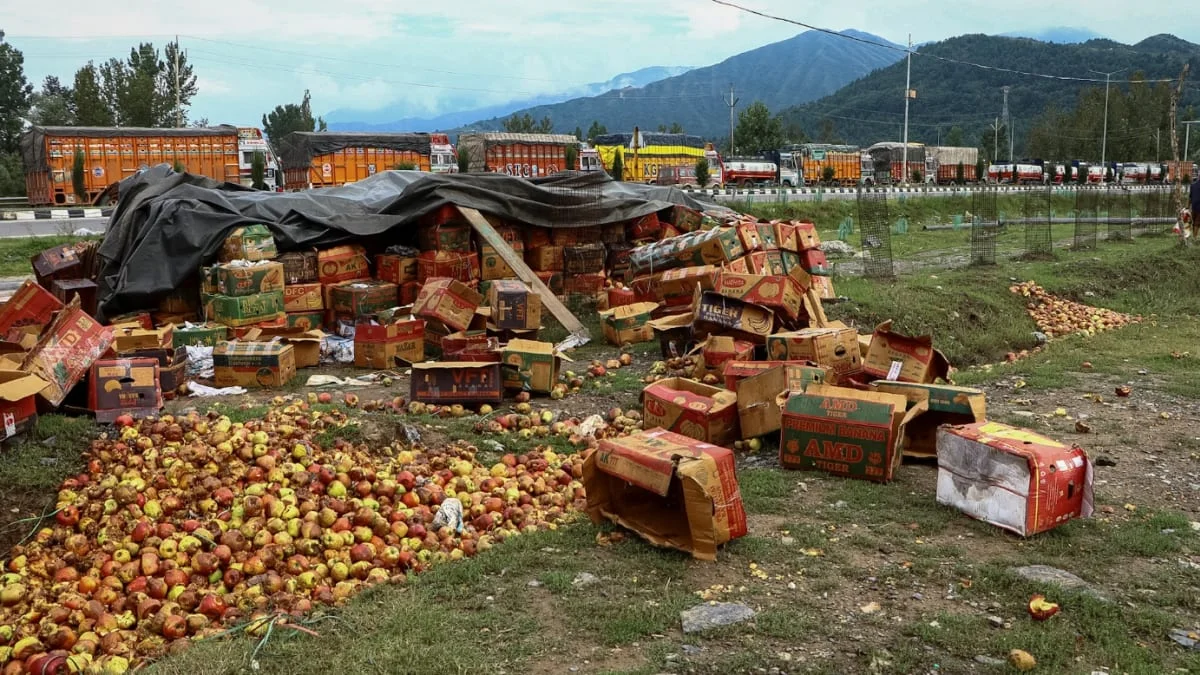
Conversely, highway blockades have created an immediate and tangible crisis. The prolonged closure of the Jammu-Srinagar National Highway has prevented fresh produce from reaching markets, leading to spoilage and significant financial losses for growers. The sheer volume of stranded fruit has caused market prices to plummet, exacerbating the economic hardship.
Impact of Trade Deal:
Duty-free import of almonds, walnuts, and apples is anticipated.
Concerns about local produce being unable to compete on price.
Calls for enhancing the quality and quantity of local produce to meet global standards.
Impact of Highway Closures:
Thousands of fruit-laden trucks stranded.
Produce rotting before reaching markets.
Estimated losses reaching hundreds of crores of rupees.
Suspension of trading at major markets like Sopore.
Assessments of Financial Losses
Estimates of the financial damage incurred by Kashmir's fruit industry vary but consistently point to substantial losses. The Kashmir Valley Fruit Growers Cum Dealers Union has provided a stark assessment, placing the sector's losses at nearly ₹700 crore. Other industry associations have reported losses exceeding ₹200 crore, with the potential to reach ₹400 crore if the situation is not swiftly resolved. These figures underscore the severe economic distress faced by growers and the broader implications for the region's economy.
Read More: India Lok Sabha Seats: Southern States Will Not Lose Seats Amidst Expansion Plans
Reported Loss Figures:
Kashmir Valley Fruit Growers Cum Dealers Union: Nearly ₹700 crore.
Fruit Growers and Dealers Association: Over ₹200 crore, potentially reaching ₹400 crore.
Governmental Response and Grower Demands
In response to the highway disruptions, authorities have assured growers that restoration work on NH-44 is being closely monitored, with efforts to reopen the route for light vehicles. However, the duration of these closures and their cumulative impact have led to demands for long-term solutions and adequate compensation for the losses incurred. Regarding the trade deal, concerns have been raised about the necessity of improving local production standards and market competitiveness.
Government Assurances:
Hourly monitoring of restoration work on NH-44.
Measures to restore highway connectivity.
Potential reopening for light vehicles.
Grower Demands:
Long-term solutions for infrastructure connectivity.
Adequate compensation for financial losses.
Strategies to enhance the quality and quantity of local produce.
Expert Perspectives on Trade and Agriculture
Analysis suggests that for Kashmir's horticulture sector to remain competitive, a strategic approach is required. This involves not only addressing immediate infrastructural challenges but also preparing for a globalized market. Enhancing the quality and quantity of local produce, potentially through technological advancements and organic farming methods, is seen as crucial for boosting the rural economy and ensuring the long-term viability of the fruit industry. The need for improved quality and quantity has been a consistent point raised by figures like Omar Abdullah.
Read More: Assam Semiconductor Plant: Will Jagiroad Jobs Help Local People?
Key Strategies for Competitiveness:
Enhancing the quality of local agricultural produce.
Increasing the quantity of local agricultural produce.
Adoption of technology-driven farming solutions.
Implementation of organic farming practices.
Conclusion: A Precarious Crossroads for Kashmir's Fruit Sector
Kashmir's fruit growers stand at a precarious crossroads, facing a dual threat from international trade dynamics and domestic infrastructure failures. The immediate crisis stems from the prolonged closure of the Jammu-Srinagar National Highway, which has led to substantial financial losses due to spoilage and reduced market access. Simultaneously, the introduction of a new trade deal with the US raises concerns about the future competitiveness of local produce against potentially cheaper imports.
The scale of estimated losses, running into hundreds of crores, highlights the vulnerability of the region's economy, which is heavily dependent on horticulture. While authorities have pledged efforts to restore highway connectivity, the calls for long-term solutions and compensation underscore the urgency of the situation. Furthermore, the warnings about the trade deal prompt a critical examination of strategies needed to bolster local production in terms of both quality and quantity to withstand global market pressures. Without a comprehensive approach addressing both immediate disruptions and long-term market positioning, the future of Kashmir's vital fruit industry remains uncertain.
Read More: Decomposed Bodies Found in Hyderabad, Pune, Sagar, Mumbai, Mohali Raise Concerns
Sources
Indian Express: https://indianexpress.com/article/india/i-only-see-losses-omar-warns-of-threat-to-kashmirs-fruit-growers-from-new-indo-us-trade-deal-10532697/
Context: Article reports on Omar Abdullah's concerns regarding the Indo-US trade deal and its potential negative impact on Kashmir's fruit growers due to duty-free imports.
The Times of India: https://timesofindia.indiatimes.com/india/omar-abdullah-seeks-long-term-solution-as-nh-closure-worries-kashmiri-fruit-growers/articleshow/123794512.cms
Context: Article details the worries of Kashmiri fruit growers due to the prolonged closure of the Srinagar-Jammu highway (NH-44) and Omar Abdullah's assurance of monitoring restoration work.
Greater Kashmir: https://www.greaterkashmir.com/kashmir/kashmirs-fruit-industry-faces-ruin-as-highway-blockade-strangles-trade-tarigami/
Context: Article highlights the severe crisis in Kashmir's horticulture industry due to the Jammu-Srinagar National Highway blockade, with significant financial losses estimated by various associations.
Asia Sentinel: https://www.asiasentinel.com/p/kashmir-fruit-harvest-wrecked
Context: Article describes how highway blockages and floods have devastated Kashmir's apple harvest, leading to massive losses and threatening the region's economy.
New Kerala: https://www.newkerala.com/news/a/we-gain-nothing-from-this-deal-only-losses-613.htm
Context: Article focuses on Omar Abdullah's criticism of the India-US trade pact, stating it would result in losses for Kashmir due to duty-free imports of fruits and nuts.