


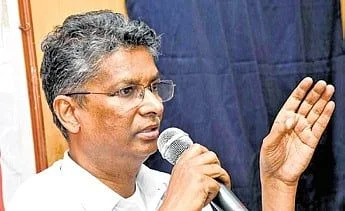
Minister Satish Jarkiholi stated on Sunday in Hubballi that the 'AHINDA' (acronym for minorities, backward classes, and Dalits) grouping has been instrumental in bolstering the Congress party's political standing. He posited that the Congress, in turn, has facilitated the integration of these communities into the societal mainstream. This assertion comes as the AHINDA banner itself faces internal pressures and a debate over its future leadership within the Congress party.
The Politics of Succession and Influence
Recent months have seen a discernible undercurrent within the Karnataka Congress concerning the leadership mantle of AHINDA, a bloc historically championed by Chief Minister Siddaramaiah. The pronouncements of Siddaramaiah's son, Dr. Yathindra, suggesting Satish Jarkiholi as a potential ideological successor, have triggered significant discussion. This framing appears to create a counter-narrative to other figures, such as RDPR minister and IT/BT Minister Priyank Kharge, who have also articulated positions aligned with AHINDA principles, notably through critiques of the RSS. Home Minister Dr. G. Parameshwara has publicly supported Jarkiholi, referencing his foundational role in the AHINDA movement.
Read More: Taiwan Holds Nantou County Drills to Prepare for State Collapse

Fissures and External Pressures
Reports from earlier in the year and late last year highlight a growing concern over the longevity and consolidation of AHINDA's political capital. Political observers note that the absence of a clear successor to Siddaramaiah, who remains the prominent face of AHINDA politics, has created a perceived vacuum. This has reportedly led to speculation about figures like Jarkiholi vying for that position.
Furthermore, the AHINDA grouping has not been immune to external pressures and internal discontent. In April 2026, reports emerged of significant pressure on Housing, Waqf, and Minority Welfare Minister B.Z. Zameer Ahmed Khan to potentially form a new regional party. This push, reportedly from leaders disillusioned with both the Congress and BJP, stems from a belief that a strong regional entity could more effectively advocate for the state's interests, echoing observations about the weakening of national parties in states with robust regional political forces.
Read More: Karnataka requests higher Totapuri mango limit for farmers in April 2026
Earlier in November 2025, AHINDA communities reportedly voiced displeasure over perceived power struggles within the Congress, particularly concerning the relationship between Chief Minister Siddaramaiah and his deputy D.K. Shivakumar. Representatives indicated that any attempts to undermine a leader from the AHINDA community would be met with strong opposition.
Contextualizing AHINDA's Role
The AHINDA bloc, representing minorities, backward classes, and Dalits in Karnataka, has historically been a significant factor in state politics. The recent discourse indicates a struggle not only for political influence within the Congress but also for the ideological direction and leadership of this crucial voting segment. The emphasis on maintaining AHINDA unity post-Siddaramaiah has been flagged by analysts as a critical challenge for any future leadership bid. The broader political landscape, marked by internal party dynamics and the potential for regional political realignments, continues to shape the narrative around AHINDA's future.
Read More: FBI Analysts Review Georgia 2020 Election Data in Fulton County






