

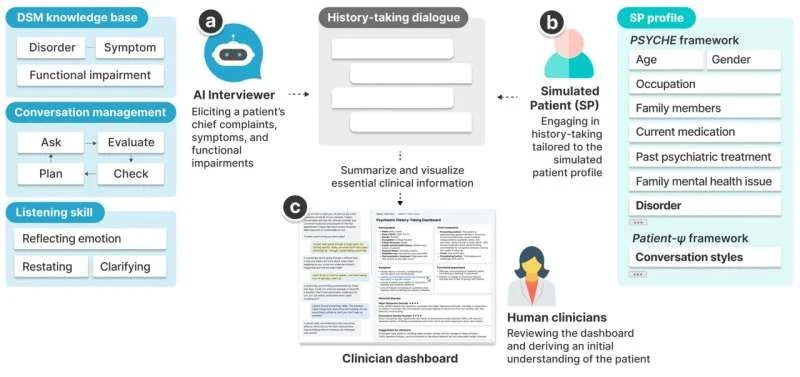
A new AI system, developed by KAIST researchers, aims to streamline the initial stages of psychiatric assessment. This technology facilitates preliminary interviews with patients before they meet with a clinician, potentially offering a more systematic understanding of their conditions. The system, detailed in recent reports, moves beyond simple question-and-answer formats, incorporating "sophisticated counseling strategies" historically reserved for human professionals.
The AI tool generates a "clinical dashboard" presenting symptoms and potential conditions for medical staff, derived from patient conversations. This dashboard allows doctors to "focus more on in-depth counseling" during actual consultations, addressing the challenge of limited consultation time and the burden on patients to articulate their distress. The project was undertaken in collaboration with experts at Gangnam Severance Hospital.
Pre-Consultation Dialogue: A Digital First Step
This AI system allows individuals to engage in dialogue with a machine, which researchers suggest can help them "organize and clarify their thoughts beforehand." This conversational approach is framed as a supportive measure, particularly for those who find the prospect of discussing emotional distress intimidating. The technology analyzes user language input, both voice and text, drawing on everyday conversation patterns and their relation to mental health. This groundwork, according to proponents, aids in a more organized transmission of medical information.
Read More: NHS official Ms. Jones steps back from Palantir contract on 7 April 2026
Technology's Roots and Broader Implications
The development by KAIST's Professor Sung-Ju Lee's research team taps into the growing trend of integrating AI into healthcare. Similar ventures have seen AI chatbots being used for preliminary medical condition assessments, with varying degrees of success and user trust. The emphasis, in these emerging applications, is on AI amplifying professional capabilities rather than outright replacement. However, questions linger regarding how users will interpret AI-generated information and the inherent need for human oversight to ensure "patient safety and uphold the standards of psychiatric care."
Contextualizing the Shift
Historically, the diagnostic process in mental health relied heavily on direct human interaction. The push for AI-driven preliminary assessments arrives amid escalating global mental health challenges. While such tools offer a novel frontier, their integration into clinical workflows is presented as a "hybrid model," where the human-patient relationship remains central, amplified by technology. This shift also sees patients' initial contact with the healthcare system increasingly mediated by virtual assistants, a phenomenon observed across various medical domains.
Read More: Chrome mimeHandler API lets extensions handle file types






