


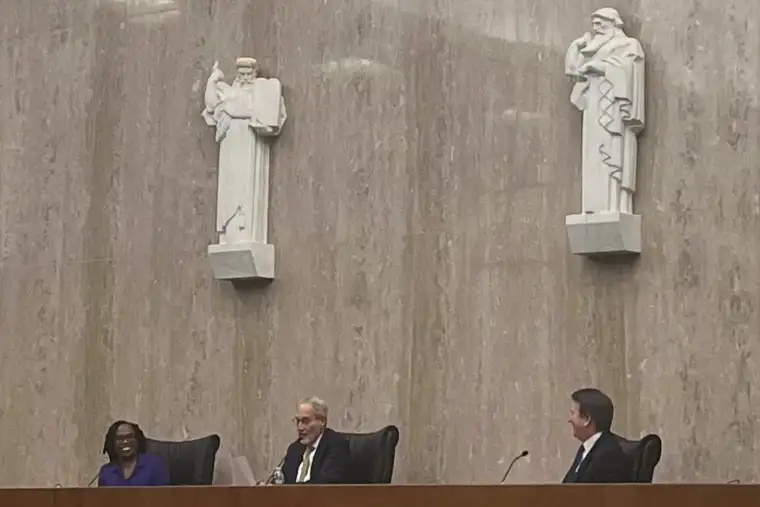
A rare public disagreement surfaced Monday between Supreme Court Justices Ketanji Brown Jackson and Brett Kavanaugh concerning the court's frequent use of emergency orders, particularly those that have cleared the path for policies of the Trump administration.
The debate, occurring at a public event for legal professionals, highlighted differing views on the court's process and the implications of its actions. Jackson, a frequent dissenter in such cases, argued that the court's approach creates a "warped" process and suggested that a more restrictive stance on emergency filings would reduce their volume. Kavanaugh, while acknowledging the complexity and close nature of many issues, defended the court's handling, stating that presidents often push the boundaries of their authority, necessitating judicial response. He also noted that critics sometimes overlook when the court has allowed policies from previous administrations to proceed under similar circumstances.
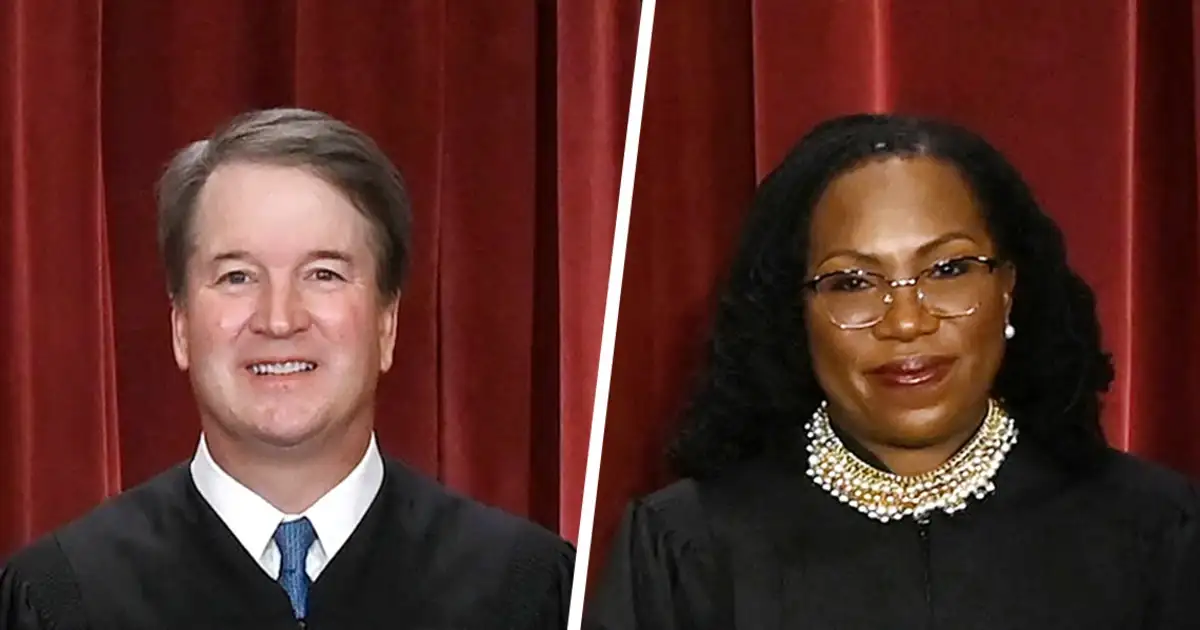
Jackson's Critique
Justice Jackson expressed concern over the "number of emergency filings" seeking to overturn lower court rulings. She posited that a stingier approach to granting these requests could lead to a decrease in their frequency. Her argument suggests that this could allow cases to proceed through the standard judicial channels, resulting in more thorough consideration of the merits before reaching the Supreme Court. This could potentially lead to more considered final decisions rather than swift interventions based on initial appeals.
Read More: Labour MPs disagree on limiting jury trials in England and Wales
Kavanaugh's Defense
Justice Kavanaugh offered a different perspective, emphasizing the often complicated and closely contested nature of the cases brought before the court on emergency dockets. He suggested that the court often faces difficult choices, stating, "Some are lawful, some are not." Kavanaugh also pointed out what he perceived as inconsistent criticism, noting that objections to recent orders were not always raised when similar emergency applications from the Biden administration were granted. He also defended the court's written explanations, stating that the court has increased its output in explaining its reasoning for these emergency decisions.
Broader Context
The exchange comes at a time when the court has been active on its "emergency docket," a mechanism allowing it to act on requests for relief before full briefing and argument. Recent decisions have seen the court's conservative majority block lower court rulings that had previously impeded the Trump administration's agenda. These actions have drawn scrutiny both inside and outside the legal community. The court itself has acknowledged this increased activity, with other justices, like Elena Kagan, also publicly commenting on the need for caution in handling such urgent appeals. Despite disagreements, Kavanaugh stated that he believes justices are "thoughtfully engaging in difficult issues" and that expressing different views is "a sign of strength."
Read More: Slavoj Žižek's ideology ideas explained for beginners
Background of Emergency Rulings
The Supreme Court's emergency docket, often referred to as the "shadow docket," has become a significant avenue for challenging or upholding executive actions and lower court decisions. In the past, the court has issued emergency orders in cases involving controversial policies, such as immigration, environmental regulations, and foreign aid. The decisions often come with limited public explanation, contributing to criticism regarding transparency and the perceived impact on the court's legitimacy. Recent examples include cases concerning the removal of a Federal Trade Commission member and the withholding of foreign aid, both of which raise questions about executive power. The court's internal dynamics and differing philosophies on the appropriate use of its emergency powers continue to shape its impact on contemporary legal and political disputes.
Read More: US and Turkish Bank Halkbank Reach Deal to End Criminal Charges