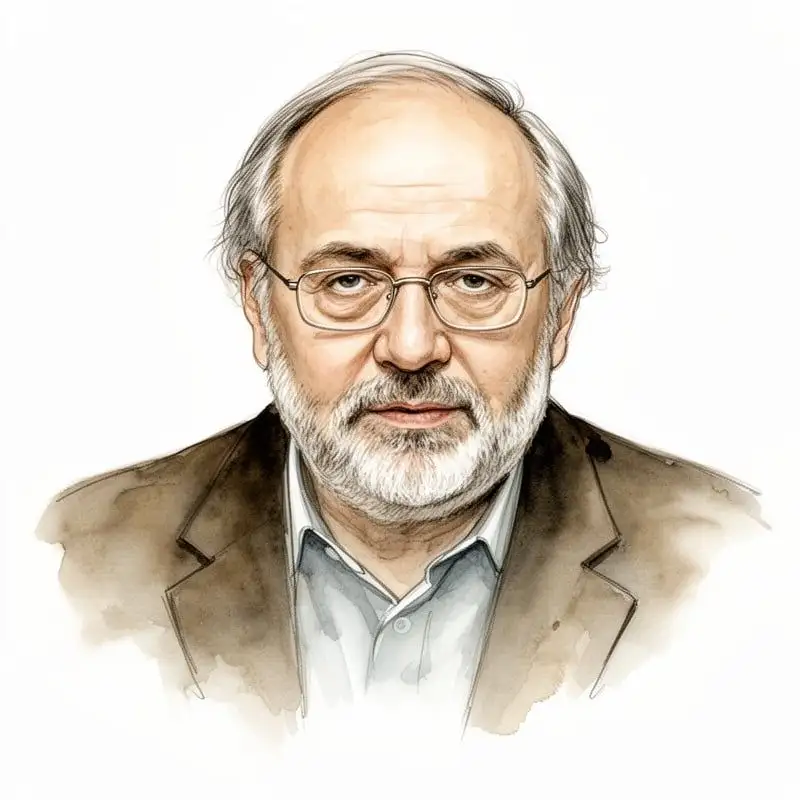
The philosopher Slavoj Žižek has carved a distinctive, albeit contested, space in contemporary thought, largely through his reinterpretation of core concepts like ideology and subjectivity, drawing heavily from the frameworks of Marx, Hegel, and particularly Lacanian psychoanalysis.
At the heart of Žižek’s intellectual project lies a complex theory of ideology, rooted in the Lacanian notion of the "real" as a void that undermines any stable reality, and a re-examination of the "subject" as central to political description. His work challenges conventional understandings by exploring how individuals passionately align themselves with political ideas, often against their perceived self-interest, a phenomenon he links to psychoanalytic transference and "belief." This has led to significant debate, with some critics within Marxist traditions arguing that his emphasis on psychoanalysis and ontology sidesteps crucial analyses of concrete political economy and class struggle.

Navigating the Ideological Terrain
Žižek’s engagement with ideology begins with a nod to Marx's German Ideology, focusing on "false consciousness." However, he builds upon this by positing that political description is only adequate when it accounts for the "category of the subject." His metaphysics is framed as an "anti-metaphysics," where the "real" is not an underlying reality but rather the very incompleteness and inconsistency that defines our perceived reality. This perspective informs his typology of ideological-political regimes, distinguishing between various forms based on how they structure belief and knowledge.
Read More: Why philosophers say suffering proves God does not exist in 2026

The Slovenian thinker's approach is notable for its use of popular culture, especially films, as illustrative tools for his philosophical arguments. This methodology, coupled with his often unexpected and provocative commentary, has contributed to a significant media presence. His prolific output, spanning over fifty books, covers a wide array of topics including multiculturalism, immigration, populism, and the strategies of the left.

Critiques and Commitments
Žižek's direct involvement in political discourse, particularly his interventions on issues like multiculturalism and immigration, has been a source of considerable controversy. Analysts are divided on the enduring impact of these political actions, with some faulting his theoretical positions for inconsistency and a perceived shift depending on the context of his interventions. His philosophical stances have also been framed in relation to broader intellectual debates, notably being positioned as a counterpoint to other public intellectuals.
Read More: Germany Criticizes Israeli Minister's Eviction Order in West Bank
His ethical and political thought centers on a re-evaluation of violence, decision-making, and commitment within the context of contemporary capitalism. This has led him to explore, for instance, the potential necessity of "irrational political myths" for the endurance of certain political regimes.
Foundations and Influences
Born in Slovenia, Žižek’s academic background and ongoing intellectual pursuits have established him as a prominent figure in philosophy, cultural criticism, and psychoanalysis. He has also been associated with the Society for Theoretical Psychoanalysis, Ljubljana, which he founded, serving as its president. His work continues to exert influence on discussions surrounding ideology, politics, and culture, marked by an unusual speaking style and a penchant for challenging established norms.