The Reverend Jesse Jackson Sr., a man who spent sixty years at the center of American civil rights and politics, has died at the age of 84. His life began in the segregated South and led him to the balcony where Dr. Martin Luther King Jr. was killed, and eventually to his own runs for the White House. To some, he was the natural successor to the non-violent movement of the 1960s. To others, he was a person who used his fame to gain power and money. His passing marks the end of a long story that changed how Black Americans participate in elections and business.
From South Carolina to the National Stage
Born in 1941 in South Carolina to a 16-year-old mother, Jesse Jackson grew up seeing the limits placed on Black citizens. He first showed his interest in change when he tried to use a "whites-only" library during a school break. He later moved to Chicago, where he became a key organizer for Dr. Martin Luther King Jr. and the Southern Christian Leadership Conference (SCLC).
Read More: Karoline Leavitt White House Press Secretary Job Unsteady After Criticism
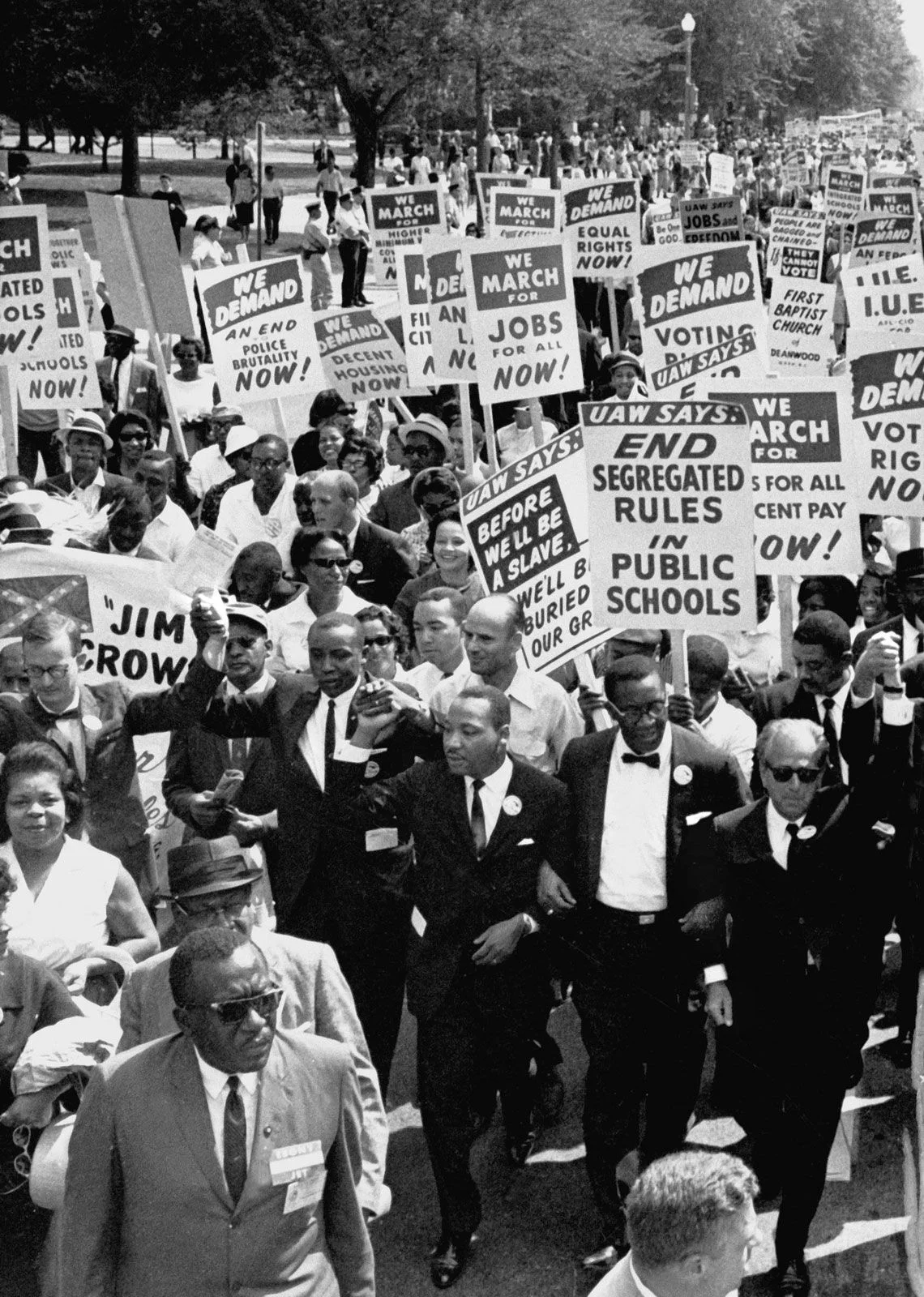
1960s: Joined the Civil Rights Movement and worked on "Operation Breadbasket" to help Black businesses.
1971: Founded Operation PUSH (People United to Save Humanity) in Chicago.
1984 & 1988: Ran for President of the United States, winning millions of votes and several states.
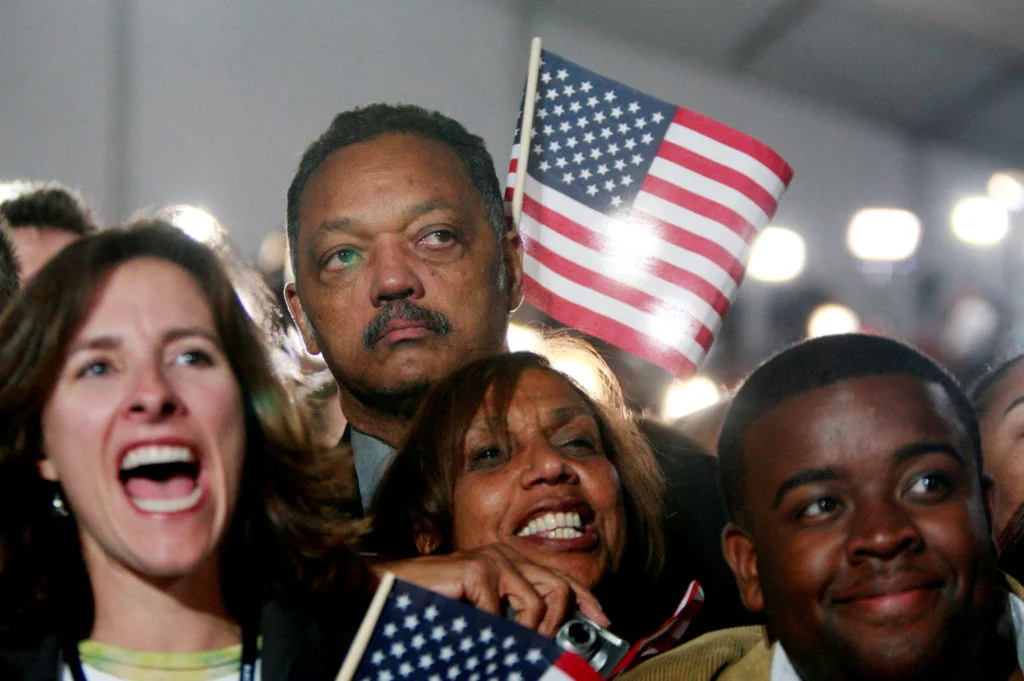
2008: Photographed in tears at Grant Park when Barack Obama was elected president.
Records of Life and Legacy
The following table compares different parts of Jesse Jackson’s public life as recorded by news and history groups:
| Area of Focus | Notable Facts | Point of Debate |
|---|---|---|
| Civil Rights | Worked closely with Dr. Martin Luther King Jr. | Some activists questioned his claim that King died in his arms. |
| Politics | First Black man to win major primary contests for President. | Critics say his style was sometimes too loud or divisive. |
| Economics | Pushed big companies to hire more Black workers and managers. | Books like Shakedown claim he used his power to pressure companies for money. |
| Early Life | Student body president; star athlete; fought to integrate libraries. | He had little contact with his birth father early in life. |
"Jackson used Operation PUSH both for public good and to elevate his visibility."— Chicago Tribune
The Events at the Lorraine Motel
One of the most debated moments in Jesse Jackson’s life is the afternoon of April 4, 1968. Jackson was at the Lorraine Motel in Memphis when Dr. Martin Luther King Jr. was shot.
The Claim: Jackson stated in public for many years that Dr. King died while he was holding him. He appeared on television the next day wearing a shirt stained with blood.
The Visual Record: Some historians and witnesses have noted that photos taken immediately after the shooting show other people, such as Ralph Abernathy, with King. There are no clear photos showing Jackson holding the dying leader.
The Balcony: Photos do show Jackson on the balcony shortly after the event, pointing toward where the shots were fired.
Does the lack of photos in the exact moment of death change the fact that Jackson was a trusted member of King's inner circle? This question has followed his legacy for decades.
Economic Impact and "Shakedown" Accusations
Jackson’s work often focused on "economic justice." He wanted Black people to have a fair share of the American economy. He used "Operation PUSH" to negotiate with large corporations.

Corporate Agreements: He convinced major brands to sign deals to hire more Black staff and use Black-owned suppliers.
The Critics: Some writers, such as Kenneth Timmerman, argued that these deals were a "racket." They claimed Jackson would threaten to tell people to stop buying a company's products unless that company gave money to his organizations.
Jackson’s Response: When asked if he was forcing companies to pay him, Jackson simply disagreed and said he was fighting for fairness.
Political Shifts and the "Rainbow Coalition"
Jackson’s runs for president in the 1980s changed American politics. He created the Rainbow Coalition, which aimed to bring together people of all colors, poor workers, and liberal voters.
Read More: Trump's independent voter approval drops to lowest point ever
He proved that a Black candidate could win millions of votes across the country.
His success in the 1980s made it easier for future leaders, like David Dinkins (the first Black mayor of New York City) and Barack Obama, to win their elections.
Even after he stopped running for office, he remained a person that world leaders and presidents would call for advice or help with prisoners held in other countries.
Investigator Analysis
Independent observers note that Jackson’s career was built on his ability to speak well and move people to action. His "Rainbow Coalition" showed that Black voters were a powerful group that the Democratic Party could no longer ignore. However, his life also shows the tension between being an activist and being a public figure who seeks fame. While his methods were sometimes questioned, the results of his political work are visible in the diverse leadership of the United States today.
Final Findings
The death of Jesse Jackson at 84 ends a chapter of history that connects the 1960s protests to modern politics.
Conclusion: Jackson was a leader who helped move the Civil Rights Movement from the streets into the halls of government and business offices.
Uncertainty: Questions about his specific actions on the day of Dr. King’s death and the finances of his organizations remain a part of his public record.
Next Steps: Plans for a public memorial in Chicago are expected to be announced, where world leaders and civil rights activists will likely gather to discuss his impact on the nation.
Sources Used
PBS NewsHour: Report on Jackson's death and his history with the Civil Rights Movement. https://www.pbs.org/newshour/politics/the-rev-jesse-jackson-leader-of-civil-rights-movement-for-decades-dies-at-84
Chicago Tribune: Coverage of his death at 84 and his Chicago-based work. https://www.chicagotribune.com/2026/02/17/rev-jesse-jackson-dies/
Britannica: Biography covering his presidential campaigns and organizations. https://www.britannica.com/biography/Jesse-Jackson
My Black History: Details on his early life, family, and education. https://www.myblackhistory.net/JesseJackson.htm
Black Politics: Analysis of his economic impact and political legacy. https://blackpolitics.org/jesse-jackson/
SoftSchools: List of facts regarding his speaking abilities and controversies. https://www.softschools.com/facts/blackhistory/jessejacksonfacts/3702/