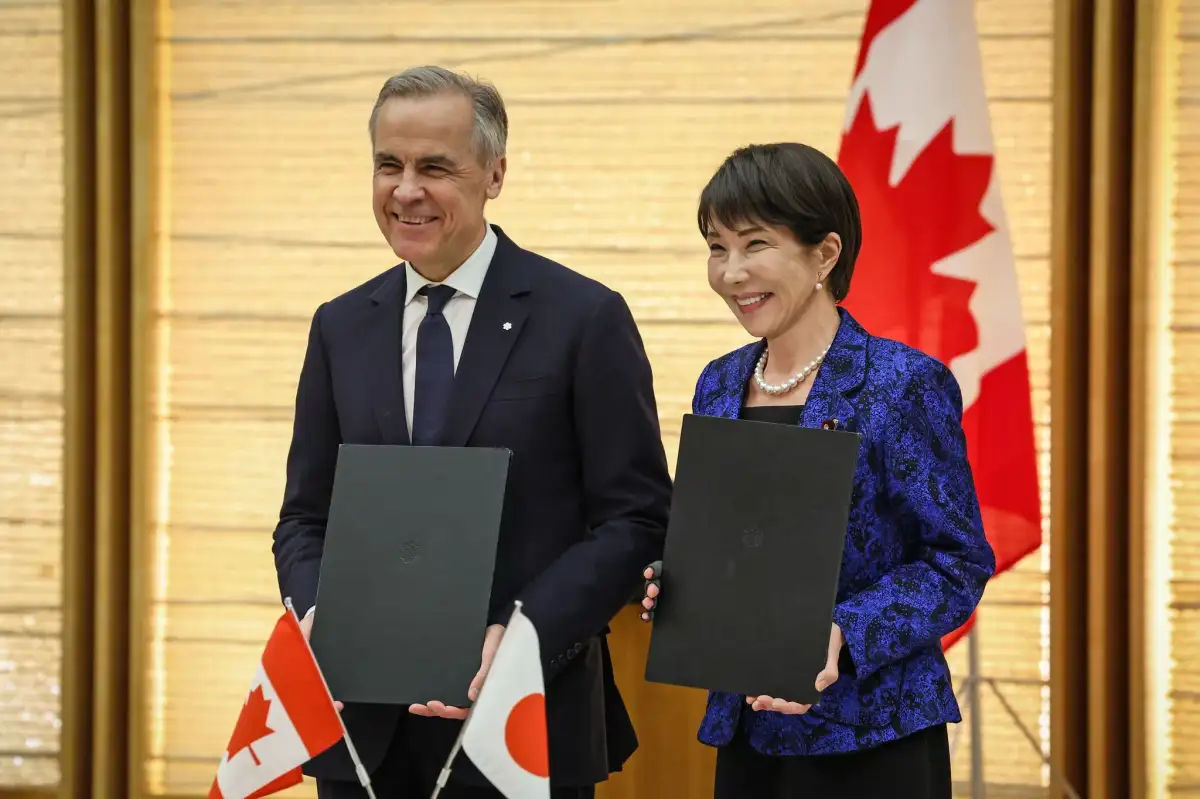
Tokyo and Ottawa have formalized a "Comprehensive Strategic Partnership," weaving together defense cooperation and energy security initiatives, with discussions indicating a move towards greater integration of their respective arms industries and a potential reassessment of Japan's post-war pacifist principles.
Recent pronouncements from officials, including remarks attributed to Carney, signal a heightened focus on collaboration, particularly in the defense sector. This partnership arrives at a juncture marked by escalating global tensions, specifically citing concerns over crude oil shipments traversing the Strait of Hormuz, a point of vulnerability highlighted in light of ongoing conflicts in the Middle East.

Defense Pact Negotiations Underway
Discussions between Japan and Canada are advancing toward a defense pact. This agreement is designed to streamline procedures for military exchanges, joint exercises, and other operational activities between the two nations. Such a development is intertwined with ongoing internal debates within Japan. The ruling Liberal Democratic Party, alongside its coalition partner, the Japan Innovation Party, has submitted proposals aimed at dismantling restrictions on lethal weapons sales. This legislative push represents a notable departure from Japan's long-standing pacifist stance, a principle shaped by its post-war history.
Read More: AFP Reviews War Crime Claims Against Australian in Gaza
Arms Industry Integration and Capabilities
A key component of the burgeoning partnership involves a push to step up cooperation between the defense industries of Japan and Canada. For Tokyo, this initiative aligns with its broader strategy to bolster its military capabilities and expand its defense sales. The stated aim is to enhance collaborative efforts with allied nations. This move seeks to leverage existing technological strengths and potentially develop new areas of joint research and development.

Energy Security Concerns as a Catalyst
The timing of this agreement is particularly significant, occurring against a backdrop of global energy market anxieties. The ongoing war in the Middle East has directly fueled concerns about the stability of oil supplies, especially for shipments passing through critical maritime chokepoints. Carney's own statements have echoed these worries, with prior calls for de-escalation in the region. The strategic partnership appears to address these vulnerabilities by seeking greater coordination in energy sectors, though specifics beyond a general commitment to cooperation remain underspecified.
Read More: Ukraine gets 100 Patriot missiles with $1 billion EU loan for defense
Broader Scope of Partnership
Beyond defense and energy, the "Comprehensive Strategic Partnership" encompasses a wider array of sectors. These include trade, technology, critical minerals, and cybersecurity. Efforts are being made to modernize existing economic cooperation frameworks, such as the Canada-Japan Joint Economic Committee, which has a 50-year history. The partnership also aims to advance joint research and development in emerging technologies, building upon existing scientific and technological cooperation agreements. A dedicated Canada-Japan Cyber Policy Dialogue is being established to bolster cybersecurity collaboration.
Background
The post-World War II era saw Japan adopt a constitution that included a renunciation of war and a commitment to pacifism, significantly limiting its military capabilities and its involvement in international security affairs. Over the decades, however, evolving regional security dynamics and shifting global power balances have led to gradual reinterpretations and expansions of its defense policies. This current initiative, involving cooperation with Canada and potential shifts in weapons export policies, marks a significant continuation of this ongoing re-evaluation of Japan's defense posture. Canada, meanwhile, has traditionally played a role in international peacekeeping and security operations, and this partnership with Japan suggests a deepening of its strategic alignment with Indo-Pacific partners. The global reliance on energy resources, particularly those transported through contested waterways, continues to be a significant factor influencing international relations and security strategies.
Read More: Indus Waters Treaty remains suspended in India and Pakistan April 2026