Tensions Flare in Sydney Amidst Protests Against Israeli President's Visit
Sydney, Australia - The state visit of Israeli President Isaac Herzog to Australia has been marked by significant public demonstrations and a series of legal and security measures. Protests against his visit erupted in Sydney's central business district (CBD), leading to clashes with police and arrests. These events unfolded as a last-minute legal challenge to expanded police powers, intended to manage the demonstrations, was rejected by the Supreme Court.
The visit, at the invitation of Prime Minister Anthony Albanese, aims to foster unity following a recent terror attack near Sydney. However, it has also galvanized opposition, with activists citing concerns over the ongoing conflict in Gaza and allegations against President Herzog. The situation highlights a deep division within Australia regarding the conflict and the nation's foreign policy.
Context of the Visit and Evolving Demonstrations
President Isaac Herzog arrived in Australia for a four-day state visit, an invitation extended by Prime Minister Anthony Albanese in the aftermath of a terror attack that claimed 15 lives. This initiative was framed as a gesture of unity with the Australian Jewish community.
Read More: Kim Jong Un's Daughter May Be Next Leader of North Korea
However, the visit has been met with considerable public dissent.
Protests began prior to the President's arrival and intensified in Sydney.
An eleventh-hour challenge to extraordinary police powers, granted to manage public assembly, was lodged in the NSW Supreme Court.
The legal challenge was dismissed by Justice Robertson Wright, who did not immediately provide written reasons for the decision.
Activists proceeded with planned demonstrations, particularly in Sydney's Town Hall area.
The Palestine Action Group has been a prominent organizer of protests, declaring intentions to march despite restrictions. Police have stated they will arrest individuals who breach these orders, a stance that has put law enforcement on a collision course with activist groups.
Evidence of Disruption and Legal Proceedings
The events in Sydney were characterized by direct engagement between protesters and law enforcement.
Read More: Protests in Melbourne During Israeli President's Visit

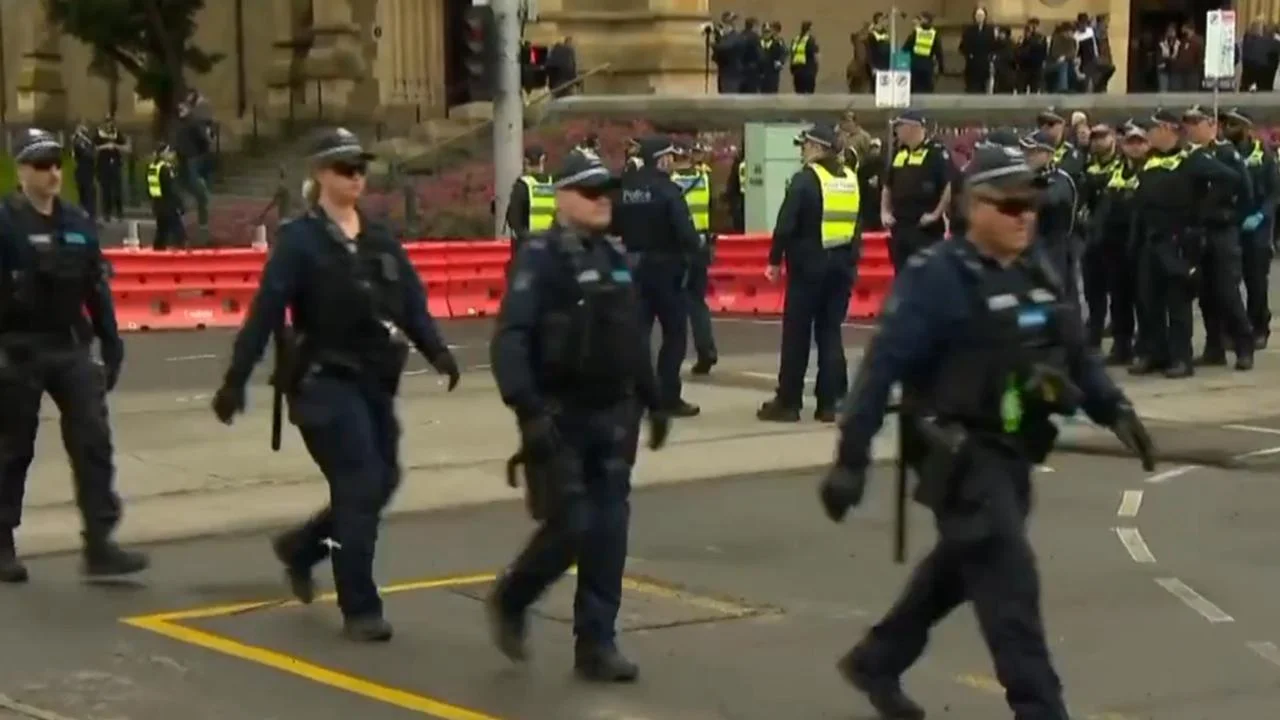
Police deployed significant resources, reportedly including thousands of officers, to manage the visit and potential demonstrations.
During protests, multiple arrests were made.
Capsicum spray was reportedly used by police in efforts to disperse crowds.
A legal challenge against the expanded police powers was filed, aiming to counter restrictions on public gatherings.
The NSW Supreme Court heard the challenge, but the application was dismissed.
The government has asserted that these arrangements are not a ban on protests, but rather a means to manage public safety.
The Supreme Court Challenge
The legal challenge sought to overturn enhanced police powers implemented in anticipation of protests.
The application was brought forward due to the urgency of the situation.
Justice Robertson Wright presided over the case.
The court's decision to dismiss the challenge was made without immediate elaboration of reasoning.
This outcome has implications for future legal actions concerning protest rights in NSW.
Police Response and Activist Intentions
NSW Police have implemented stringent measures to control public gatherings.
Read More: People Protest Worldwide Due to Money Problems
NSW Police Commissioner Mal Lanyon extended protest restrictions for a fortnight, citing "significant animosity" towards the visiting president.
Warnings were issued that arrests would be made for non-compliance with "move-on orders."
The Palestine Action Group has indicated a plan to march from Sydney Town Hall to NSW Parliament House, which contravenes current assembly restrictions.
Organizers have stated they have declined official meetings with the police.
Divergent Views on the Visit's Implications
The invitation to President Herzog and his subsequent visit have generated strong and opposing reactions within Australia.
Support for the Visit
Key Australian Jewish organizations have publicly backed President Herzog's presence.
Groups such as the Executive Council of Australian Jewry and the Australian Jewish Association have welcomed the visit.
They have also condemned the protests against him.
Opposition and Allegations
Conversely, a significant segment of the public and various advocacy groups have voiced strong opposition.
Read More: Many Protests Happen in Australian Cities

Concerns are frequently linked to the Israeli government's actions in Gaza.
The Australian Centre for International Justice (ACIJ), alongside other legal bodies, formally requested an investigation into President Herzog's alleged incitement of genocide.
These allegations stem, in part, from a UN Human Rights Council inquiry.
Protesters have indicated their intent to carry images of civilian casualties and destroyed infrastructure in Gaza.
Government's Position and Transparency Questions
The Australian government's stance on the visit has faced scrutiny, particularly regarding transparency and the extent of taxpayer funding.
Parliamentary Address and Costs
Questions have been raised about President Herzog's itinerary within Australia.
Foreign Minister Penny Wong stated that President Herzog would not address Federal Parliament.
The Minister indicated that details about whether the President would visit Parliament House were a matter for the Department of Veterans' Affairs.
Questions regarding the total cost of the visit to Australian taxpayers remain unconfirmed.
Presidential Statements and Denials
President Herzog himself has addressed allegations made against him.
Read More: Memorial for Nightclub Fire Victims Burns Down Again
He has vehemently denied claims that his remarks constitute incitement.
His position is that such statements have been taken out of context.
Expert Analysis and Broader Context
The events surrounding President Herzog's visit reflect deeper societal divisions and international dynamics.
"The decision to invite President Herzog, the head of state of a country accused of genocide in Gaza—a claim Israel’s government denies—has angered many Australians and even led to calls for the visitor’s arrest." - CNN
The Australian government's approach, balancing an invitation for national unity with managing public dissent, has drawn international attention. The deployment of extensive police resources and the legal battles over protest rights underscore the sensitive nature of the visit. The allegations of incitement against President Herzog, contrasted with his denials and the government's invitation, create a complex and contentious scenario.
Conclusion and Future Considerations
The visit of Israeli President Isaac Herzog to Australia has undeniably been a focal point of public attention, characterized by widespread protests, legal maneuvers, and a robust police presence. The rejection of the Supreme Court challenge to expanded police powers signifies a temporary legal resolution regarding protest management, though the underlying tensions persist.
Read More: Barbeques Galore Stores Close After Company Faces Money Problems
Key takeaways from the current situation include:
Significant public opposition to the visit, manifesting in large-scale demonstrations.
Intensified security measures by NSW Police, including a substantial officer deployment and restrictions on public assembly.
Legal challenges against these restrictions were unsuccessful at the Supreme Court level.
Divergent perspectives on the visit, with some Australian Jewish groups offering support and activist organizations strongly condemning it, citing humanitarian concerns and allegations against President Herzog.
Questions surrounding the transparency of the visit, including cost and parliamentary engagement, remain.
The events highlight the challenges of balancing diplomatic engagements with the right to protest, particularly on issues with significant international and domestic implications. Further actions or statements from government officials, protest groups, and potentially legal bodies are likely to follow.
Most Used Sources and Context
The Age: Provided live updates on the protests, police actions, and the Supreme Court challenge, offering a detailed, near real-time account of events in Sydney. (https://www.theage.com.au/national/nsw/herzog-visit-live-israeli-president-to-arrive-in-sydney-protesters-launch-last-minute-challenge-to-extraordinary-police-powers-20260209-p5o0jw.html?post=p59wmk)
SBS News: Contributed live updates, focusing on the political discourse, including Foreign Minister Penny Wong's statements regarding parliamentary addresses and potential costs, alongside protest events. (https://www.sbs.com.au/news/live-blog/live-updates-isaac-herzog-israel-president-australian-visit-day-one/igzefltqw)
The Conversation: Offered an analytical perspective on the Supreme Court's dismissal of the challenge to police powers, discussing the implications for protest rights. (https://theconversation.com/isaac-herzog-visit-protesters-lose-challenge-to-sweeping-special-police-powers-what-now-275436)
CNN: Provided international context, highlighting the anger over Gaza, the Prime Minister's invitation, and the calls for the President's arrest, framing the visit within broader geopolitical tensions. (https://www.cnn.com/2026/02/07/australia/australia-israel-herzog-visit-intl-hnk)
SMH (The Sydney Morning Herald): Detailed the extensive police deployment, the warnings issued to protesters, and the specific restrictions imposed by NSW Police, including the Commissioner's statements. (https://www.smh.com.au/national/nsw/nsw-police-deploy-3000-officers-for-herzog-s-visit-protesters-put-on-notice-20260206-p5o04i.html)
7NEWS: Reported on planned nationwide protests and the specific accusations of incitement against President Herzog, including the planned actions of activist groups. (https://7news.com.au/news/nationwide-protests-planned-as-details-of-israeli-president-isaac-herzogs-visit-to-australia-revealed-we-will-flood-the-streets-c-21448016)
AFR (Australian Financial Review): Focused on the extension of protest bans, the collision course between police and activist groups like the Palestine Action Group, and the rationale behind the restrictions. (https://www.afr.com/politics/significant-animosity-to-israeli-president-prompts-further-protest-ban-20260203-p5nz25)


:max_bytes(150000):strip_icc():focal(612x1166:614x1168)/Switzerland-accident-fire-020826-02-7cbc5d49ad0f413883178cfd825a77de.jpg)