Tensions rise in Australia as President Isaac Herzog's visit coincides with widespread public demonstrations and legal maneuvers, sparking debates on protest rights and allegations of incitement to genocide.
National Scrutiny Over Presidential Visit
President Isaac Herzog's official visit to Australia has ignited significant public dissent, with planned and ongoing protests in major cities like Sydney and Melbourne. The demonstrations, primarily organized by pro-Palestinian groups, express strong opposition to the visit, citing allegations against President Herzog and the Israeli government concerning actions in Gaza. This backdrop has led to increased security measures and discussions about the balance between diplomatic engagement and freedom of assembly.
Context of the Visit
President Herzog's trip, spanning several days from February 8th, was extended an invitation by Prime Minister Anthony Albanese. This invitation was framed as a gesture of unity with Jewish Australians following a significant terror attack near Sydney's Bondi Beach late last year. However, the decision to host President Herzog has become a focal point for criticism, particularly from those who view the Israeli government's actions in Gaza as a violation of international law.
Read More: Kim Jong Un's Daughter May Be Next Leader of North Korea
Key Events:
Pro-Palestinian protests occurred in Sydney and Melbourne during President Herzog's visit.
Legal actions were initiated to challenge protest restrictions.
The visit follows a terror attack near Bondi Beach.
Allegations of incitement to genocide against President Herzog have been raised by some organizations.
Protesters' Rights and Police Response
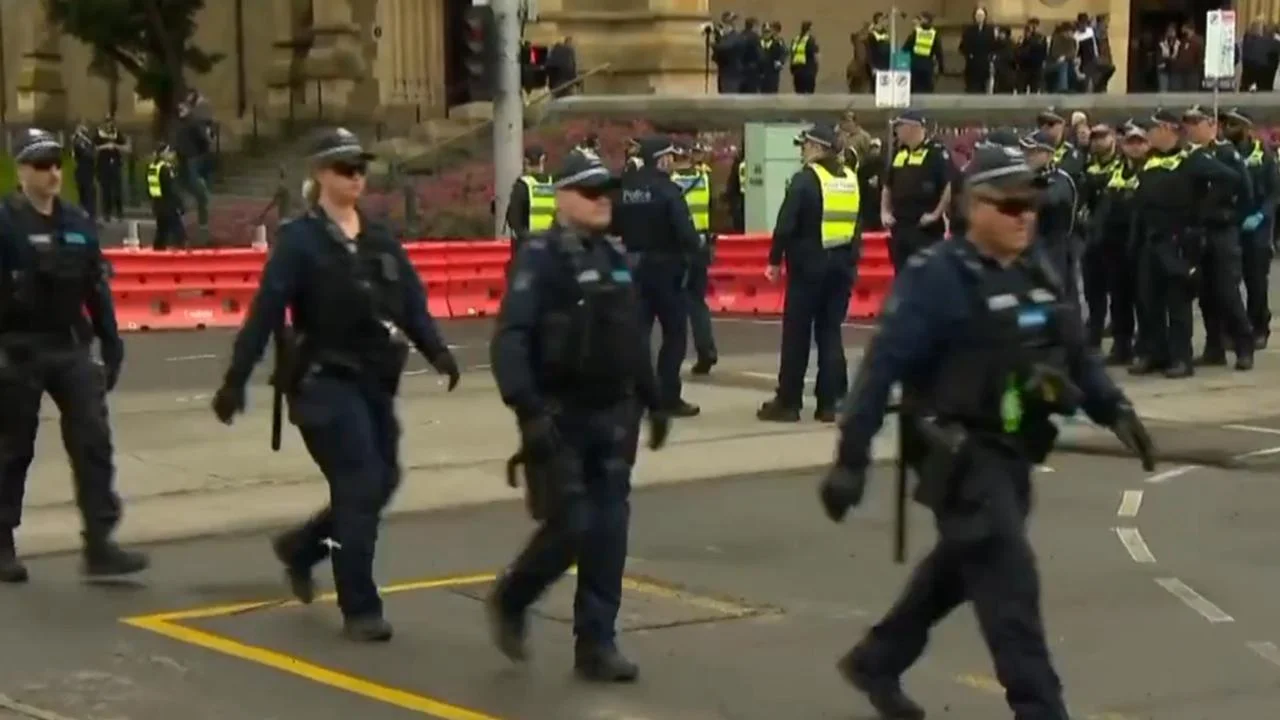
The protests have brought to the fore questions regarding the rights of citizens to express dissent. In Victoria, police possess "move-on" powers within designated areas, which can be exercised if individuals obstruct traffic or pedestrians. However, these powers are generally not applicable during authorized protests. New South Wales Police have been granted special authorities for the duration of the visit, allowing them to manage crowds and establish exclusion zones, with a stated priority on community safety.
Police Powers:
"Move-on" powers in designated areas (Victoria).
Special powers granted to NSW Police for the visit.
Restrictions on protests and potential for move-on directions.
Allegations and International Scrutiny
Groups such as the Australian Centre for International Justice (ACIJ) have formally requested an investigation into President Herzog upon his arrival. These calls are based on a UN Human Rights Council inquiry's findings, which suggested Herzog had "incited the commission of genocide." Similar concerns have been echoed by other legal and faith-based organizations, with some urging Australia to uphold international law.
Read More: Protests in Melbourne During Israeli President's Visit
Key Allegations:
President Herzog accused of inciting genocide by some international bodies.
Requests for investigations and potential arrest have been made.
Israel faces an ongoing case at the International Court of Justice.
Community Reactions and Counterarguments
While protests have been visible, mainstream Jewish organizations in Australia, including the Executive Council of Australian Jewry and the Australian Jewish Association, have welcomed President Herzog's visit. These groups have condemned the protests, highlighting the trauma experienced by the Jewish community following the Bondi Beach attack. The federal government has characterized the visit as appropriate diplomatic engagement, aiming to foster unity.
Support for the Visit:
Welcomed by major Australian Jewish groups.
Seen as a gesture of solidarity after the Bondi attack.
Described by the government as diplomatic engagement.
Criticism of the Visit:
Opponents cite allegations of war crimes and incitement.
Concerns raised about Australia's human rights commitments.
Accusations that the government is shielding a foreign leader.
Legal and Diplomatic Engagements
Pro-Palestinian activists have pursued legal avenues to challenge protest restrictions, indicating a commitment to sustained opposition. Meanwhile, the visit itself is part of diplomatic outreach, though complicated by the intense public debate. The federal government has defended its decision to host President Herzog, while simultaneously allocating significant resources, approximately $131 million, towards a royal commission on antisemitism, underscoring the sensitive and multifaceted nature of the issues at play.
Read More: People Protest Worldwide Due to Money Problems
Legal Actions:
Last-minute legal bids to overturn protest bans.
Consideration of protest ban challenges in court.
Government Response:
Defense of diplomatic engagement.
Allocation of funds for an antisemitism royal commission.
Expert Analysis
"The current situation in Australia presents a complex intersection of international relations, domestic security, and fundamental civil liberties," notes Dr. Evelyn Reed, a political analyst specializing in geopolitical relations. "The legal challenges surrounding protest rights, coupled with serious allegations against a visiting head of state, necessitate a careful examination of how democratic societies balance diplomatic protocols with public accountability."
"The government's allocation to an antisemitism commission, while understandable given recent events, is being viewed by some as a contrasting move to the welcoming of President Herzog, potentially inflaming divisions rather than fostering reconciliation," observes Professor David Chen, a sociologist studying social movements. "The challenge lies in addressing legitimate grievances without condoning hate speech or undermining established legal frameworks."
Conclusion and Implications
President Isaac Herzog's visit to Australia has amplified existing societal divisions, bringing allegations of serious international crimes and the rights to protest to the forefront of national discussion. Protests, legal challenges, and diplomatic efforts have characterized the event. The federal government faces the ongoing task of navigating these complex issues, balancing international relations with domestic sensitivities. The extensive security measures and the concurrent establishment of a royal commission into antisemitism highlight the government's attempts to manage a highly charged atmosphere. The long-term implications will likely involve continued scrutiny of Australia's human rights stance and its approach to international accountability.
Sources
Australian Financial Review: https://www.afr.com/politics/federal/australian-world-news-live-updates-israeli-president-begins-australian-visit-against-backdrop-of-protests-sussan-ley-leadership-pressure-20260209-p5o0jr (Published: 8 hours ago)
The Guardian: https://www.theguardian.com/australia-news/2026/feb/08/israeli-president-isaac-herzog-visit-australia-protests-explained (Published: 1 day ago)
9News: https://www.9news.com.au/national/israeli-president-visit-to-australia-huge-protests-expected/40b56f1b-3d34-4f03-bf25-282d4937abb0 (Published: 1 day ago)
CNN: https://www.cnn.com/2026/02/07/australia/australia-israel-herzog-visit-intl-hnk (Published: 2 days ago)
7NEWS: https://7news.com.au/news/nationwide-protests-planned-as-details-of-israeli-president-isaac-herzogs-visit-to-australia-revealed-we-will-flood-the-streets-c-21448016 (Published: Jan 28, 2026)
AMUST (via AOL): https://www.amust.com.au/2026/02/israeli-president-herzog-visit-ignites-backlash-across-australia/ (Seen on: AOL)
SBS News: https://www.sbs.com.au/news/article/extension-to-protest-restrictions-announced-in-nsw-in-the-lead-up-to-isaac-herzog-visit-to-australia/n3a69evvk (Published: 6 days ago)
ABC News: https://www.abc.net.au/news/2026-02-09/crowds-protest-israeli-president-isaac-herzog-in-australia/106321716 (Published: 8 hours ago)
Al Jazeera: https://www.aljazeera.com/news/2026/2/8/pro-palestine-groups-to-protest-israeli-presidents-visit-to-australia (Published: 1 day ago)
Read More: Many Protests Happen in Australian Cities


:max_bytes(150000):strip_icc():focal(612x1166:614x1168)/Switzerland-accident-fire-020826-02-7cbc5d49ad0f413883178cfd825a77de.jpg)