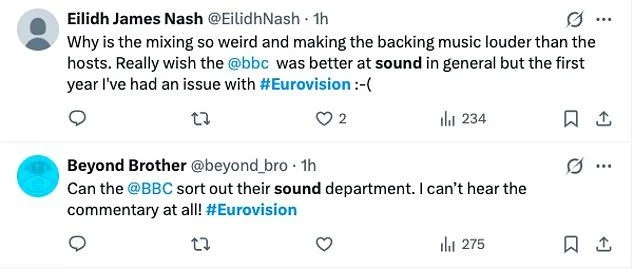
Israel's entry has secured a spot in the Eurovision Song Contest final, a qualification that transpired amidst a divided audience and vocal disapproval during Tuesday's semi-final in Vienna. The nation's contestant, Noam Bettan, performing "Michelle," faced a mixed reception, with some audience members shouting and later booing during quieter moments of his song. This followed an opening semi-final celebrating the contest's 70th anniversary, which was also reportedly marred by "terrible" sound issues and speculation of AI-generated background music, according to social media commentary.
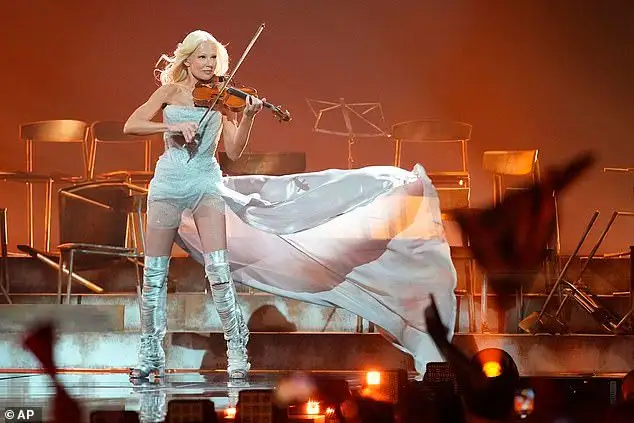
The political undercurrents surrounding Israel's participation were palpable, with protests and calls for boycotts preceding and during the event. Organisers acknowledged that audience members "loudly expressed their views" close to microphones, both before and during Israel's performance. Despite these vocal objections, Bettan was among the ten acts to qualify for Saturday's grand final.
Read More: Paul McCartney and Bruce Springsteen impact on rock music legacy 2026

Other countries making it through the first semi-final include Moldova, Sweden, Croatia, Greece, Finland, Belgium, Lithuania, and Serbia. Those eliminated, failing to secure a place in the final, were Portugal, Georgia, Montenegro, Estonia, and San Marino.
Notably, veteran pop star Boy George, who appeared as a guest performer on San Marino's entry, "Superstar," did not advance. The song, co-written by the Culture Club singer, failed to survive the vote, marking his exit from the competition.
Protesters reportedly attempted to storm the stage and throw paint during one performance, underscoring the heightened tensions surrounding the event. Organisers stated that audience participation, including flag waving within set guidelines, was permitted, and the audience was not controlled.
==The event, marking its 70th anniversary, saw strong performances from Finland and Greece, both of which qualified as expected. These nations, along with Israel, were considered frontrunners in the semi-final. The "big four" nations – France, Germany, Italy, and the United Kingdom – automatically qualify for the final due to their significant financial contributions to the contest.
Read More: Europe June 2026 heatwave caused 39 percent rise in Belgium deaths
The Eurovision Song Contest is a long-running international song competition involving primarily European countries, though it has expanded to include others. Its format involves semi-finals leading to a grand final, where a winner is determined by a combination of national juries and public votes. The contest has historically been a platform for cultural exchange and musical diversity, though it has also become a stage for political statements and audience reactions.