Islamic State Central Africa Province (ISCAP) militants, an affiliate of ISIS, have claimed responsibility for a series of brutal attacks targeting Christian communities in the eastern Democratic Republic of Congo (DRC). The group’s propaganda, disseminated through platforms like Telegram, alleges the deaths of dozens, even hundreds, of civilians, primarily Christians, in recent months. These claims, while unverifiable in their precise numbers, align with consistent reports of heightened violence and deliberate targeting of religious communities in the North Kivu and Ituri provinces.
The stated targets and methods employed by ISCAP, including house-to-house killings, deliberate destruction of homes and vehicles, and the specific targeting of those gathered for ceremonies, mirror the patterns described by survivors and observed by various organizations. While official death tolls vary and are difficult to independently confirm in the remote and conflict-ridden regions, the consistent reporting across multiple sources points to a severe and ongoing crisis. ISCAP’s media network actively features these purported acts, framing them within a broader ideological narrative.

Patterns of Brutality Emerge
ISCAP, identified by the United Nations as linked to the Islamic State, has been accused of a cyclical pattern of attacks, often occurring in waves. Specific incidents cited include:

A claim of 60 Christians killed in the village of Bafwakao, Mambasa territory, around Easter.
Attacks on December 28 and 29, where over 30 Christians were reportedly captured, beheaded, and executed in North Kivu and Ituri provinces.
An assault on December 31 in Lubero territory, resulting in 12 deaths and the destruction of over 20 homes and vehicles.
An incident on June 7, where over 50 Christians were reportedly killed in the villages of Masala, Mahihi, and Keme.
Allegations of 18 people beheaded in eastern DRC in an attack claimed by ISCAP.
Reports of 20 Christians beheaded in recent weeks in eastern DRC.
An ambush in Beni District, North Kivu Province, on September 26, with claims of 40 Christians killed.
An ISCAP raid on Ntoyo village in Lubero earlier in September, allegedly resulting in the deaths of over 100 Christians.
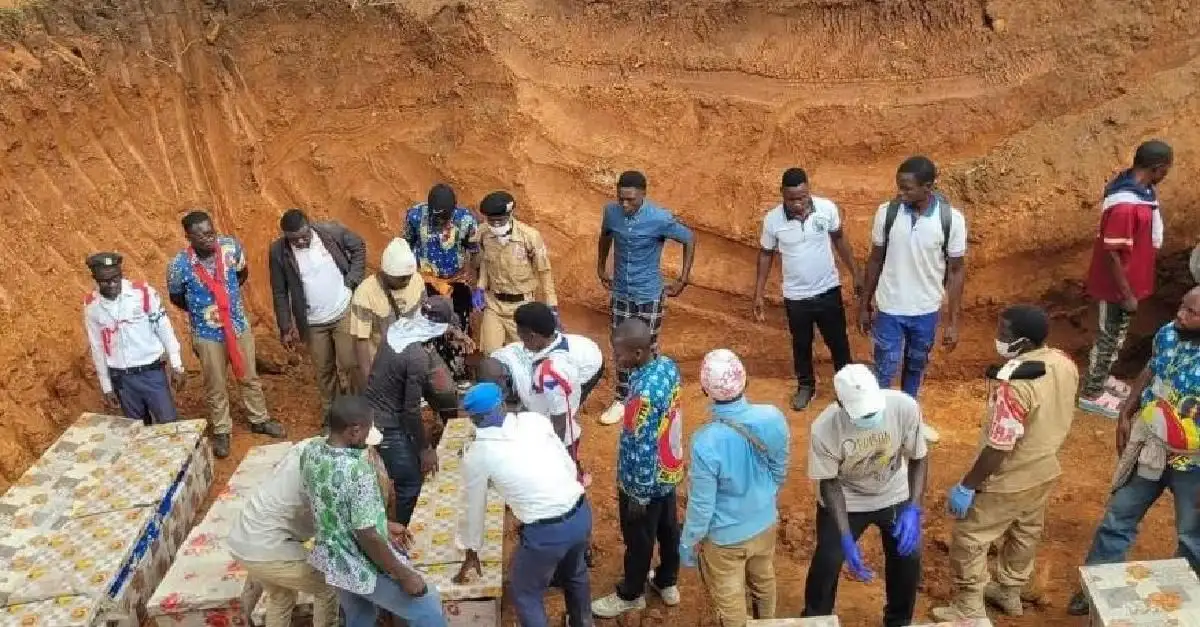
An attack on a church in Komanda, Ituri Province, in August, leading to a mass burial.
Attacks around October 23-29, including the beheading of a civilian in Makazini, the killing of 12 locals in Hoho, and the death of five Christian villagers in Mitali.
A raid on a Congolese army barracks in Mbau, North Kivu, on November 11.
An assault on September 25, where 64 Christians were reportedly killed.
The scale and frequency of these incidents, coupled with ISCAP's explicit claims of responsibility and detailed descriptions of the violence, suggest a deliberate and sustained campaign against Christian populations in the eastern DRC.
Read More: Damascus Cafe Bomb Kills 9, Wounds 20

Context of the Insurgency
The Allied Democratic Forces (ADF), now operating under the umbrella of the Islamic State's Central African Province (ISCAP), has been a persistent presence in eastern DRC for years. The group is known for its brutal tactics, including killings, abductions, and attacks on civilians.
A new and younger generation appears to be emerging in the leadership of ISCAP, potentially influencing the group's operational tempo and media presence.
Cyclical military offensives against ISCAP have been noted, suggesting a protracted conflict with no easy resolution.
The group's activities are concentrated in North Kivu and Ituri provinces, areas rich in resources and historically plagued by armed group activity.
Local residents have reportedly discovered hidden caches of supplies, indicating logistical support networks for the rebels.
"The Trump administration condemns in the strongest terms this horrific violence against Christians in the DRC and is committed to advancing the Washington Accords to bring peace back to the region and end targeted killings." – A White House spokesperson.
International Reaction and Concerns
While claims are made and reports surface, the situation in eastern DRC remains a complex web of conflict, displacement, and human suffering.
International bodies and former officials have raised alarms, with terms like "silent genocide" being used to describe the escalating violence against Christians.
Calls have been made for greater international attention and pressure on the DRC government to address these attacks, drawing parallels with attention given to other global conflicts.
Local pastors and community leaders continue to bear witness to the devastation, highlighting the personal toll of these attacks on families and individuals.
The consistent attribution of these acts to an ISIS-affiliated group underscores the transnational nature of extremist ideologies and their impact on localized conflicts.