


STOCKS PLUNGE AMIDST WAR AND OIL PRICE SHOCK
Global stock markets tumbled on Monday following U.S. and Israeli strikes on Iranian targets, a move that has sent oil prices soaring and fueled fears of a global recession. The conflict, which claimed the lives of senior Iranian officials including Ayatollah Ali Khamenei, has led to Iranian retaliation against crucial oil infrastructure and trade routes, notably the Strait of Hormuz.

An estimated 20 percent of the world's crude oil supply passes through the Strait of Hormuz, a disruption described as historically unprecedented by energy experts. This has led to oil prices skyrocketing and predictions of a recession climbing significantly. Prediction markets show a jump in recession probability to 38 percent.

Market Turmoil Across Continents
The financial fallout has been widespread. Germany's share market dove 3 percent, with some reports indicating a 4 percent fall mid-morning. The Australian dollar weakened by over 1 percent. In the Middle East, markets in Dubai saw significant drops, with major property and banking stocks falling around 5 percent.
Read More: British Columbia Adopts Permanent Daylight Saving Time March 2026, US Debates
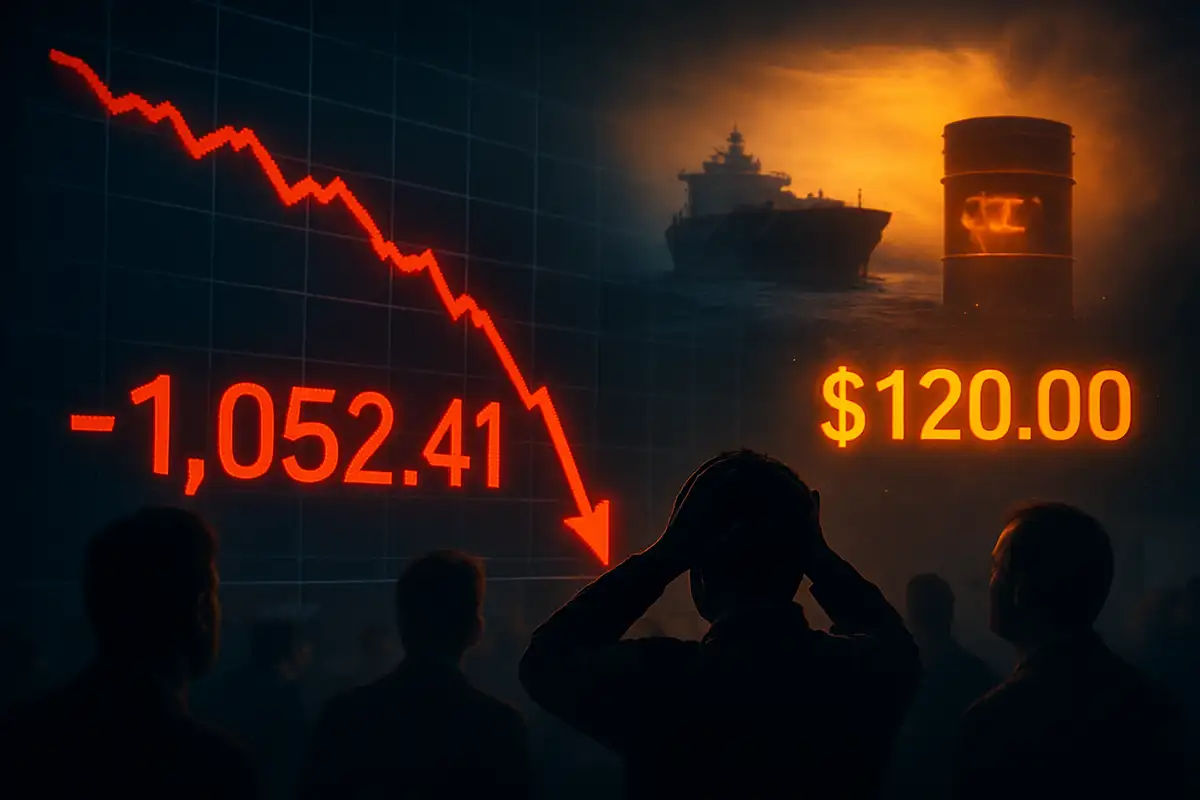
South Korea's KOSPI index experienced its worst day on record, plunging as much as 13 percent, triggering circuit breakers to halt trading. Exchanges implemented temporary daily price limits to curb panic selling. Many are labeling this period "Black Wednesday" for stock markets.

Trump's Response and Economic Uncertainties
President Donald Trump, while acknowledging the immediate oil price fluctuations, suggested they were a "very small price to pay for U.S.A., and World, Safety and Peace." He also announced via Truth Social that the U.S. Navy is prepared to escort tankers through the Strait of Hormuz. However, such statements have done little to assuade anxieties in global financial markets.
The U.S. economy, historically resilient to global shocks, faces renewed political risks from sustained energy price increases. The Federal Reserve faces a quandard: cutting rates to support falling stock markets could exacerbate inflation driven by oil prices, while further Iranian targeting of energy infrastructure in Saudi Arabia or the UAE could lead to larger market corrections. Existing safeguards like circuit breakers and robust capital requirements for banks have, so far, prevented a complete liquidity freeze.
Read More: ASX 200 Recovers After Global Sell-off, Tech Stocks Lead Gains
North Asia Bears the Brunt
While U.S. markets felt the initial shock, equity markets across North Asia appear to be the biggest financial casualties of the Iran conflict. This vulnerability is partly attributed to significant investor inflows into the region this year, driven by stronger earnings revisions compared to the U.S. South Korean retail investors, previously hesitant to engage with the blue-chip Kospi index, had recently initiated a buying spree.
A History of Financial Fragility
Recent reports highlight a persistent undercurrent of financial fragility, even amidst previously buoyant markets and rate cuts. International Monetary Fund analyses call for continued vigilance from policymakers regarding medium-term financial stability. Historical parallels to practices preceding the 2008 financial crisis are also being drawn, with concerns about highly leveraged U.S. financial institutions echoing past vulnerabilities. The capacity of current financial systems to withstand future shocks remains a point of considerable uncertainty.
Read More: US strikes Iran: Why are prices at the pump going up?