


Intel Corporation finds itself pinned between its hunger for functioning hardware and the jagged edges of American national security policy. Lawmakers in Washington are demanding to know why a company propped up by taxpayer money is "certifying" machinery from ACM Research, a firm with deep Chinese roots. While the company claims these tools stay off the actual assembly lines, the act of testing them suggests a future where Chinese-linked gears turn the wheels of American silicon sovereignty.
Intel has confirmed the receipt and testing of three specific tools from ACM Research.
Some of these tools have already "met performance standards," signaling a technical success that complicates the political optics.
Lawmakers from the House Selection Committee on China argue this violates the "fiduciary responsibility" Intel owes to a government that now owns a literal stake in its survival.
The company insists its production processes remain free of ACM hardware, creating a thin wall between "testing" and "using."
The Friction of Interest
The tension rests on a semantic gap: what a factory does today versus what it prepares for tomorrow. Intel is currently trying to sell its 18A manufacturing process to outside clients, a move that requires absolute reliability and, increasingly, political purity.
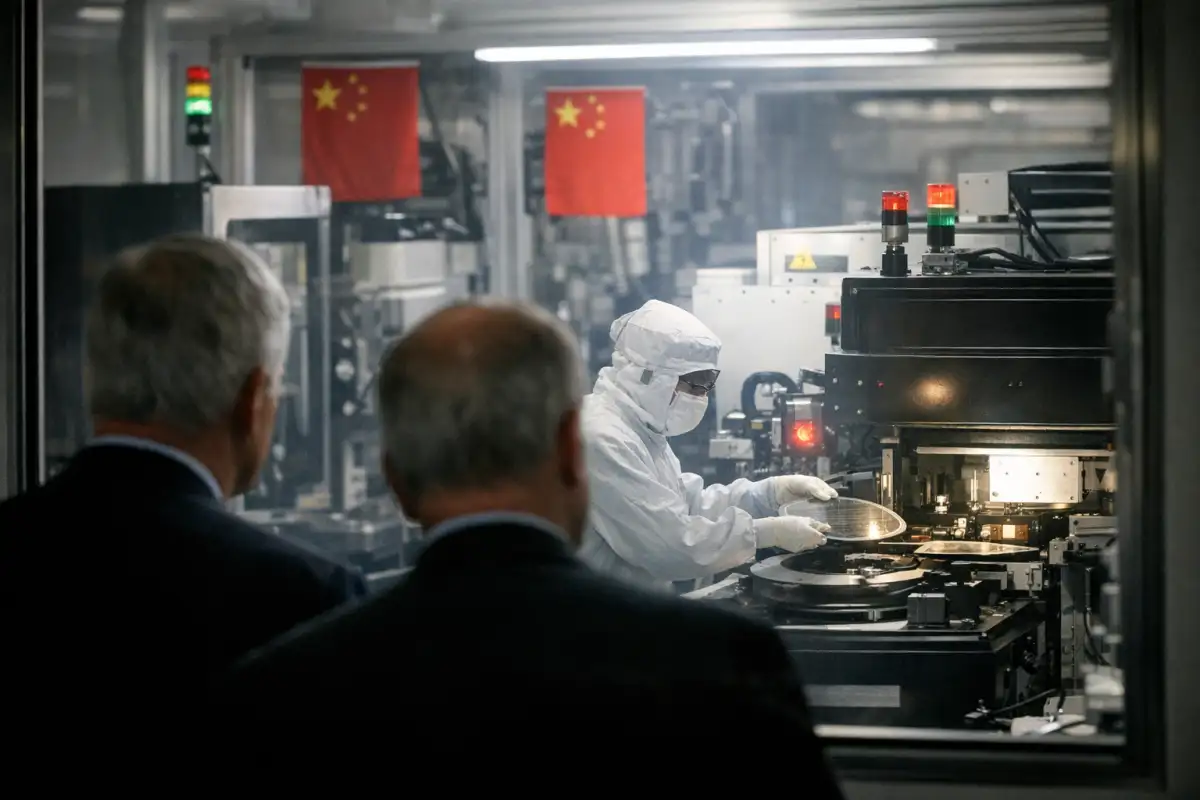
"This raises important questions about Intel's approach to safeguarding the public interest, including how the company benefits American economic interests." — House Selection Committee on China
The core tension is that Intel is certifying Chinese-linked tools for performance while the U.S. government subsidizes the company to escape Chinese supply chains.
Read More: New $2,500 Gaming PC Builds in 2025 Cost More for High Graphics
| Party | Stance | Hidden Variable |
|---|---|---|
| Intel | Claims full compliance; tools are for "testing," not "production." | Testing is the gateway to purchasing. |
| Lawmakers | Demand an end to China-linked tool integration. | Intel is now a ward of the state; it lacks private autonomy. |
| ACM Research | Admits shipping tools from Asian operations to U.S. customers. | Performance often beats politics in the cleanroom. |
Technical Creep and Corporate Paper-Trails
The machines in question aren't just objects; they are conduits for semiconductor manufacturing standards.

Intel has fumbled with its public image since August, when the Trump administration pressured the CEO over alleged Chinese ties.
The company’s US team has been the face of these transactions, likely to mask the "Asian operations" origin of the hardware.
Despite the noise, Intel has not promised to stop the tests. It only promises that the tools aren't currently making the chips sold to the public.
The Backdrop: A Public-Private Knot
Intel is no longer a standard private entity. Following massive government investment, it functions as a national laboratory with a stock ticker. The ACM Research entanglement reveals a hollow spot in the strategy to "de-risk" from China: the machines that make the chips are often as globalized as the chips themselves.
The 18A process is Intel's gamble to regain the lead from overseas rivals, but if the foundation of that process is built on "certified" Chinese-linked tools, the political floor may fall out before the technical one is finished. This isn't just a trade spat; it is a struggle over who owns the industrial blueprints of the next decade.