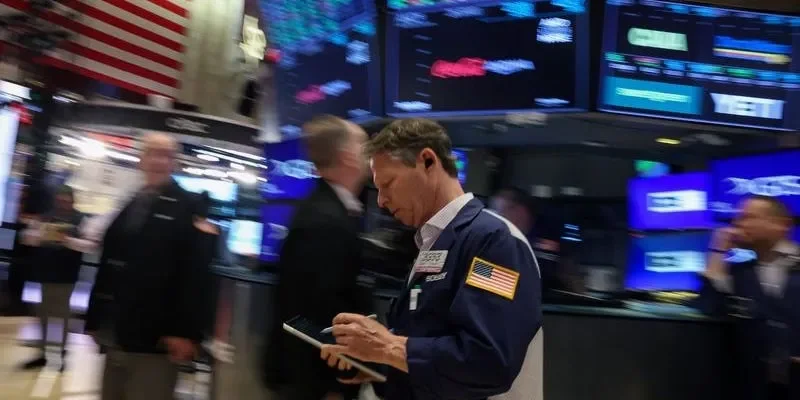
Indian equity markets saw a significant upswing, with the BSE Sensex climbing over 670 points and the NSE Nifty nearing the 25,000-mark. This rally was buoyed by several factors, including positive news surrounding potential Goods and Services Tax (GST) rationalization and an upgrade in India's sovereign credit rating by S&P Global.
The stock performance indicates a broader market optimism, with sectors like auto and insurance stocks leading the gains. Reports of possible GST rationalization emerged following Prime Minister Narendra Modi's announcements, sparking positive sentiment. Furthermore, the credit rating upgrade by S&P Global, moving India's long-term sovereign rating to 'BBB' from 'BBB-', served as another major impetus for the market's upward trajectory. Banking majors and NBFCs were specifically noted as being in focus following similar rating adjustments.

The market's ascent is not a singular event but appears to be part of a trend over recent months. For instance, on September 16, 2025, the Sensex had previously rallied over 590 points, with the Nifty 50 surpassing 25,230. This was attributed to gains in auto stocks, optimism around U.S. trade negotiations, and expectations of a U.S. Federal Reserve rate cut. Similarly, on August 18, 2025, GIFT Nifty indicated a strong opening, with Sensex and Nifty experiencing gains, partly fueled by the S&P Global credit rating upgrade.
Read More: Goldman Sachs: Stocks To Rise 11% But Expect More Market Swings
Broader Market Dynamics and Corporate Actions
The market’s movement reflects a complex interplay of global sentiment, domestic economic indicators, and corporate performance. On November 10, 2025, the Sensex had already jumped over 500 points to 83,720, with Nifty 50 trading above 25,620, driven by improving global sentiment and strong domestic earnings. A significant surge was also observed around May 12, 2025, where both Sensex and Nifty recorded substantial gains, marking their best day in four years. This rally, which saw the Sensex rise 2,975 points and Nifty 917 points, was linked to U.S.-China tariff decisions and a India-Pakistan ceasefire, lifting all sectors.
Read More: Aakhri Sawal Film Release Moves to May 8, 2026 with ISL Teaser
The operational mechanisms of the stock market, such as the '52-week High & Low' indicators and the rules for stock inclusion in indices like the Nifty, also play a role in market dynamics. These are adjusted for corporate actions like bonuses, consolidations, splits, and rights issues. The methodology for replacing stocks in an index, based on factors like free float market capitalization, liquidity, and turnover, ensures that the index composition remains relevant.
Notable Corporate Developments and Financials
Corporate activities and financial results have also been central to market movements. On October 23, 2024, several companies announced earnings updates, with Bajaj Finance shares surging following strong Q2 earnings. Gujarat Fluorochemicals Limited's subsidiary, GFCL EV Products Ltd., also announced a significant fundraising of Rs 1,000 crore at an equity valuation of Rs 25,000 crores. The report also touched upon various other corporate announcements, including WHO pre-qualification for Zydus Typhoid Vaccine and acquisition offers.
Read More: Thermon Group Reports Strong Q3 2026 Results, Stock Target Set
Specific companies like Infosys have witnessed intraday fluctuations, while others like Influx Healthtech made a notable debut on the NSE SME platform. The financial performance data, showing year-on-year increases in net profit, revenue, and EBITDA for some companies, directly impacts investor confidence and stock valuations. For instance, a report from May 2025 highlighted companies with substantial revenue growth and improved EBITDA margins.
Market Indicators and Trade Timings
The daily functioning of the market involves specific trading sessions and settlement cycles. For instance, the report mentions T+0 settlement trade timings running from 9:15 AM to 1:30 PM. The "Market Watch - Equity/Stock" section provides data on securities where orders have been received during the pre-open session. Understanding these technical aspects of market operations is crucial for a complete picture of trading activity.