)
A recent trade agreement between India and the United States has brought about significant tariff reductions on a range of American goods entering India. While both nations have publicly acknowledged progress on trade issues, including India's commitment to addressing regulatory hurdles and a notable willingness to purchase American aircraft and aviation parts, a central point of contention—India's imports of Russian oil—remains shrouded in ambiguity. This situation has generated varied reactions and a degree of uncertainty regarding the comprehensive scope of the accord.
Agreement Details and Economic Implications
Following a phone call between US President Donald Trump and Indian Prime Minister Narendra Modi, the announcement of a trade deal surfaced. Key elements highlighted include:
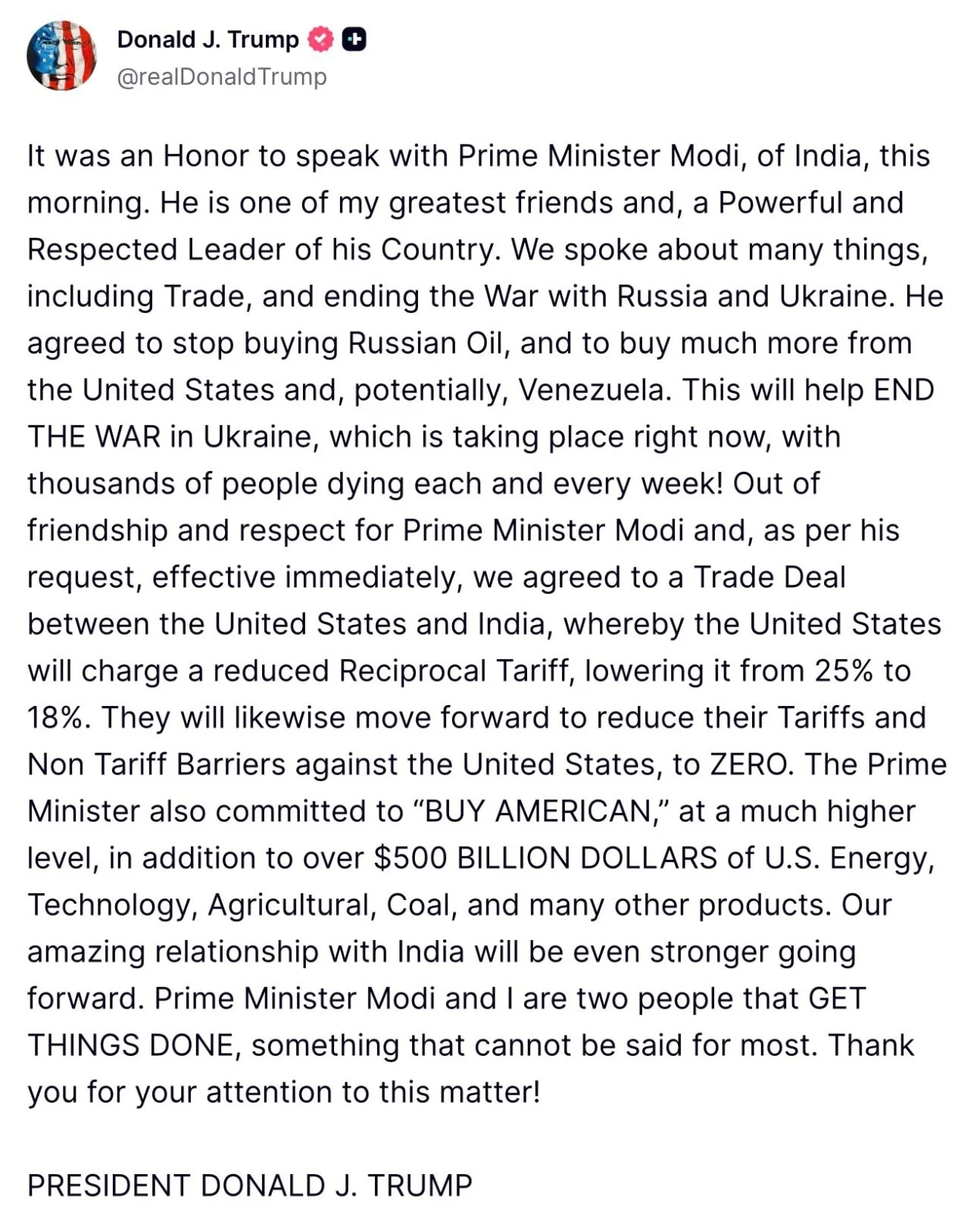
Reciprocal Tariff Reductions: The United States has signaled a substantial cut in tariffs on Indian goods, moving from an earlier imposition of 50% down to 18%. This tariff reduction for Indian products entering the US has been publicly confirmed by Indian officials, including Union Minister Ashwini Vaishnaw, who characterized the deal as a "win-win."
Market Access for US Goods: Reports suggest that India will phase in reduced or eliminated duties on various US industrial products. Piyush Goyal, an Indian minister, has described this as a significant advantage for India, particularly in light of US export controls on high-performance computing chips essential for artificial intelligence.
Aircraft and Parts Purchase: India has indicated plans to acquire aircraft and related parts from the US, an element seen as contributing to the overall economic exchange.
Read More: Kim Jong Un's Daughter May Be Next Leader of North Korea
The confirmed aspect of the deal revolves around tariff relief and increased market access for American products in India.
The Unresolved Question of Russian Oil
A significant divergence exists between public statements from the US and the official confirmations from India concerning Russian oil imports.
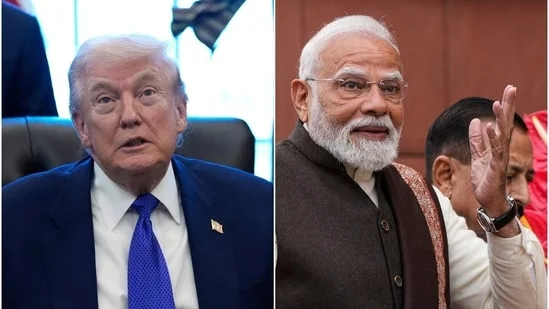
US President Trump's Assertions: Donald Trump publicly stated that India would halt its purchases of Russian oil and redirect such imports towards the US, possibly also including Venezuela. He framed this as an energy component of the broader economic realignment.
Indian Government's Position: While Prime Minister Narendra Modi welcomed the tariff relief and spoke of strengthening the partnership, his public statements, and those from other ministers like Ashwini Vaishnaw and Piyush Goyal, have not explicitly confirmed any commitment to cease Russian oil imports or to zero out tariffs on all US goods.
Kremlin's Response: Russia's government, through Kremlin spokesman Dmitry Peskov, stated that it had not received any formal communication from New Delhi regarding a halt in Russian oil imports. Russia is reportedly monitoring the situation closely and respects the bilateral relationship between India and the US.
Media Reports and Discrepancies: Indian media outlets have presented varying perspectives. Some reports suggested an agreement from India to reduce Russian oil purchases based on a call between Trump and Modi, while others, like an Indian foreign ministry spokesperson, stated they were unaware of such a call.
Read More: UK Economy Grew a Little at End of 2025
The cessation of Russian oil imports by India, as claimed by the US, remains unconfirmed by Indian officials and has not been communicated to Russia.
Strategic Flexibility and Trade Tensions
The potential shift in India's energy sourcing has drawn attention from international bodies and analysts.
Moody's Assessment: Moody's has indicated that an immediate end to India's Russian oil purchases following a US trade deal could present a "big disruption" for India's economy.
Previous Trade Strains: The recent agreement follows a period of strained trade relations, marked by US imposition of tariffs on Indian goods, including a specific levy linked to Russian oil purchases. The current deal appears to involve the rollback of such punitive measures.
Bilateral Trade Agreement (BTA) Talks: Washington has acknowledged India's request for further tariff reductions and indicated it would consider these during ongoing negotiations for a full-fledged US-India Bilateral Trade Agreement (BTA), discussions for which commenced in February.
Read More: People Protest Worldwide Due to Money Problems
India's past trade friction with the US has included energy-related tariffs, the resolution of which is a key component of the current, albeit partially clarified, agreement.
Expert Perspectives
Analysts offer varied interpretations of the trade pact's nuances.

"The oil element of the deal does not reduce India’s strategic flexibility." — Mahavir Lunawat, CMD of Pantomath Capital, as cited in India Today.
This perspective suggests that India might retain significant autonomy in its energy decisions, even amidst US claims of a commitment to reduce Russian oil imports. The framing of the energy clause by Donald Trump as part of a wider economic reset indicates a US attempt to influence India's geopolitical energy choices.
Unresolved Aspects and Future Trajectory
The core of the India-US trade accord, as currently understood, centers on tariff adjustments and enhanced market access for American goods. The assertion by the US that India will cease Russian oil imports, however, lacks corroboration from Indian official statements and has not been formally communicated to Russia. This disparity creates an environment where the full implications of the deal remain subject to interpretation and future clarification. The initiation of talks for a comprehensive Bilateral Trade Agreement (BTA) suggests a broader intent to solidify economic ties, but the immediate impact will likely be shaped by how the Russian oil issue is ultimately addressed or remains unresolved.
Sources
Zeenews.india.com: Published recently. Covers tariff relief and energy commitments, noting lack of clarity on Russian oil.
Hindustantimes.com: Published 5 days ago. Details the claimed $500 billion deal, tariff reductions, and Trump's assertions on Russian oil, contrasted with Indian official statements.
Financialexpress.com: Published 1 day ago. Focuses on tariff relief for US goods and potential reimposition of duties if Russian oil purchases resume.
Link: https://www.financialexpress.com/policy/economy/trade-off-deal-delivers-tariff-relief/4135082/
Indiatoday.in: Published 5 days ago. Examines the "big oil question" and Trump's framing of the energy clause, with commentary on India's strategic flexibility.
Business-standard.com: Published 5 days ago. Reports the Kremlin's reaction, highlighting their lack of communication from India regarding Russian oil.
Cnbc.com: Published October 22, 2025. Mentions Indian media reports of an agreement to cut Russian oil purchases and US tariff slashes.
Firstpost.com: Published 5 days ago. Provides an explainer on the India-US trade agreement and its key components.
Economictimes.indiatimes.com: Published 5 days ago. Features an analysis from Moody's on the potential disruption of halting Russian oil imports. (Note: Content extraction was not possible for this source).
Read More: Sir Jim Ratcliffe Says Sorry for Immigration Comments



:max_bytes(150000):strip_icc():focal(612x1166:614x1168)/Switzerland-accident-fire-020826-02-7cbc5d49ad0f413883178cfd825a77de.jpg)