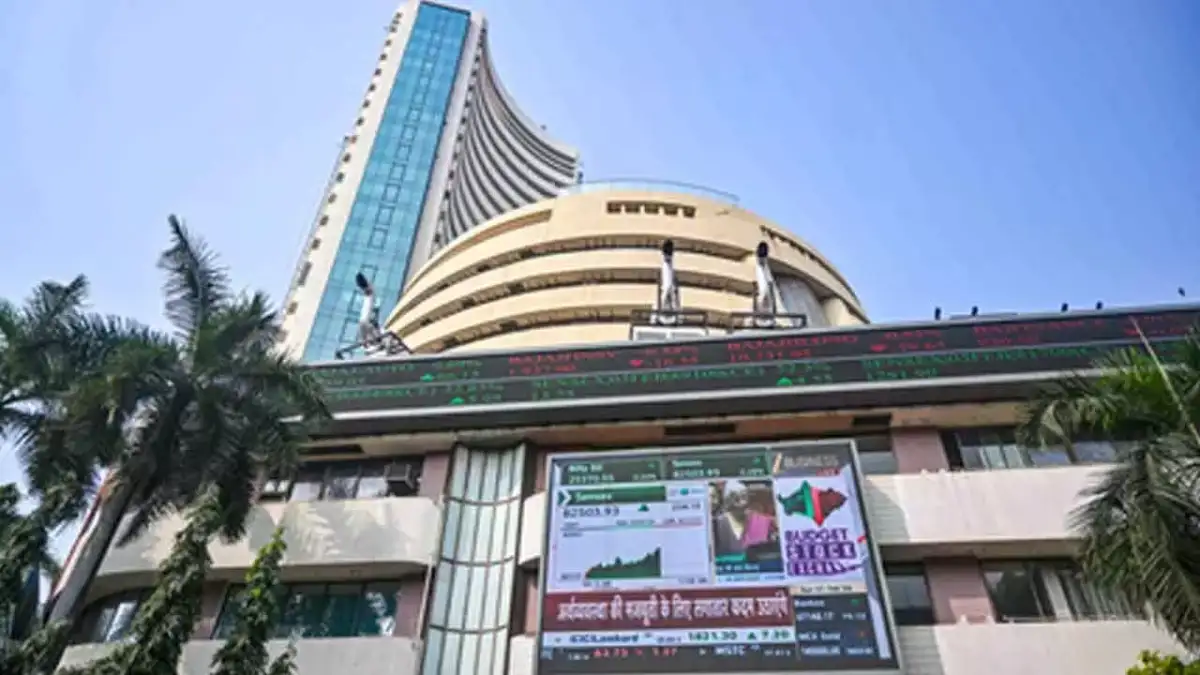
The Indian stock market, a mercurial beast often swayed by whispers of global pacts and domestic pronouncements, has this week staged a notable recovery. After a period of volatility, including an initial shock from budget-related tax changes, indices like the Sensex and Nifty50 have seen significant gains. This rebound is being largely attributed to a perceived breakthrough in trade talks with the United States and a steady hand from the Reserve Bank of India (RBI). But in the intricate dance of markets, are these gains built on solid ground, or are they a fleeting illusion, masking deeper uncertainties?
The Familiar Rollercoaster: Trade Deals and Rate Stasis
The narrative of the past week for Indian equities has been dominated by two key events: the announcement of a positive development in the India-US trade deal and the Reserve Bank of India's Monetary Policy Committee (MPC) decision to maintain the status quo on interest rates. These two pillars, according to market analysts, have been instrumental in shoring up investor confidence.
Read More: FIFA World Cup 2026 Revenue Reaches $15 Billion With New Ticket Prices
The India-US trade deal, though details remain somewhat opaque in the public domain, has been painted as a significant positive. Reports suggest a reduction in US tariffs on certain Indian goods, a move that would directly benefit Indian exporters. This news appears to have overshadowed earlier anxieties, such as the impact of an increased securities transaction tax (STT) on derivatives, which had cast a shadow post-Budget 2026-27. The market's sharp recovery suggests that the perceived benefits of this trade agreement are substantial enough to absorb such domestic fiscal adjustments.
Simultaneously, the RBI's MPC has chosen to hold the repo rate steady at 5.25%. This decision, coupled with a projection of FY26 inflation at a constructive 2.1%, signals a degree of confidence from the central bank regarding both economic growth and price stability. A stable interest rate environment is typically viewed favorably by markets, as it reduces borrowing costs for businesses and can encourage investment. The RBI's "neutral policy stance" has further boosted risk appetite, allowing investors to potentially chase higher returns.
However, this confluence of positive news begs critical questions:
What are the concrete terms of the India-US trade deal? While tariffs are mentioned, are there other significant concessions or agreements that would provide a more robust foundation for long-term trade?
How sustainable is this rebound? Is it driven by genuine economic fundamentals or by speculative trading on anticipated outcomes?
What specific domestic economic factors are supporting this positive outlook beyond the trade deal and RBI's stance?
Echoes of the Past: Deja Vu in Market Reactions
This pattern of market rebound following trade negotiations and central bank policy announcements is not entirely new. We've seen similar reactions in the past, often creating a temporary surge before other underlying issues come to the fore.
Consider the period around September 2025. Market cues then also included an impending RBI MPC meeting and the ongoing discussions around an India-US trade deal. At that time, there was also concern about the H-1B visa fee hike potentially impacting India's crucial IT sector, alongside US tariffs on pharmaceutical products. These issues highlight a recurring tension: while positive bilateral trade developments can offer a boost, lingering concerns about specific sector impacts and protectionist measures from trading partners can act as a drag.

The role of foreign institutional investors (FIIs) and domestic institutional investors (DIIs) is also crucial. In recent times, there have been instances of significant FII outflows, only to be partially offset by DII inflows. This dynamic can create a complex market picture. For instance, on a particular Friday, FIIs offloaded equities worth Rs 3,769.31 crore, while DIIs stepped in, buying stocks worth Rs 5,595.84 crore. This indicates a potential battle between foreign and domestic capital, with domestic players absorbing some of the selling pressure.
Read More: Hunter Region Gets $12 Billion Train Factory
Key questions arise from these historical parallels:
Are the underlying vulnerabilities that caused past market jitters still present, despite the current optimism?
How significant is the impact of foreign fund flows on the sustainability of this rebound?
Does the current market narrative sufficiently account for potential geopolitical risks or global economic headwinds?
The Numbers Game: GST, Inflation, and Growth Projections
Beyond the headline-grabbing trade deals and RBI meetings, underlying economic data provides a more nuanced picture. The January GST collections, reported to be over Rs 1.93 lakh crore, marking a 6.2% year-on-year increase, do suggest a healthy level of consumption and import activity. This figure, in isolation, is a positive indicator of economic momentum.
However, this must be viewed in conjunction with other factors. The RBI's projection of FY26 inflation at 2.1% is notably constructive. But has inflation been consistently moving in this favorable direction, or is this a projection based on specific assumptions?
| Key Economic Indicators | Latest Data/Projection | Significance | Potential Concerns ||————————————|————————————|———————|——————————|| GST Collections (Jan) | Over Rs 1.93 lakh crore (+6.2% YoY) | Strong consumption & imports | Are these collections broad-based across sectors? || RBI Repo Rate | 5.25% (Unchanged) | Stable borrowing costs | Does this rate sufficiently curb potential inflationary pressures? || RBI FY26 Inflation Projection | 2.1% | Mild inflation outlook | Is this projection overly optimistic given global price volatility? || Market Performance (Sensex/Nifty) | Rebound with healthy gains | Investor confidence booster | How much of this is sentiment-driven vs. fundamental? |
Read More: US Markets Drop as Consumer Spending Slows Down
The stability provided by the RBI maintaining its neutral policy stance is a double-edged sword. While it aids risk appetite, it also raises the question of whether the central bank is adequately prepared to act should inflation begin to creep up unexpectedly, especially in a volatile global environment.
Further probing questions include:
What are the specific drivers behind the projected 2.1% inflation for FY26? Are these sustainable or based on temporary factors?
How robust is the underlying economic growth that underpins these GST numbers? Are there any signs of deceleration in key sectors?
What is the broader context of global inflation and economic growth, and how does India's current stance align with these international trends?
A New Ambassador, a New Alliance? Unpacking "Pax Silica"
The arrival of Sergio Gor, the new US Ambassador to India, has been accompanied by significant pronouncements. His assertion that "no country is as essential as India to the United States" is a strong diplomatic statement. More intriguing, however, is his announcement of an invitation to New Delhi for a US-led strategic alliance, known as 'Pax Silica', focused on critical minerals and artificial intelligence.
Read More: Rocket Companies brand update in April 2026 changes logos and names

This initiative, if it materializes, could represent a substantial shift in geopolitical and economic alignments. Critical minerals are vital for advanced technologies, and AI is set to redefine industries. A strategic alliance in these areas could offer India significant advantages, potentially unlocking new avenues for investment and technological collaboration.
However, this also opens a Pandora's Box of questions:
What are the precise objectives and commitments expected of India within 'Pax Silica'?
What are the implications of aligning closely with the US on critical minerals and AI, particularly in the context of global supply chains and geopolitical rivalries?
Could this alliance create new trade barriers or exclusionary practices for other nations, potentially leading to further trade fragmentation?
How will this impact India's existing trade relationships and its broader foreign policy of strategic autonomy?
The remark about actively engaged discussions to firm up a trade deal, coupled with the 'Pax Silica' invitation, suggests a deepening strategic partnership. The market's positive reaction to trade deal hopes might be an early indicator of this evolving relationship.
Looking Ahead: Navigating Uncertainty with Open Eyes
The current market buoyancy, fueled by the India-US trade deal optimism and the RBI's dovish stance, presents a complex picture. While the immediate indicators are positive – with markets staging a rebound and GST collections showing strength – a critical free-thinker must remain vigilant.
Read More: May 2026 Stocks: Momentum and Dividend Leaders Gain
The rebound appears to be a direct response to anticipated benefits from the trade deal and the comfort derived from the RBI's steady hand. However, the lack of concrete details on the trade agreement, coupled with historical instances of market volatility triggered by external shocks and sector-specific concerns, warrants a cautious approach.
The market's current optimism is largely built on the narrative of a strengthening India-US trade relationship and the stability offered by the RBI's monetary policy. While positive, the underlying sustainability of these gains hinges on the clarity and depth of the trade deal, the management of potential geopolitical risks, and the true health of the domestic economy beyond headline figures.
Moving forward, investors and analysts must closely scrutinize:
The actual terms and impact of the India-US trade deal. Transparency and clarity are crucial.
The trajectory of global economic conditions and geopolitical developments. Escalating tensions or unexpected economic downturns elsewhere can swiftly impact even strong domestic markets.
The real drivers of domestic consumption and industrial activity. Are these sustainable or subject to external influences?
The long-term implications of strategic alliances like 'Pax Silica'. These could redefine India's economic and geopolitical landscape.
The market has reacted positively, but the journey ahead requires a keen eye for detail, a critical assessment of potential risks, and a clear understanding of what truly drives long-term economic prosperity. The current rally might be a sign of strength, but only time and deeper investigation will reveal if it's a genuine surge or a temporary eddy in a larger, more complex flow.
Read More: Gulf Oil Exports Rise in June but Still Below Pre-War Levels
Sources:
The Hans India: https://www.thehansindia.com/business/indian-markets-rebound-this-week-over-india-us-trade-deal-rbi-mpc-decisions-1046352
Firstpost: https://www.firstpost.com/business/markets-rebound-after-budget-shock-rupee-logs-strongest-weekly-rally-years-13977116.html
Outlook Money: https://www.outlookmoney.com/invest/equity/market-cues-this-week-rbi-mpc-meeting-india-us-trade-deal-us-macro-data-among-other-factors-likely-to-influence-s-street
The Week: https://www.theweek.in/news/biz-tech/2026/01/12/sensex-nifty-rebound-after-5-day-slump-as-india-us-trade-deal-hopes-boost-markets.html
Economic Times: https://economictimes.indiatimes.com/markets/stocks/news/india-us-trade-deal-800-point-gift-nifty-surge-sets-tone-for-strong-tuesday-opening-20-stocks-in-focus/articleshow/127869476.cms