


India has slid to 157th out of 180 countries in the 2026 World Press Freedom Index, a significant drop that places it in a "very serious" category for press freedom conditions. This assessment, released by Reporters Without Borders (RSF) ahead of World Press Freedom Day, highlights a worsening global environment for journalists, with 100 countries seeing a decline in their press freedom scores. The index evaluates countries based on five indicators: economic, legal, political, social, and security conditions for journalists.
Key Findings and Criticisms
The report details a global trend of increasing political pressure on the press and rising authoritarian tendencies. RSF specifically points to a weakening media market and the use of colonial-era laws such as sedition and defamation by governments to stifle reporting. This legal pressure, the report notes, particularly impacts the editorial independence of smaller media outlets.
Read More: US Expedites Arms Sales to Middle East, Bypassing Congress
"On World Press Freedom Day, the Congress party stands firmly with every fearless voice that speaks truth to power and fights to protect democracy," the party wrote on X.
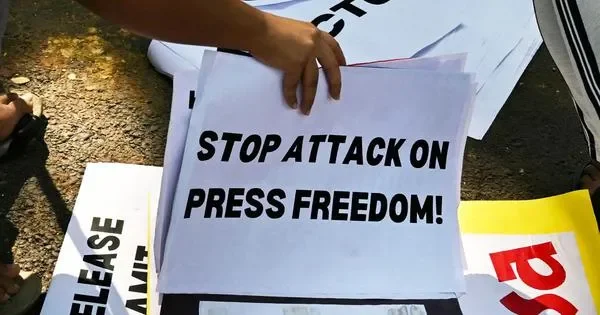
The Congress party has seized upon India's low ranking to launch a sharp critique of the current state of press freedom in the country, asserting that a free press, vital for democracy, is "under attack."
Nuances in Media Landscape and Global Comparisons
The RSF report also flags specific issues within India's media ecosystem. It states that the media landscape does not adequately reflect the country's social diversity. A significant portion of TV media, particularly in Hindi, reportedly dedicates substantial airtime to religious news, sometimes with overt expressions of hatred towards Muslims. Furthermore, the report indicates a bias in journalism, especially in managerial roles, being dominated by Hindu men from upper castes, which influences the angles and subjects covered.
Conversely, the report acknowledges counter-examples like 'Khabar Lahariya,' an outlet staffed entirely by women journalists from rural areas, representing ethnic or religious minorities. The overarching influence of Hindu nationalist ideology is cited as a dominant force, shaping current affairs, framing political discourse, and curtailing the space for dissenting or minority voices.
Read More: Western Ghats Dragonfly Numbers Drop, Worrying Scientists
In regional comparisons, Pakistan has seen a marginal improvement, climbing to 153rd, while Nepal (87th), the Maldives (108th), Sri Lanka (134th), Bhutan (150th), and Bangladesh (152nd) all rank higher than India. Countries faring worse than India include Myanmar (166th), Afghanistan (175th), and China (178th). Norway maintains its top position for the tenth consecutive year, while Eritrea remains at the bottom.
Background
The World Press Freedom Index has been published annually for 25 years, tracking the conditions under which journalists operate globally. This year's findings underscore a long-term, deepening crisis in press freedom worldwide. The index uses five key indicators to assess press freedom, with economic, legal, political, social, and security conditions for journalists being paramount. The report suggests that the average press freedom score across the 180 studied countries and territories has reached a historical low.
Read More: US May Restart Iran Strikes as Talks Fail


