


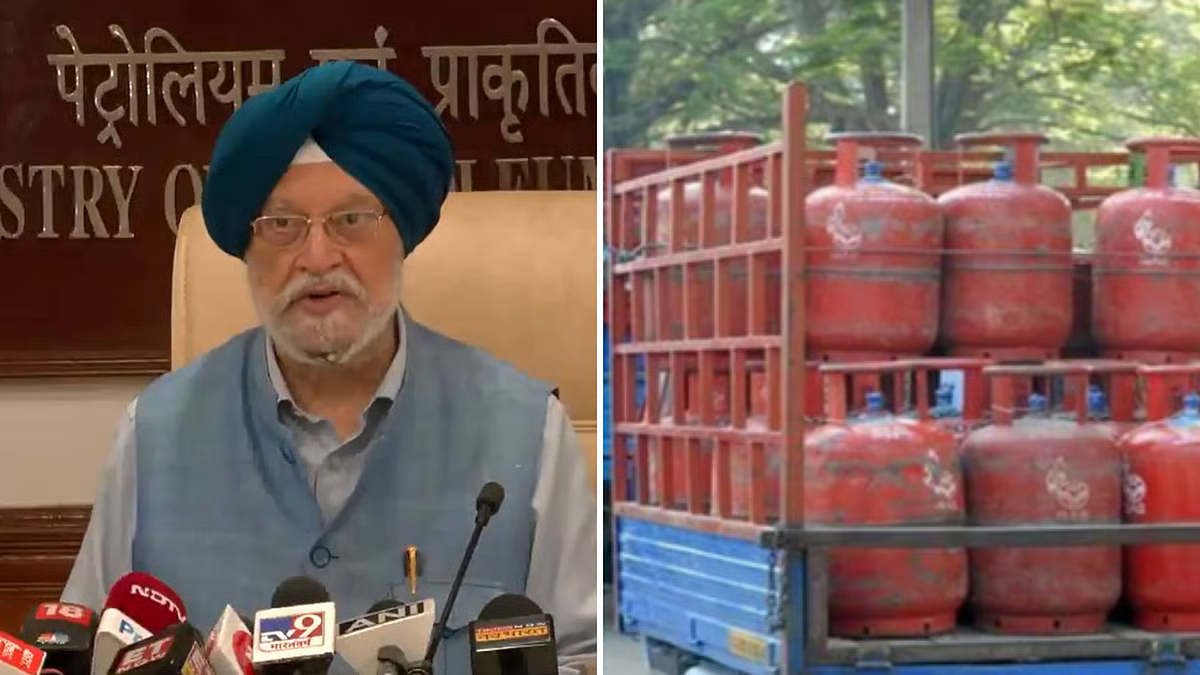
The Union Government upped domestic LPG cylinder prices by ₹50 on April 7, 2025, a move hitting both subsidized and non-subsidized households across India. While international Brent crude dipped toward $60 a barrel, the state simultaneously adjusted excise duties on petrol and diesel to capture the fiscal surplus, effectively preventing a retail price drop for motorists at the pump. This fiscal maneuvering coincides with a ₹19 lakh crore stock market evaporation triggered by new trade tariffs and ongoing volatility in the Middle East.
| Energy Type | Price Action | Market Reality |
|---|---|---|
| Domestic LPG | +₹50 per cylinder | All consumers bear the burden regardless of subsidy status. |
| Petrol/Diesel | Excise Duty Increase | Retail prices stay flat; savings from lower crude kept by the State. |
| Commercial LPG | Hits ₹1,883 (Delhi) | Influenced by inventory lags and West Asia military friction. |
The Justification of Lag
The state frames this as a necessary lag in the Energy Market. Oil Marketing Companies (OMCs) claim to be processing older, expensive stock while the current market price falls.

“The crude inventory that they’re carrying is at $75 on average per barrel… international prices came down to $60, but our companies carry inventory over a 45-day period,” stated Hardeep Singh Puri, Union Oil Minister.
The government maintains that OMCs have been selling at a loss to protect consumers from previous spikes.
Price revisions for LPG are now slated for a 15-day review cycle based on international benchmarks.
No immediate retail relief is planned for petrol, as the excise hike "sets off" the warranted reduction from falling crude.
The Political Theater of Inflation
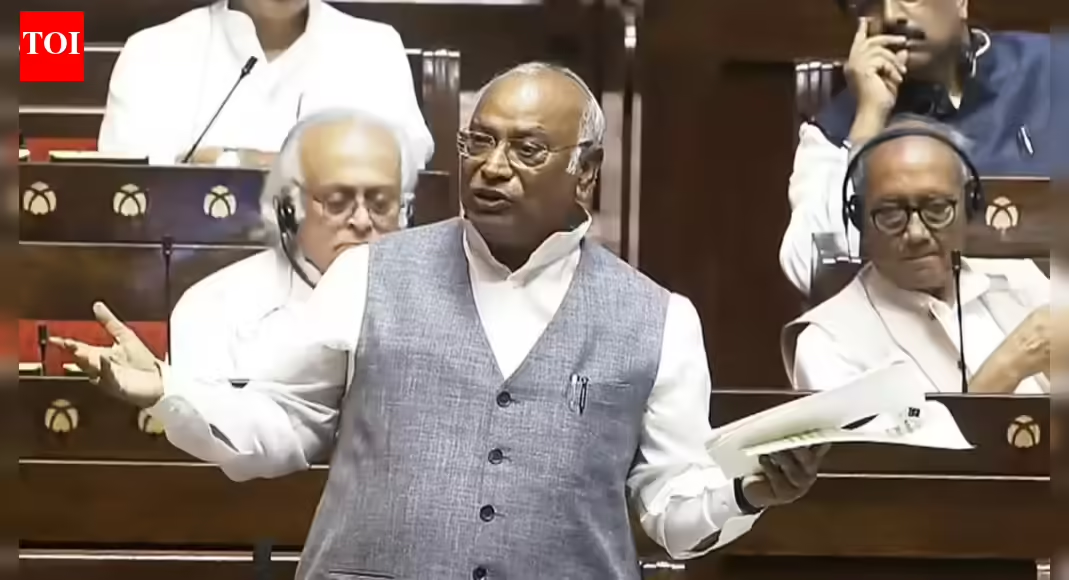
Opposition leaders utilized the price hike to sharpen their rhetoric against the administration's "Achhe Din" branding. Mallikarjun Kharge and Rahul Gandhi labeled the Prime Minister the "Inflation Man," timing their critiques to the stock market crash and the irony of hiking cooking gas prices during celebratory cycles for women.
Read More: US Oil Rig Count Rises Slightly as WTI Price Hits $92.21

Mamata Banerjee (TMC) described the hike as a "sadist" assault on household budgets, noting that essentials are becoming "luxuries."
Priyank Kharge (Congress) argued that while the state of Karnataka funds Guarantee Schemes to provide dignity, the Centre extracts that wealth back through fuel taxes.
K.T. Rama Rao (BRS) pointed out the dissonance between crashing global oil prices and the rising domestic cost of living.
Background: The Disconnected Ledger
The math of Indian fuel pricing remains divorced from immediate global reality due to a "deregulated" framework that historically adjusts upward with speed but downward with friction. While the Middle East conflict provides a backdrop of uncertainty, the internal logic of the hike rests on the government's need to stabilize the balance sheets of state-run oil firms.
The Pradhan Mantri Ujjwala Yojana, designed to transition the poor to clean fuel, now faces a reality where the poorest beneficiaries must absorb the same ₹50 increase as the wealthy. This lopsided application of the price hike suggests a shift in priority from "universal access" to "fiscal recovery." Meanwhile, the stock market's reaction to global trade tensions adds a secondary layer of financial pressure on the middle class, whose savings are being squeezed from both the equity markets and the kitchen stove.
Read More: Anantapur Youths Run 5K to Pledge Drug-Free India on March 10