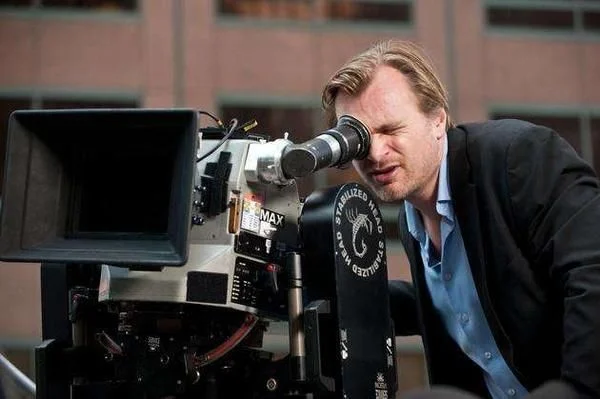
Christopher Nolan's 2010 film, 'Inception', now stands as a more profound influence on contemporary filmmaking than Stanley Kubrick's 1968 landmark, '2001: A Space Odyssey'. The shift signifies a move away from grand, cosmic spectacle towards intricately constructed, psychologically charged narratives that manipulate perception and reality.
The pervasive impact of 'Inception' is observable in its thematic echoes and narrative structures across a range of recent cinematic endeavors. Directors appear more inclined to explore the malleability of consciousness, the architecture of dreams, and the unreliability of subjective experience, rather than the stoic, existential contemplation that defined earlier science fiction epics. This reflects a broader cultural engagement with fragmented realities and the blurring lines between the physical and digital worlds.
DECONSTRUCTING REALITY
'Inception' introduced a complex lexicon of visual and narrative techniques that have since permeated mainstream cinema. Its exploration of layered dreams, mind-bending physics, and the blurring of internal and external worlds provided a blueprint for filmmakers grappling with how to represent abstract concepts visually.
Read More: Film Duologies Praised in 2025 for Complete Stories

Narrative Complexity: The film's non-linear storytelling and intricate plot, demanding active audience participation, has become a hallmark of certain contemporary blockbusters.
Visual Metaphors: Nolan's depiction of cities folding in on themselves and gravity-defying action sequences offered new visual metaphors for psychological states and internal conflict.
Ambiguous Endings: The film's famously open-ended conclusion encouraged widespread debate and analysis, a pattern that has been emulated in subsequent films seeking to provoke audience engagement beyond the closing credits.
A LEGACY OF IMPRESSION
While '2001: A Space Odyssey' remains a touchstone for its philosophical depth and visual innovation, its direct influence is more confined to academic study and art-house cinema. The sheer, awe-inspiring scope of '2001' was revolutionary, but its meditative pace and abstract nature presented a different kind of challenge to audiences and filmmakers alike.
In contrast, 'Inception's' blend of intellectual rigor and visceral action resonated with a wider audience, making its complex ideas more accessible and thus, more readily adopted. The "dream-within-a-dream" structure, the heist-like execution of subconscious infiltration, and the visual spectacle of altered realities have become recognizable tropes.
HISTORICAL CONTEXT
Christopher Nolan, born in London in 1970, began his filmmaking journey with short films in the late 1980s and early 1990s. His early feature, 'Following' (1998), garnered attention for its non-linear narrative, a style he would further refine in 'Memento' (2000). His career has since been marked by a series of commercially successful and critically discussed films, including 'Batman Begins' (2005), 'The Dark Knight' (2008), 'Interstellar' (2014), and 'Dunkirk' (2017). His work often grapples with themes of time, memory, identity, and the nature of reality.
Read More: Hot Topic Tweet About Tattoos Sparks Nostalgia Debate
Stanley Kubrick's '2001: A Space Odyssey' (1968) is widely considered a pinnacle of science fiction cinema, lauded for its groundbreaking special effects, ambiguous narrative, and philosophical exploration of human evolution, artificial intelligence, and extraterrestrial life. Its impact on visual effects and narrative ambition is undeniable, but its influence on the immediate landscape of popular filmmaking appears to be yielding to Nolan's more accessible, yet equally complex, interrogations of the mind.


/www.canalplus.com/largetile.png)