


Budapest, Hungary – Voters are heading to the polls in Hungary today in what is shaping up to be a watershed moment for the nation, potentially ending Prime Minister Viktor Orbán's 16-year grip on power. The election is marked by a record-breaking voter turnout in its initial hours, indicating a populace deeply engaged with the prospect of significant political change. Observers across the European Union, Russia, and the United States are closely monitoring the outcome, which could send ripples through Western right-wing movements, including circles close to U.S. President Donald Trump.

The contest pits the long-standing incumbent, Orbán, against Péter Magyar, a 45-year-old former insider of Orbán's Fidesz party who has rapidly emerged as the most serious challenger. Magyar, leading the Tisza party, has capitalized on widespread discontent fueled by years of economic stagnation, soaring living costs, and allegations of corruption benefiting individuals tied to the government. Young voters, in particular, appear eager for a departure from the status quo.
Read More: Taiwan Holds Nantou County Drills to Prepare for State Collapse

Orbán's government has, during the campaign, employed a strategy of warning voters that Magyar's Tisza party would draw Hungary into the ongoing conflict in Ukraine, a claim Magyar has vehemently denied. This narrative war underscores the high stakes and deep divisions at play in this pivotal election.

The Stakes: A Shifting Landscape
The implications of this election extend beyond Hungary's borders. A victory for Magyar could signal a significant shift in Hungary's geopolitical alignment, potentially strengthening ties with the European Union and NATO, as he has pledged to do. Conversely, an Orbán win would likely solidify his existing policies and alliances, which have often been at odds with Brussels.
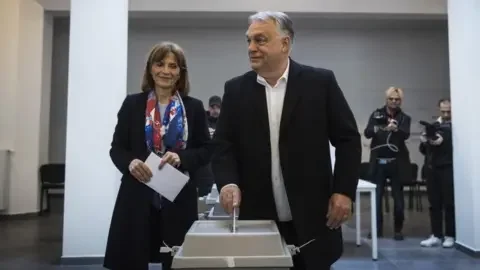
Polls have indicated a lead for Magyar's Tisza party, but analysts caution that the complexities of Hungary's electoral system mean vote shares do not always translate directly into parliamentary seats. The possibility of various outcomes—ranging from an Orbán acceptance of a Magyar-led majority to a contested result—remains a subject of speculation.
Read More: Marquez Wins Hungarian Sprint Race After Shoulder Surgery
A Public Weary of Stagnation
Much of the electorate appears to be grappling with the economic realities of the past few years. Three years of economic stagnation, coupled with rising living expenses and the visible enrichment of government-linked oligarchs, have fostered a palpable weariness with Orbán's leadership among a significant portion of the population.
Magyar has directly addressed these concerns, tapping into a vein of public frustration over alleged state corruption and declining living standards. His platform centers on a promise of change and a potential recalibration of Hungary's international relationships, moving away from what some perceive as an overly close stance towards Russia and focusing on mending ties with European partners.
Background: A Long Tenure Under Orbán
Viktor Orbán has been at the helm of Hungary for 16 years, becoming the European Union's longest-serving leader. His tenure has been characterized by a strong nationalistic stance and a consolidation of power. His challengers, including Magyar, have frequently pointed to what they describe as a significant advantage Orbán holds through his control over public media and a substantial portion of the private media market, which he has allegedly transformed into a platform for his party's messaging. The support Orbán has garnered from international right-wing figures, including former U.S. President Donald Trump and Israeli Prime Minister Benjamin Netanyahu, highlights the broader ideological resonance of his political project.
Read More: FBI Analysts Review Georgia 2020 Election Data in Fulton County







/2026/04/09/69d7832173b01342912424.jpg)