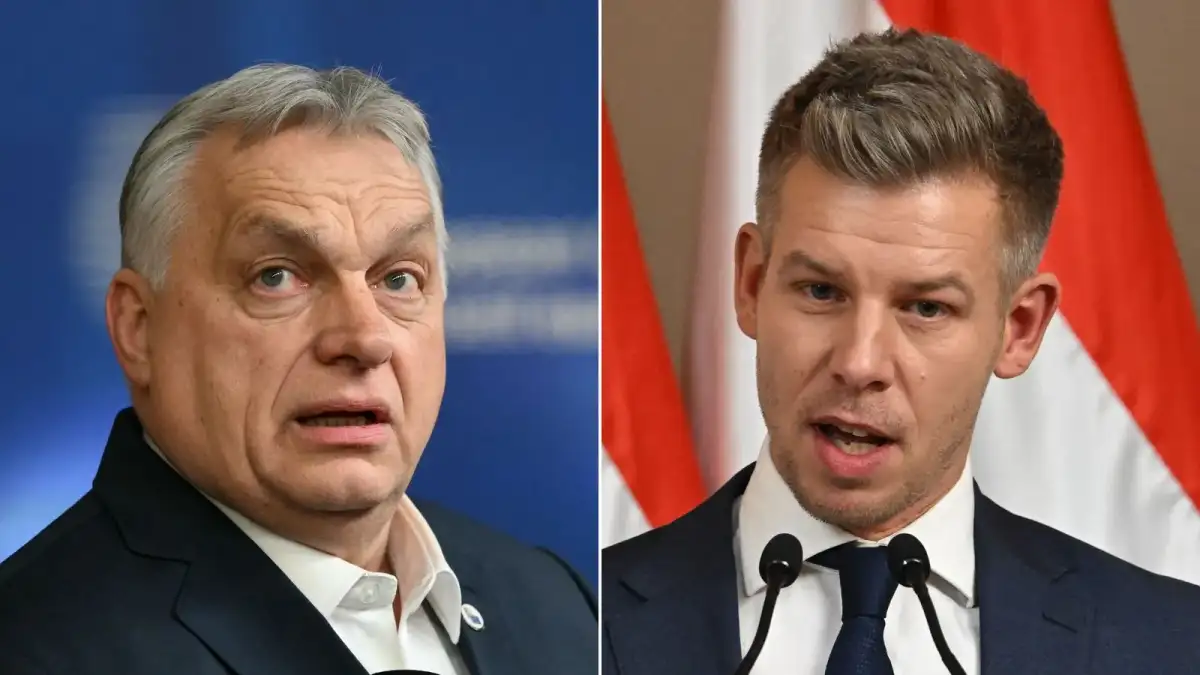
Hungarian voters decisively ousted Prime Minister Viktor Orbán on Sunday, ending his 16-year tenure and ushering in a new era under opposition leader Péter Magyar. Early results indicated a sweeping win for Magyar's Tisza party, potentially securing a two-thirds majority in parliament. This outcome, marked by record voter turnout, signifies a significant shift in Hungary's political landscape.
Orbán conceded defeat, acknowledging the results and stating he would continue to serve from the opposition benches. The election's outcome has generated considerable international attention, with various global leaders and political figures reacting to the change in power.

Global Reactions to Orbán's Defeat
Former US President Barack Obama celebrated the result as "a victory for democracy," a sentiment echoed by many European leaders. Polish Prime Minister Donald Tusk expressed his joy, telling Magyar, "I think I am happier than you!" and proclaiming, "Welcome back to Europe!" German Chancellor Friedrich Merz viewed the election as proof that "European societies are resilient against Russian propaganda."

US Democrats also largely cheered Orbán's loss, with some suggesting "wannabe dictators wear out their welcome." Conversely, allies of former US President Donald Trump offered a more divided response, with some lamenting the defeat of a leader Trump had endorsed. Technology tycoon Elon Musk, a Trump ally, posted cryptically, "Soros Organization has taken over Hungary."
Read More: Kerala Elections 2026: 79.63% Turnout After Postal Ballots Counted

Magyar's Ascent and a Shift in Hungary
Péter Magyar, the incoming prime minister, rose to prominence as Orbán's most serious challenger. His Tisza party rallied support around themes of fighting corruption and re-integrating Hungary with the European mainstream. Magyar has pledged to repair strained relations with the EU, tackle corruption, and redirect funds towards public services. While he indicated a continuation of Orbán's stance against sending arms to Ukraine, his victory is seen as a move towards closer ties with Brussels.

Background and Wider Implications
Viktor Orbán, a figure of the far-right movement, cultivated ties with Russian President Vladimir Putin and was a staunch antagonist of many EU leaders. His government had faced accusations of undermining democratic institutions and the rule of law. Orbán's ousting is seen by some as a repudiation of his alignment with the Kremlin. Analysts suggest that while Orbán was a model for some far-right movements, his party's defeat may not directly halt the global rise of such politicians. The EU's future financial support for Hungary is now anticipated to be contingent on reforms enacted by the new government.
Read More: Tesla FSD Gets Dutch Approval, First in Europe, For Drivers