
The preliminary stage of the men’s ice hockey tournament in Milan has concluded. Both Canada and the United States have secured their places in the quarterfinals, demonstrating high levels of play in different areas of the game. Canada finished the round as a top-ranked team, using a roster filled with veteran NHL players. The United States has relied on specific player pairings that have prevented opponents from scoring during five-on-five play.
The tournament now moves into a "win-or-go-home" phase. This shift changes the requirements for every team involved. While the first three games allowed for tactical adjustments, the upcoming knockout round leaves no room for mistakes. This report examines the data from the opening games and the current condition of the leading teams as they prepare for the elimination bracket.
Read More: FIFA World Cup 2026 Revenue Reaches $15 Billion With New Ticket Prices
Tournament Context and Key Figures
The preliminary round served to rank teams and establish which rosters could handle the pressure of international play.
Canada: Led by Sidney Crosby and Connor McDavid, the team is focused on using their past winning experience. Many of these players recently won the 4 Nations Face-Off against the United States.
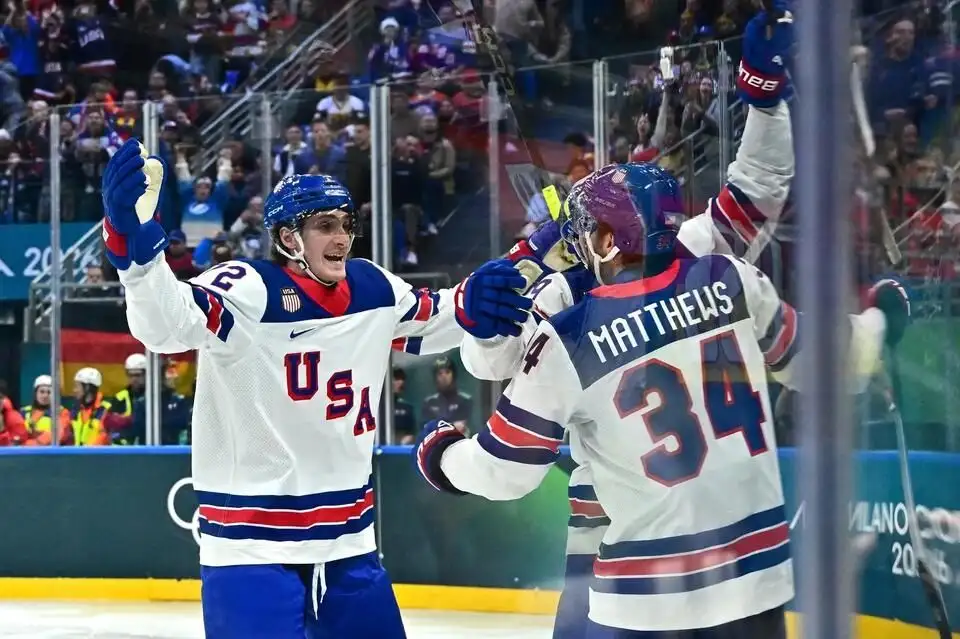
United States: The team is using a heavy rotation of Brady Tkachuk, Matthew Tkachuk, and Jack Eichel. This group has played together more than any other forward line on the team.
Denmark: Secured their first victory in Milan by defeating Latvia 4-2.
Switzerland: Advanced after an overtime goal by Dean Kukan, though they are monitoring the health of forward Kevin Fiala.
Performance Data and Scoring Metrics
The following data points highlight the efficiency of the North American teams during the opening round of the tournament.

| Metric | Team Canada | Team USA |
|---|---|---|
| Expected Goals (5v5) | 76.4% | Not Specified |
| High-Danger Chances | +52 over opponents | Not Specified |
| Top Defensive Stat | Outscored opponents 3-0 with top line | Charlie McAvoy 0 goals against (40 mins) |
| Primary Line Time | 10:25 (Top 3 producers) | 35:45 (Tkachuks & Eichel) |
Canada generated 52 more high-danger scoring chances than their opponents during the preliminary round, suggesting a high level of offensive control.
Deep Dive: Team Strategies and Roster Health
Offensive Production vs. Defensive Stability
Canada has chosen to group three of the NHL's top four scorers on the ice at the same time. This strategy has resulted in a 3-0 scoring advantage during their limited time together. In contrast, the United States has focused on a stable defensive pairing. Charlie McAvoy and his partner have not allowed a goal while playing five-on-five hockey for nearly 40 minutes.
"We had a job to do with the first three and we've done that," said forward Sam Reinhart.
The Role of Veteran Leadership
Canada’s coaching staff includes Jon Cooper, Bruce Cassidy, Rick Tocchet, and Pete DeBoer. All four have experience in "Game 7" scenarios in the NHL. Seventeen players on the current roster also participated in the 4 Nations Face-Off final last year. The team is currently leaning on this history to manage the stress of the knockout stage.
Read More: Ben Simmons Olympic Return Rumors for 2026 Games
External Factors and Player Availability
Health is becoming a factor as the quarterfinals begin.
Switzerland's Kevin Fiala was hospitalized and sent a video message to his teammates. His return to the athletes' village is expected, but his playing status is not confirmed.
Canada has faced questions regarding the availability of defenseman Cale Makar. Reports indicate his presence is considered important for the upcoming games.
Denmark's success has relied heavily on goaltending, with Frederik Andersen making 33 saves in their recent win.
Expert Analysis
Analysts and team staff have noted that the transition to the quarterfinals requires a change in mindset. The coaching staff of Team Canada has described the next phase as a series of "Game 7s," where a single loss ends the tournament.
Investigative Observation: While Canada has shown statistical dominance in "expected goals," will their reliance on a few top scorers be enough if an opponent successfully plays a defensive style?
Defensive Question: The United States has maintained a clean sheet with McAvoy on the ice for 40 minutes. It remains unknown if this defensive record can hold against the high-danger scoring chances Canada is known to create.
Read More: England World Cup Match: Pubs Open Until 5 AM Monday
Findings and Next Steps
The evidence from the preliminary round shows that Canada and the United States enter the quarterfinals as the most statistically dominant teams. Canada possesses a higher rate of puck control and scoring opportunities, while the United States has shown greater consistency in defensive pairings.
Immediate Focus: Teams are now preparing for single-elimination games.
Medical Monitoring: The status of Kevin Fiala (Switzerland) and Cale Makar (Canada) will likely impact the depth of their respective rosters.
Goaltending: Denmark has shown that a high save percentage (such as Andersen’s 33 of 35) can allow lower-ranked teams to compete with favorites.
The quarterfinals will determine if the statistical advantages seen in the first three games translate into success when the risk of elimination is present.
Primary Sources
Sportsnet: Analysis of five-on-five goal stats and high-danger chances. Canada, USA showcase superpowers en route to quarterfinals
ESPN: Report on Canada's advancement and Denmark's victory. Crosby, McDavid lead Canada into Olympic hockey quarterfinals
NHL.com: Details on coaching experience and the 4 Nations Face-Off roster. Canada leaning on past experience heading into Olympic quarterfinals
ESPN (NHL Section): Evaluation of player grades and the importance of Cale Makar. Grades, top players from the USA's thrilling win over Canada