


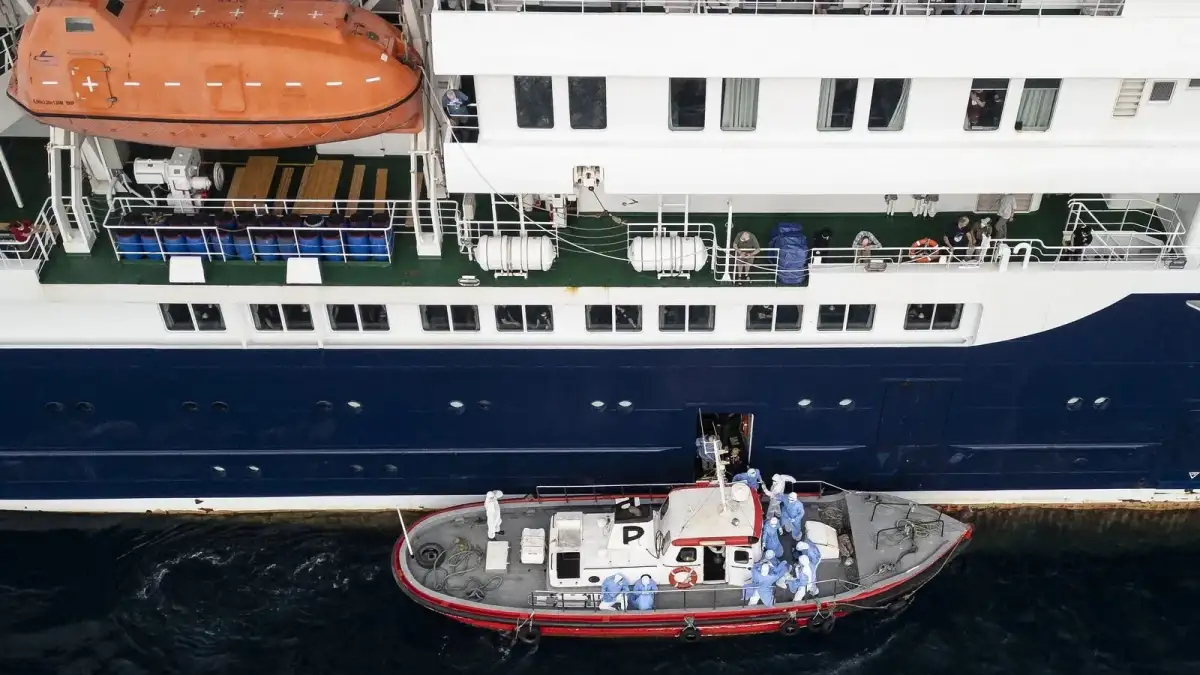
The MV Hondius is scheduled to dock in Tenerife today, 10 May 2026, marking the conclusion of a high-stakes maritime transit following a hantavirus outbreak that has claimed three lives. Spanish health authorities and the World Health Organization (WHO) have initiated a synchronized extraction protocol to manage the remaining 146 passengers and crew.

Core Facts:
Casualties: Three deaths confirmed; one remains on board.
Infection Status: Six cases confirmed, two probable; current occupants are officially asymptomatic.
Logistics: Passengers are being screened upon arrival and evacuated to respective home nations—including military-supervised quarantine in Madrid and monitoring centers in Nebraska and Merseyside.
Transmission: First documented instance of ship-based hantavirus transmission, sparking international concern over past-disembarkation tracing.
The Geography of Containment
The operation relies on a complex international handoff. The WHO Director-General, Tedros Adhanom Ghebreyesus, has personally attempted to quell local anxiety in the Canary Islands, where dock workers and residents have expressed hostility toward the ship’s arrival.

| Category | Action Plan |
|---|---|
| Spanish Passengers | Airlifted to Gomez-Ulla Military Hospital, Madrid. |
| US Passengers | Transported to Nebraska for monitoring. |
| UK Passengers | Airlifted to Merseyside for hospital quarantine. |
| Containment | Universal FFP2 masking and immediate terminal screening. |
Traceability Gaps and Public Anxiety
The incident has surfaced deep fissures in public health transparency. On 24 April, over two dozen passengers from 12 countries departed the vessel before comprehensive contact tracing was established. Health officials are now struggling to locate individuals who may have been exposed, including a flight attendant who recently tested negative despite prior concerns.
Read More: US Evacuates Americans from Cruise Ship Due to Hantavirus

Local resentment in Tenerife remains palpable. Dock workers have staged protests citing the proximity of the vessel and the potential for zoonotic risk, despite official assurances that no rodents were discovered during initial inspections.
Contextual Background
The MV Hondius outbreak represents a logistical failure in early symptom recognition. With the first death occurring on 11 April and subsequent fatalities on 26 April and 2 May, the lag time between the initial infection and a coordinated international response has triggered widespread criticism regarding cruise line protocols.
The WHO continues to emphasize that the disease is not transmissible via casual social contact in the same manner as previous global pandemics, urging the public to distinguish between hantavirus pathology and viral respiratory threats like COVID-19. Nevertheless, the situation underscores the difficulty of managing pathogenic outbreaks in mobile, isolated, and international environments.
Read More: New Mothers' Mental Health Needs More Support After Birth


