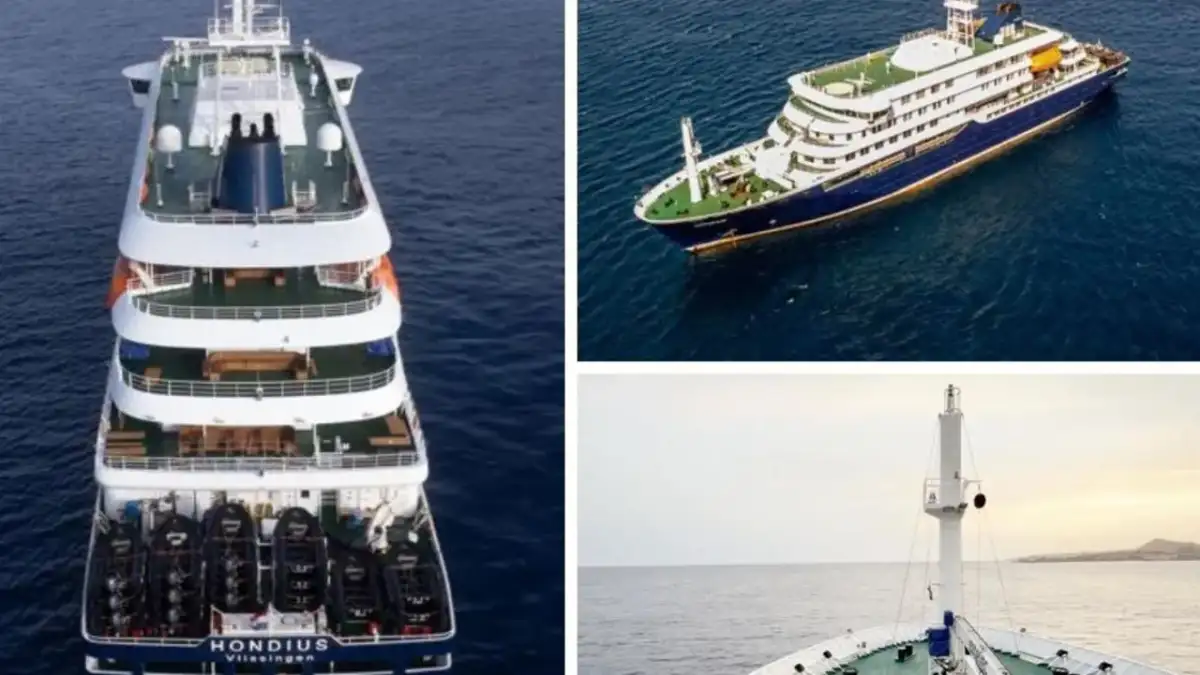
A hantavirus outbreak, linked to the cruise ship M/V Hondius, has prompted international public health responses, with several passengers identified as high-risk and undergoing health assessments. The virus, specifically the Andes strain, capable of human-to-human transmission, has led to confirmed infections and deaths among those who disembarked.

Repatriation and Health Monitoring
American passengers from the M/V Hondius are being repatriated to the United States, with a focus on public health assessment. A CDC team is deployed to Offutt Air Force Base in Nebraska to evaluate returning passengers, determining their exposure risk and recommending monitoring levels. Officials stress that the risk to the general American public remains low.

Additional CDC team deployed to support passenger assessment.
Goal is to conduct exposure risk assessment for each American passenger.
Monitoring recommendations will be provided.
No quarantine is being considered for passengers who do not test positive, though precautions are advised.
Other countries are also managing the repatriation and health protocols for passengers and crew who left the affected ship. The complex operation to bring individuals back is nearing completion.
Read More: Australians Quarantined 45 Days in Perth After Ship Virus Outbreak

Cases and Fatalities
The hantavirus outbreak has resulted in confirmed cases and fatalities. As of May 9, three passengers – a Dutch couple and a German national – have died after contracting hantavirus. A Swiss man who disembarked in Saint Helena tested positive for the Andes strain.
A passenger developed severe respiratory illness on April 11 and died on board.
Another passenger, the 69-year-old wife of a previously deceased individual, developed gastrointestinal symptoms.
Seven other American passengers who previously disembarked are being monitored in Arizona, California, Georgia, Texas, and Virginia.
No passengers or crew currently remaining on the ship are exhibiting symptoms, according to the ship operator.
The Andes Strain and Transmission
The World Health Organization (WHO) has identified the Andes strain of hantavirus among passengers. This strain is notable for its potential to spread between humans, a key factor driving the public health response. While hantavirus is primarily transmitted through rodent droppings, the Andes strain introduces a human transmission risk.
The Andes strain can be transmitted from person to person.
The WHO's identification of this strain has informed international health regulations and responses.
Death rates associated with hantavirus vary depending on the specific strain.
Background of the Outbreak
The initial alert regarding the outbreak came from the United Kingdom, which notified the WHO under International Health Regulations. Passengers aboard the Dutch-flagged MV Hondius developed severe respiratory illness during a trip originating from Argentina and proceeding towards Cabo Verde. The ship operator, Oceanwide Expeditions, confirmed the situation.
Read More: Karnataka Homestays Get New Police Checks After Assault
The cruise ship involved is the M/V Hondius.
The journey included travel from Argentina.
The outbreak has prompted a response involving countries across Europe, Africa, and Latin America.
The WHO has stated that this outbreak is "not another COVID."